
Accelerating Action on Stroke Through a WHO Resolution
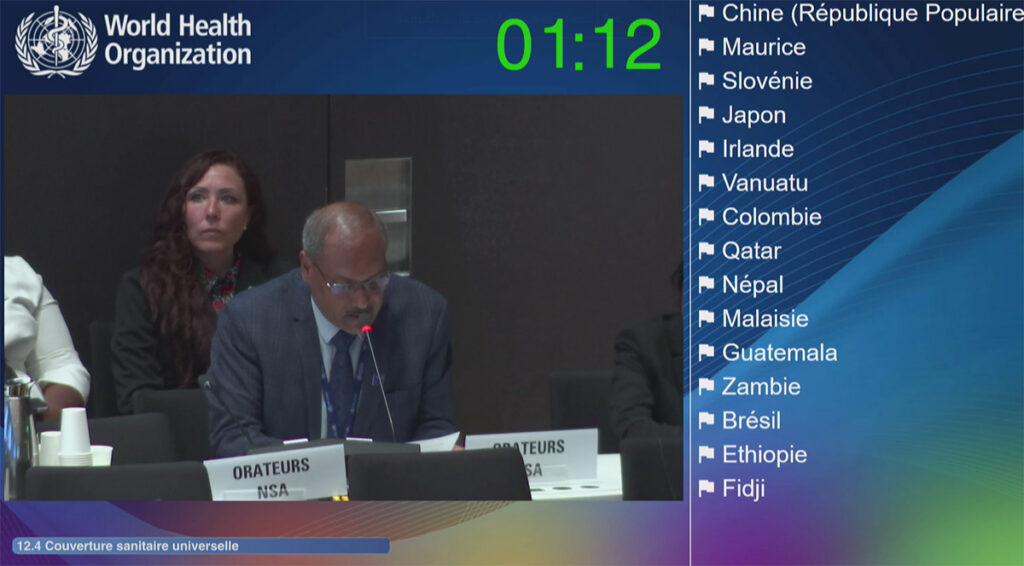
This constituency statement was led and delivered by the World Stroke Organization, with contributions from the World Heart Federation, under agenda item 12.4 – Universal Health Coverage – at the Seventy-Ninth World Health Assembly.
The World Stroke Organizations and partners, including the World Heart Federation, welcomes the Resolution on Reducing the Burden of Stroke as an important opportunity to advance global health, UHC and development goals through equitable, effective and coordinated stroke care across the patient pathway.
Stroke causes 7 million deaths and 145 million disability-adjusted life years annually, with more than 94 million stroke survivors- many living with complex disabilities and cardiometabolic co-morbidities.
Without prioritised action, stroke deaths are projected to rise by 50% by 2050, with global economic costs reaching US$1.6 trillion, disproportionately affecting low- and middle-income countries.
Over 80% of strokes are linked to manageable risk factors shared with other NCDs, including hypertension, diabetes, atherosclerosis, atrial fibrillation and kidney disease. While access to effective prevention can slow stroke incidence, access to evidence-based acute stroke care, secondary prevention and rehabilitation can transform stroke outcomes, reducing the burden of stroke on individuals, society and economies.
We welcome the Resolution’s recognition of stroke action plans as a continuum of care across six interconnected policy pillars: population-level prevention; primary care readiness and risk-factor control; emergency and acute care; rehabilitation and long-term support; registries and surveillance; and financing, equity and health-system integration.
We urge Member States to adopt this Resolution and commit to stroke action plans that encompass these key pillars as part of their strategic NCD response.
Submitted on behalf of the World Heart Federation, International Diabetes Federation, International Society of Nephrology, World Hypertension League and Handicap International, and NCD Alliance.