
Heart failure is the world’s leading cause of hospitalization, affecting more than 55 million people worldwide. It occurs when the heart stops pumping blood as well as it should be.
There is no cure for heart failure, but with the right treatment, a patient can still lead an enjoyable, meaningful and productive life.
Heart failure (HF) does not mean the heart has stopped working, it just needs some help to make sure it can keep pumping blood around the body. Heart failure can have a significant negative impact on a person’s quality of life and half of all people diagnosed with HF die within five years of their diagnosis, mostly due to lack of treatment. Most heart failure patients are over 60 years old, but HF can affect people of any age.
Despite significant medical advances in the diagnosis and management of heart failure, and the extensive body of knowledge available on the causes and risk factors of this condition, HF remains a leading healthcare challenge in both high- and low-income
countries. Lack of awareness about HF has recurrently been identified as a major stumbling block for patients with HF and their families, communities at large, healthcare workers at all levels of care, and policymakers.
Heart failure is a serious condition in itself, but it is also a major risk factor for conditions like atrial fibrillation, stroke and coronary heart disease, as well as a consequence of many cardiovascular diseases. Due to its role in all stages of cardiovascular disease and its huge social and economic impact, heart failure should be a central focus of approaches to prevent and control of CVD, and for broader health policy approaches in general.
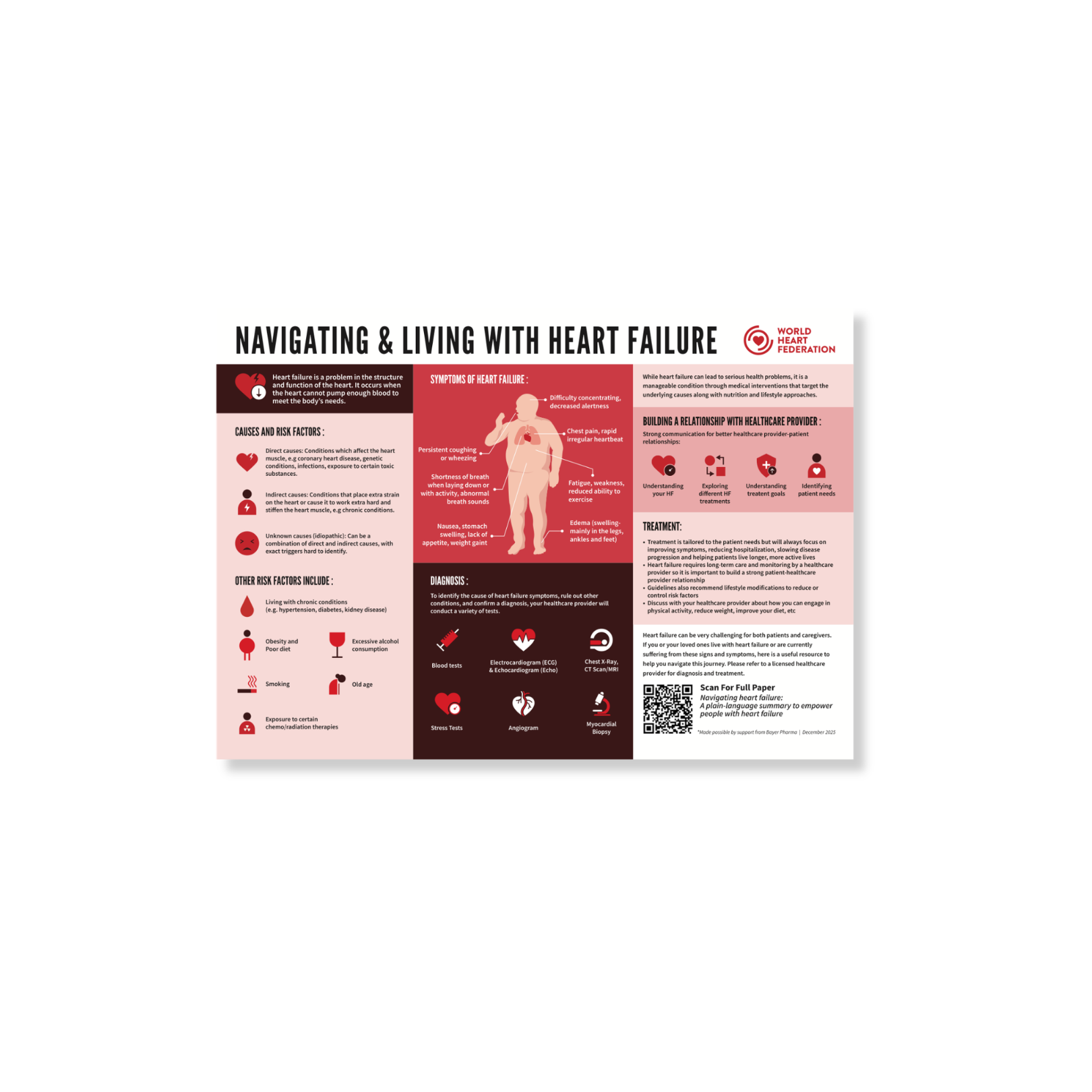
Navigating & living with heart failure
Download this infographic for a clear, plain-language overview of heart failure—what it is, common symptoms, how it’s diagnosed, and how people can live well with the condition. Designed to support patients, families, and caregivers, it helps turn complex information into practical understanding.
What is heart failure?
Heart failure is a complex clinical syndrome where the heart is unable to pump sufficiently to maintain blood flow to meet the body’s needs. It can be either acute and come on suddenly, or a progressive, long-term condition.
In heart failure, the heart’s ventricles may become too stiff, or the heart muscle may become damaged and weakened. Over time, the heart can no longer keep up with the normal demands placed on it to pump blood to the rest of the body.
Symptoms
Symptoms of heart failure typically include shortness of breath when exercising or lying down, coughing or wheezing, tiredness and fatigue, fluid retention with swelling of the legs and/or abdomen, and being less able to do physically demanding tasks or exercise.
Symptoms may also include:
Rapid or irregular heartbeat
Increased need to urinate at night
Very rapid weight gain from fluid retention
Lack of appetite and nausea
Difficulty concentrating or decreased alertness
Chest pain if your heart failure is caused by a heart attack
CAUSES OF HEART FAILURE
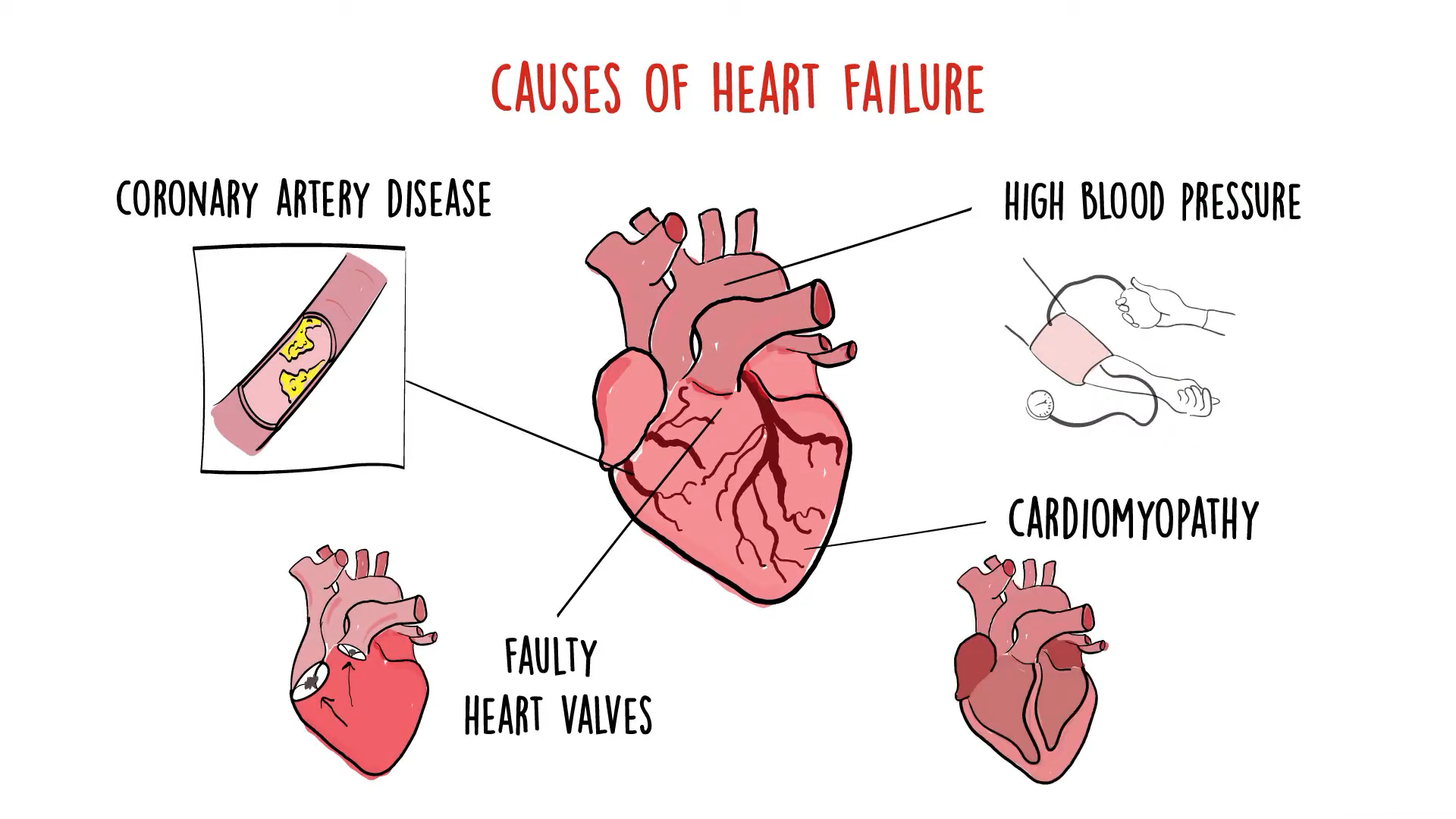
Heart failure often develops after other conditions have damaged or weakened the heart. There are many possible causes, including infectious diseases, such as Chagas disease and rheumatic heart disease; cardiac conditions, such as coronary heart disease, including a previous heart attack, cardiomyopathy (a disease of the heart muscle), high blood pressure, valvular heart disease, congenital heart disease and atrial fibrillation; unhealthy lifestyles, such as a high salt diet, smoking tobacco, alcohol or drug misuse; and failure to adhere to preventative medications.
Causes of acute heart failure include viruses that attack the heart muscle, severe infections, allergic reactions, blood clots in the lungs, the use of certain medications or any illness that affects the whole body.
TREATMENT & PREVENTION
Heart failure can be prevented by preventing and controlling the conditions that cause it, such as coronary heart disease, high blood pressure, diabetes and obesity. Many risk factors for heart disease can be eliminated by making simple lifestyle changes and taking medications as prescribed.
Lifestyle changes that can help prevent heart failure include:
- Not smoking
- Managing conditions like high blood pressure and diabetes
- Engaging in physical activity
- Eating a healthy diet
- Maintaining a healthy body weight
- Reducing and managing stress
While heart failure can’t be cured, the right treatment can reduce symptoms, improve quality of live, and help a patient live longer.
WHF roadmap for heart failure
The World Heart Federation Roadmap for Heart Failure was developed in response to the rising global burden of heart failure. It aims to inform health systems approaches to heart failure by prioritizing practical, proven, cost-effective action.
It provides comprehensive guidance on the complex syndrome of heart failure from a global perspective, a graphical display of the ideal pathway of care, potential roadblocks along this pathway, and proposed solutions. It includes a summary of evidence-informed interventions that have shown improved outcomes for patients, and recommendations on how to adapt and implement the Roadmap at a local level.
Latest News

Iron Deficiency Day: Interview with WHF President Prof Fausto Pinto

The European Hematology Association and the World Heart Federation join forces to raise awareness on heart failure and iron deficiency
AstraZeneca and the World Heart Federation partner to tackle gaps in heart failure awareness and care