
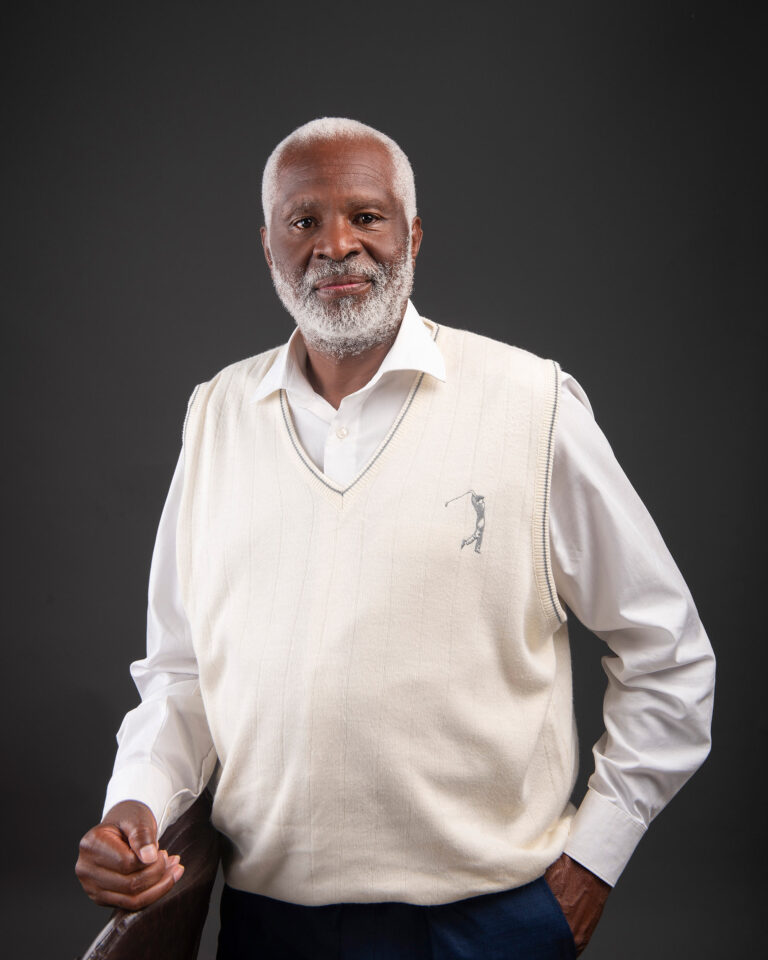
Evans Nyambega
Patient Organisations
Motivation
Why I am standing for the WHF Board
In 2010 I had a stroke in a village in Nyamira County, Kenya. The nearest facility could not diagnose me. Three days passed before I was moved to Nairobi. I was a pharmacist, a health professional, and the system still failed me. Everything I have done in the fifteen years since is an attempt to ensure fewer people begin their recovery as I did.
I am standing for the WHF Board because the Federation is at a decisive moment, and because I can contribute something specific to it.
What I would bring
Stroke, inside a cardiovascular federation. WHF speaks accurately of heart disease and stroke together claiming 20.5 million lives each year. Yet stroke remains the quieter half of that number in global cardiovascular governance. I would bring cerebrovascular depth to the Board — not as a competing agenda, but because prevention, hypertension control, and health-system readiness are shared ground. Strengthening the stroke pathway strengthens the cardiovascular case.
Implementation reality from a low-resource, decentralised system. WHF has noted that only 16 of 163 WHO Member States have national action plans dedicated to heart health. Closing that gap will be decided in countries like mine. I work across forty-seven devolved county governments, each with its own budget and health priorities. I know what it takes to move a global roadmap into a county integrated development plan, a benefit package, and a draft bill. That is a form of knowledge the Board can use.
Lived experience, structurally applied. I am a patient, and I lead an organisation governed by patients. I have seen patient representation function as a listening exercise rather than a governance contribution. I would work to ensure the patient voice at WHF shapes decisions rather than decorating them.
My vision for the Federation
First, that WHF becomes measurably better at converting its science into national implementation with a small number of visible demonstration countries, drawn from low- and middle-income settings, where roadmaps are tracked to policy adoption rather than to publication.
Second, that African and LMIC members move from participation to co-authorship. This means structured South–South exchange between members facing comparable constraints, and deliberate pathways for smaller members to access funding, technical support, and platforms.
Third, that data becomes the Federation’s advocacy engine. Without registries, advocacy is rhetoric. Kenya’s national stroke registry is early in its development, and I would bring that experience, including its difficulties, to the Board’s thinking on surveillance in resource-constrained settings.
Fourth, that the next strategy period holds equity as an operational commitment, not a stated value.
In closing
I do not come to this candidacy as an individual. I come representing a community of Kenyan stroke survivors who built an organisation from a hospital therapy room and carried it to the national policy table. If elected, I will serve the whole Federation and I will make sure the people furthest from care are present in the room where decisions are made.
Dr. Evans Barongo Nyambega
Founder & Chairperson, Stroke Association of Kenya Board Member, African Stroke Organisation
Recipient, 2025 World Stroke Organization Global Campaign Individual Achievement Award for Stroke Advocacy