
Breanna Restorick
Lakewood
My Heart Story I always knew my mom and my grandma had heart disease, but…
My Heart Story
I always knew my mom and my grandma had heart disease, but I didn’t really understand what they had or that it could be hereditary. I didn’t know what questions I should be asking, and I certainly never imagined that one day I would be dealing with heart disease myself.
For me, it all started with migraines.
I was getting headaches every single day. At first, I thought it was from staring at a computer all day for work. I figured my eyes were probably the problem, so I went to an eye doctor. I needed glasses, and I remember thinking, OK, maybe that’s it. Maybe this will fix everything.
It didn’t.
The headaches continued.
I eventually went to my doctor for a routine checkup. She listened to my heart for maybe five seconds before looking at me and saying, “OMG, you have a really loud murmur.”
That moment changed everything.
She referred me to a cardiologist, and after that, things started coming together. I had an echocardiogram and was eventually referred to University Hospital. That’s where I met Dr. Gill, who would become such a huge and special part of my life.
After more testing, I was told I needed open-heart surgery.
I was terrified.
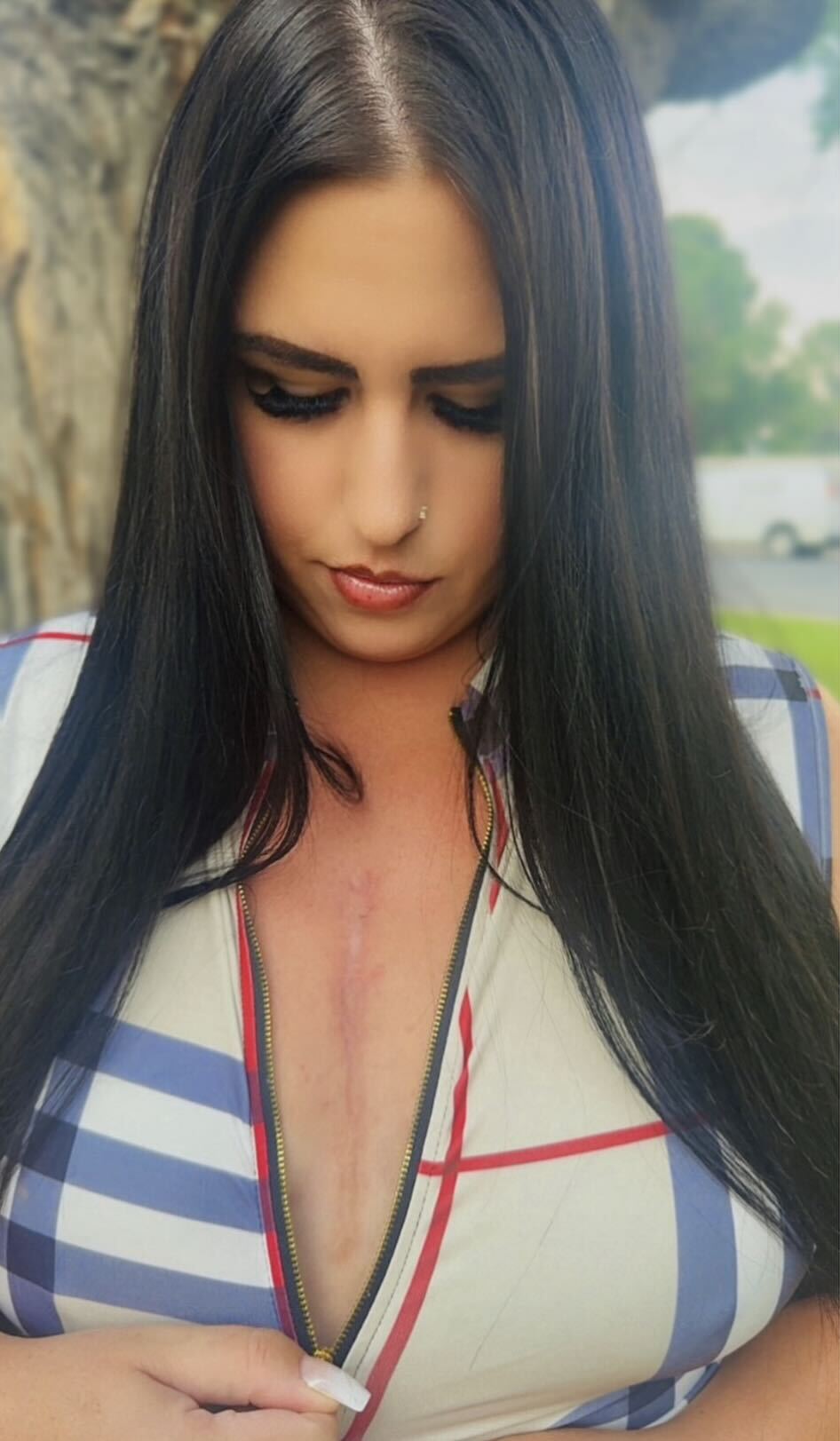
In July 2017, I went in for open-heart surgery. It was one of the scariest things I had ever experienced. I remember that my veins didn’t want to cooperate. After being poked several times, they finally got an IV into the top of my left hand. It hurt so badly.
I remember crying to my dad and telling him I was scared I wasn’t going to wake up.
Then they rolled me back.
The next thing I remember is waking up in my room with a tube down my throat. I couldn’t speak. I was completely out of it, but every so often I would wake up and ask them to take the tube out.
There are pieces of those first few days that I will never forget.
I remember people coming to visit me. I remember looking over and seeing my mom eating a bag of chips and laughing.
Oh, how I miss her laugh.
I remember getting sick and throwing up over the side of my bed. Most of the first two days are a blur, but there are these little moments that stayed with me—the faces of the people I loved standing around me, making sure I was OK.
After five days, I was released from the hospital.
In my mind, the recovery was surprisingly easy. I went home and started moving forward. I thought the hardest part was behind me.
For a while, everything was good.
Then, about a year later, I started having PVCs. My doctors felt that the best option was to have an ICD placed. A year after that, I had an ablation.
Unfortunately, the ablation was unsuccessful.
It is also something I will probably never forget.
I woke up on the operating table in the middle of the procedure. I was strapped down, and when I looked to my right, I could see my heart rate was at 200 beats per minute.
I panicked.
I started to freak out, and thankfully they gave me more sedation and I was able to go back to sleep. But waking up like that, seeing that number, and realizing what was happening around me was traumatizing, to say the least.
After that, I continued to have symptoms. But I also had more good days than bad, and for a while, that was enough.
Then around 2021, things changed.
My symptoms became substantially worse.
Eventually, I ended up facing another ablation. This time, it was an alcohol ablation.
I will never forget sitting in that pre-op room.
I was given a choice.
I was told I could go through with the procedure, knowing there was a possibility I could develop complete heart block, or I could choose not to have the procedure and continue living with the symptoms that were becoming increasingly difficult to manage.
I sat in that chair and cried.
I remember feeling like my life was over either way.
How do you make a decision when neither choice feels like a good one?
In the end, I decided to go through with the procedure. I made the decision I believed was best for me in that moment, with the information I had and the hope that things would get better.
Sure enough, I developed complete heart block.
Today, I have a two-lead ICD, and I am paced 100% in the bottom part of my heart.
I walked out of that hospital feeling worse than when I walked in.
Not necessarily because of my physical symptoms, but because of how much my life had changed in just two days.
It has taken me a long time to accept that this is my life now.
I have good days. I have bad days. Some are harder mentally, some are harder physically, and some are both.
There are so many things I have wanted to accomplish and experience in my life that are no longer options for me. Some days, the reality of that hits me incredibly hard. There are things I have had to grieve that other people may not even understand are losses.
But even with all of that, I am grateful.
I am grateful for the doctors and nurses who have stood beside me through every procedure, every setback, every difficult conversation, and every hospital visit.
I am grateful for my family and friends who have never stopped showing up for me.
I am especially grateful for my daughter. She helps me every day and gives me a reason to keep going when things feel overwhelming. She reminds me that I still have a life to live.
And then there is my dad.
My dad has been with me through all of this. Every hospital visit. Every procedure. Every difficult moment. He shows up, stays with me, and doesn’t leave my side.
I honestly don’t know what I would do without the family I have.
I fight for them.
I fight for my fellow heart warriors who know what it feels like to live with a heart that doesn’t work the way it is supposed to.
And I fight for my mom and my grandma, and for the other members of my family who lost their battles with heart disease.
For a long time, I didn’t understand that their heart disease could have anything to do with me. I didn’t know what I didn’t know.
Now I do.
And maybe that’s one of the reasons I feel so strongly about sharing my story.
If my experience can make even one person pay attention to their symptoms, ask questions about their family history, get their heart checked, or realize that they aren’t alone in what they’re going through, then everything I’ve been through can mean something more.
I didn’t choose this life.
But I’m still here.
And I’m still fighting.