
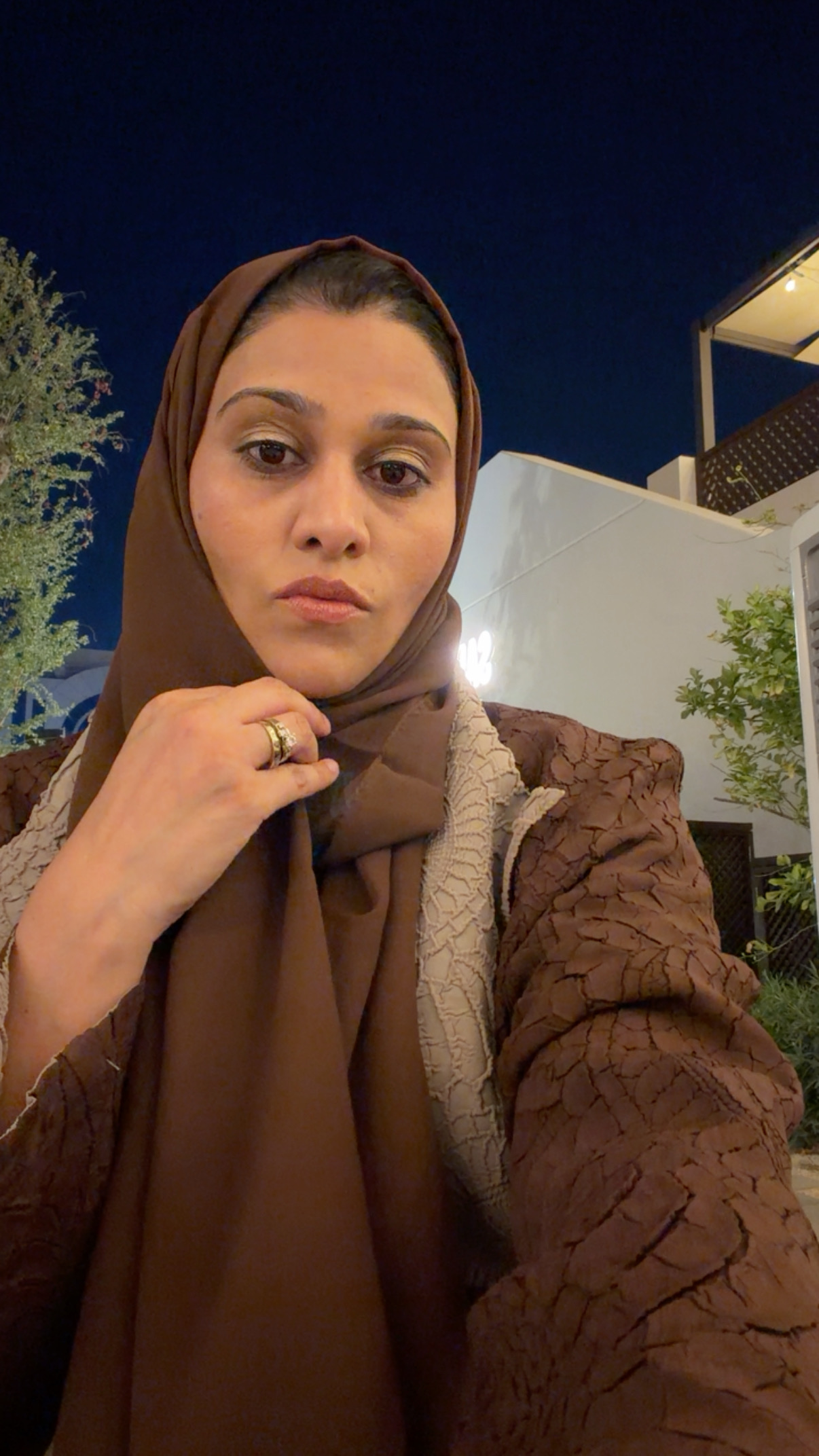
Aaysha Seedat
Abu Dhabi
My Heart, My Journey: A Woman’s Story of Resilience By Aaysha Seedat My name is…
My Heart, My Journey: A Woman’s Story of Resilience
By Aaysha Seedat
My name is Aaysha. I am South African, living in the United Arab Emirates, and I have been a teacher by profession for the past 22 years. Teaching has always been a significant part of who I am. But over the past several years, my life has also become a journey through something I never imagined I would have to face at such a young age: a complex and life-changing cardiovascular journey.
I was born with congenital heart disease. From a young age, my parents were incredibly diligent about my health. They ensured that I attended my cardiology appointments, underwent regular check-ups and remained under medical supervision. That care continued into my adulthood.
For many years, however, I was able to live my life without significant symptoms.
Then, in my late thirties, everything began to change.
For approximately two years before my first major heart surgery, my cardiovascular health deteriorated significantly. At the time, I was only 40 years old. In May 2023, shortly after turning 40, I underwent my first aortic valve replacement.
That moment marked the beginning of a completely different chapter of my life.
Recovery was not simply about healing from surgery. It meant learning how to live with the reality of a mechanical heart valve, lifelong anticoagulation and the constant awareness that my heart required ongoing care and vigilance.
The past three and a half years have been incredibly challenging.
In January/February 2026, I developed severe thrombosis. Treatment with heparin was complicated and unfortunately did not have the outcome we had hoped for. Some of the clots subsequently dispersed and travelled to my brain, resulting in a stroke.
There are experiences in life that divide your story into a “before” and an “after.”
That was one of them.
Yet, somehow, you find a way to keep going.
I have learned that perseverance does not always mean feeling strong. Sometimes perseverance means simply getting through the day. Sometimes it means taking your medication, attending another appointment, listening to another medical explanation, dealing with another difficult symptom and then waking up the next morning and doing it all again.
For me, my two sons are a tremendous source of strength. They are a constant reminder of why I keep moving forward.
My cardiovascular journey has also given me a much deeper understanding of the challenges women can face when heart disease enters their lives during their thirties and forties.
There is still so much that needs to be understood about cardiovascular disease in women. There are unique challenges that can be particularly difficult for younger women to navigate.
For me, these have included the realities of living with a mechanical valve and lifelong anticoagulation, the restrictions and considerations surrounding pregnancy, and the hormonal changes associated with perimenopause. Hormone replacement therapy is not an option that I can simply consider without taking my cardiovascular history and medications into account.
Then there are the medications that become part of everyday life.
Warfarin. Aspirin. Concor. And now medication to address my significantly elevated LDL cholesterol.
Each medication serves an important purpose, but living with chronic cardiovascular disease means constantly balancing treatment, monitoring, side effects, lifestyle and the uncertainty that can accompany a complicated medical history.
And this is something I believe we need to talk about more openly.
Women in their thirties and forties are often perceived as being young, healthy and resilient. We may be mothers, wives, teachers, professionals and caregivers. We continue working, raising our children and managing our homes while quietly navigating a health reality that may not be visible to the people around us.
Cardiovascular disease does not always look the way people expect it to.
And it certainly does not only happen to older people.
I believe there is a significant need for greater public education about cardiovascular disease in women, particularly younger women. We need more awareness of how heart disease can affect women physically, emotionally, professionally and within their families.
We also need more support.
I would love to see stronger support networks and support groups specifically for women living with cardiovascular disease, particularly younger women who may find themselves navigating heart surgery, anticoagulation, pregnancy-related decisions, hormonal changes, menopause and the psychological impact of living with a chronic heart condition.
Sometimes, what a woman needs most is to know that she is not alone.
My journey has also taught me the importance of gratitude.
I am deeply grateful for my husband, who has been my absolute rock throughout these years. He has stood beside me through symptoms, surgery, hospital admissions, complications, uncertainty and recovery. His support has meant more to me than words can adequately express.
I am equally grateful for the medical teams who have cared for me over the years, including the doctors, nurses and healthcare professionals at Mediclinic and Cleveland Clinic Abu Dhabi.
And I am profoundly grateful to the United Arab Emirates for the healthcare, medical expertise and support that have been available to me during some of the most difficult periods of my life.
I do not know exactly what the next chapter of my heart journey will look like.
But I do know this:
I am still here.
I am still a mother.
I am still a wife.
I am still a teacher.
And I am still moving forward.
My heart has been through more than I ever imagined it would have to endure. But my story is not defined solely by my diagnosis, my valve, my medications, my thrombosis or my stroke.
It is also a story of resilience.
It is a story of family.
It is a story of gratitude.
And most importantly, it is a reminder that women living with cardiovascular disease deserve to be seen, heard, supported and understood.
If sharing my story helps even one younger woman recognise that she is not alone, then every difficult chapter of my journey has a purpose.
This is my heart story. And I am still writing it.