
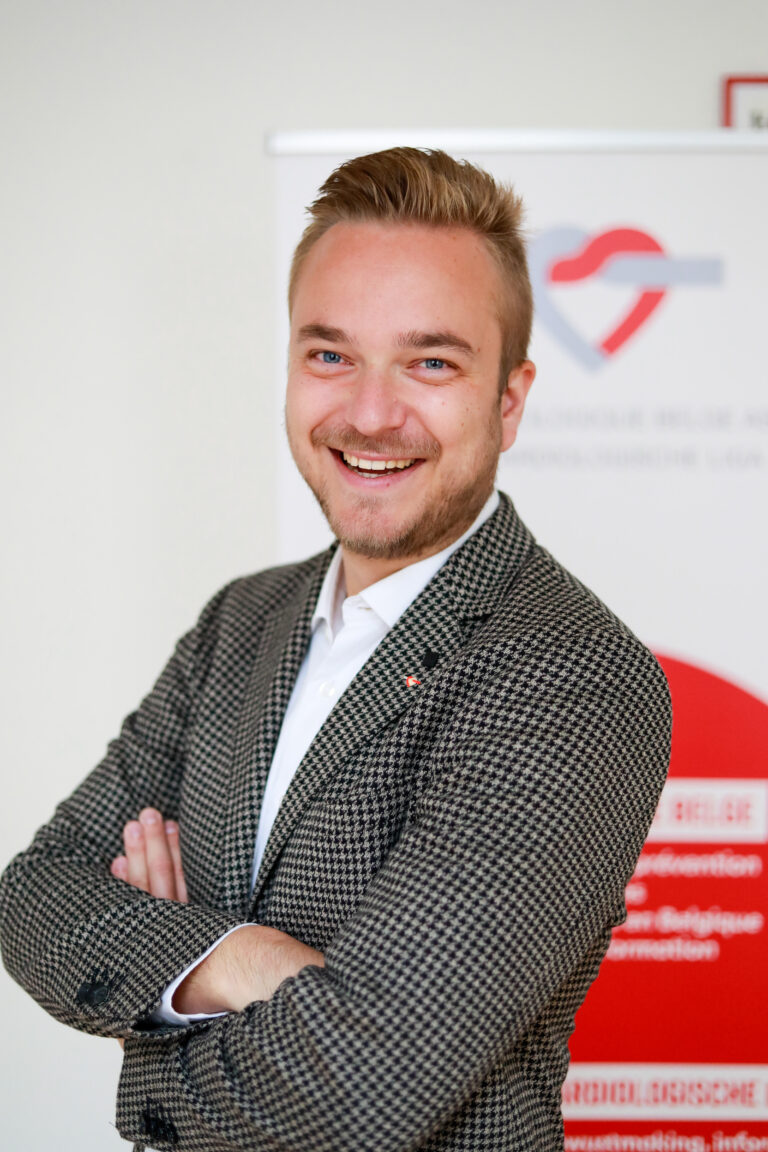
Rik Vanhoof
Foundations
Motivation
I have dedicated my career to cardiovascular health, first in the pharmaceutical industry and now as General Manager of the Belgian Heart League, Belgium’s leading non-profit in cardiovascular disease prevention. In both roles, the same conviction has driven me: preventing cardiovascular disease requires more than clinical excellence. It requires bold advocacy, smart communication, and organizations willing to act with urgency.
Since taking the helm of the Belgian Heart League in 2023, I have led a fundamental strategic and financial transformation of the organization, significantly growing both income and total assets, and expanding our national impact. I have developed and led multiple public awareness and prevention campaigns, reaching millions of Belgians through TV, radio, and digital channels. I have been a driving force behind Belgium’s first National Cardiovascular Disease Plan, navigating complex political landscapes and aligning stakeholders across government, medical societies, and patient organizations. As part of the European Heart Network community, I also contributed to the advocacy process that led to the adoption of the European Cardiovascular Health Plan in December 2025, a landmark achievement that I believe can serve as a model for a more ambitious global agenda.
My background combines academic training in pharmaceutical sciences and general management with commercial experience at Bayer in cardiovascular brand strategy and field leadership. I serve on the boards of several Belgian health initiatives focused on health literacy and tobacco control, and am a trilingual spokesperson with experience in TV interviews, keynote presentations, and high-level policy engagement in Dutch, French, and English.
If elected to the WHF Board, I bring two clear priorities.
First: bolder action on upstream determinants
Ultra-processed food systems, tobacco, sedentary urban design, air pollution, and climate change are not peripheral issues. They are the foundation of the CVD burden we claim to fight. We are already seeing the consequences: rates of obesity, hypertension, and type 2 diabetes are rising sharply among younger age groups across all regions, laying the groundwork for a cardiovascular crisis that will peak in the coming decades. WHF has the convening power to push for specific, ambitious policy action on these fronts. The question is whether we use it with enough urgency.
Second: closing the communication gap
Younger generations do not respond to traditional cardiovascular messaging. Yet it is precisely this generation that is accumulating cardiovascular risk faster than any before them. Obesity, sedentary behaviour, and metabolic dysfunction are no longer diseases of old age. As a Millennial leader actively working to reach Gen Z audiences in my own organization, I know this gap well. Reaching people before they become patients is not a communications exercise. It is a public health imperative.
I also believe WHF must look inward. Greater balance between cardiac societies, heart foundations, and patient organizations in its governance is not only a matter of fairness. It is a strategic necessity for a federation that aspires to represent everyone affected by cardiovascular disease.
At 32, I will live with the consequences of today’s decisions for decades. I bring a clear agenda, proven experience, and the drive to ensure WHF matches its ambition with its execution.