Celina Gorre
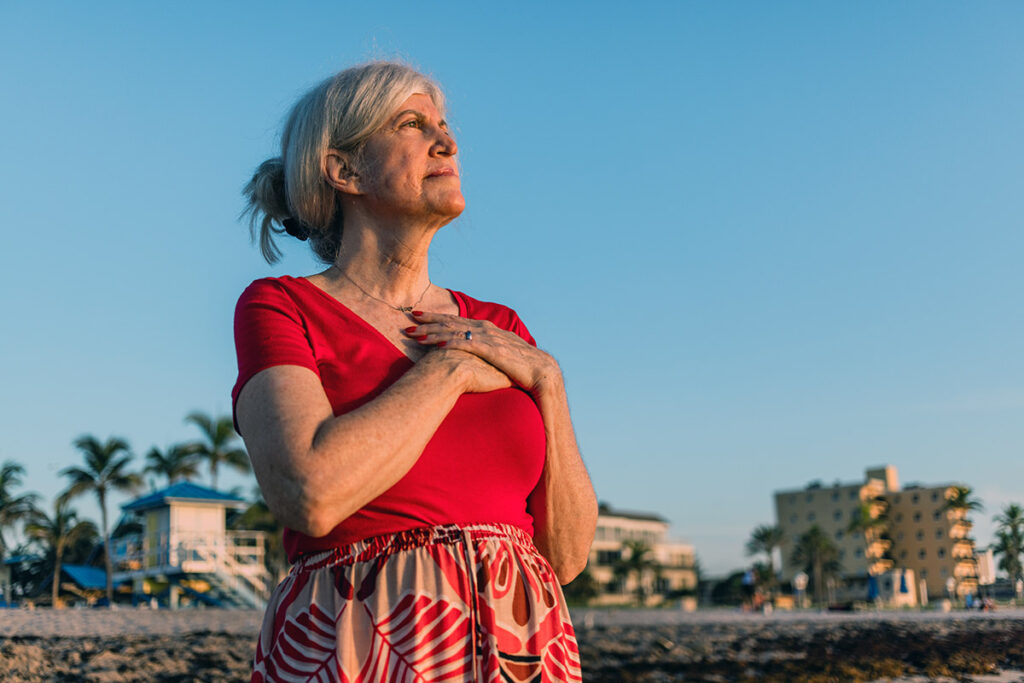
Jaime Wolfley was once told by a doctor that she had the heart of an athlete. Three years ago, her heart stopped.
“It was just a normal day,” Wolfley says as she recalls preparing for an evening in with friends when her symptoms started. “I felt this pressure in my chest and an unusual feeling of numbness in my right arm and soon after I couldn’t catch my breath.”
Her story is shared by millions of others. Heart disease can affect women of any age and, globally, it is the leading cause of death for women. But compared to men, women are more likely to be misdiagnosed when they have coronary heart disease, according to the World Heart Federation.
In Wolfley’s case, her symptoms were first thought to be anxiety. She was just moments away from being discharged from the emergency room when she went into cardiac arrest.
Wolfley was diagnosed with a type of heart attack called spontaneous coronary artery dissection (SCAD), in which a tear between the layers of the coronary artery wall obstructs blood flow to the heart. Unlike other types of heart attacks, it is not caused by a build-up of plaque and its exact causes remain unknown. However, studies show more than 90% of incidences of SCAD are in women. It can occur during or soon after pregnancy as well as appearing in individuals experiencing extreme stress. To raise awareness and improve research and medical care of women with heart disease, WomenHeart – a patient-centred organisation, founded in the United States in 1999 – focuses on providing support, education and advocacy for women with, or at risk of, heart disease.
Part of its mission is to achieve equity in heart health which it accomplishes through various initiatives including public education campaigns, both in-person and via app-based peer support networks, and a variety of educational and advocacy events.
The organisation is working towards reconciling gender disparities within cardiovascular conditions by collaborating with medical experts, such as Dr Sharonne Hayes, a cardiologist and professor of cardiovascular medicine at the Mayo Clinic in Rochester Minnesota, technology companies, NGOs and industry partners. Together, they are able to provide a more supportive community for women living with heart diseases, improving both physical and mental health.
The experience of being misdiagnosed is one of the reasons Wolfley applied to be a WomenHeart Champion. “We need to show people it can happen to anybody,” she says.