
World Heart Federation Declares 2026 the Year of Neglected Cardiac Diseases

The World Heart Federation (WHF) is placing neglected cardiac diseases at the centre of the global cardiovascular agenda in 2026, calling for urgent action to address conditions that have long been underprioritised and continue to claim millions of lives despite being preventable or treatable.
A new Lancet correspondence, led by WHF President Prof Jagat Narula, highlights that an estimated 100 million people live with neglected cardiac diseases that are routinely diagnosed and treated in high-income countries but continue to cause preventable deaths elsewhere. The initiative focuses on four major groups of conditions: rheumatic heart disease, Chagas disease, congenital heart disease, and inherited cardiomyopathies and aortopathies. These diseases place a heavy burden on people in low- and middle-income countries and on marginalized communities in high-income countries, including Indigenous populations, where many still lack access to early diagnosis, treatment, medicines, surgery, and genetic testing.
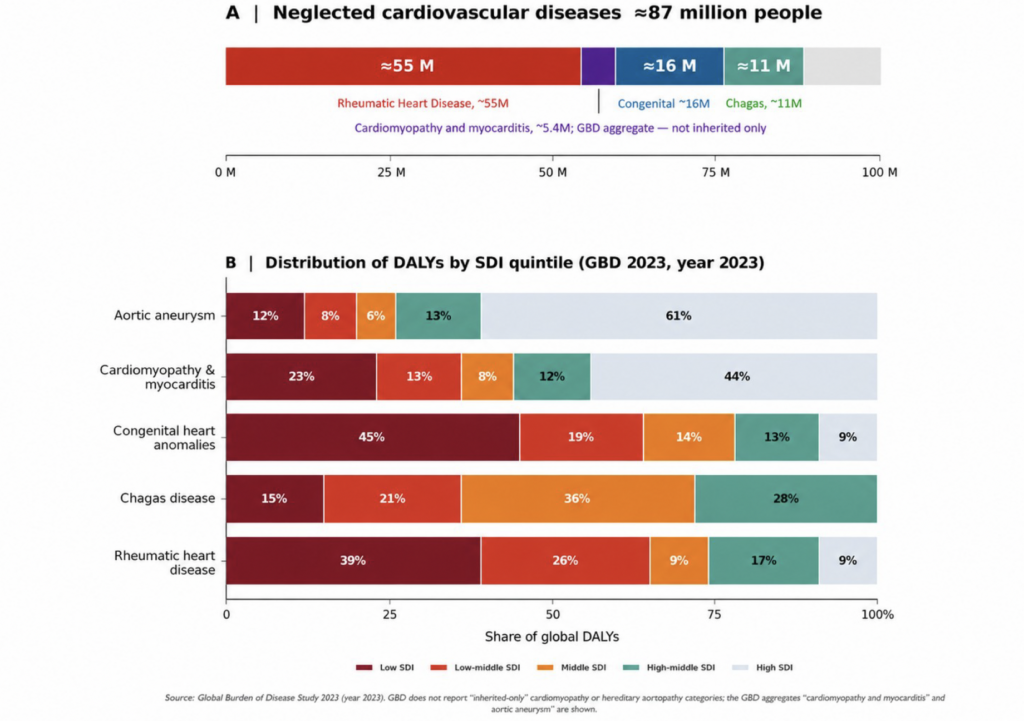
“The tools, the knowledge, and the moral imperative are already in place,” said the authors. “What has been missing is will, sustained funding, and accountability.”
As part of this global focus, WHF is working with its members and partners throughout the year to raise awareness and drive policy action. At the World Heart Forum on Neglected Cardiovascular Diseases 2026, WHF called on national societies, funders, and civil society to strengthen their commitment to addressing neglected cardiac diseases. Building on this momentum, WHF launched the World Heart Report 2026 on Congenital Heart Disease, exposing the stark global inequities in access to diagnosis, treatment, and lifelong care.
Another major milestone this year is the 2nd World Congress on Rheumatic Heart Disease (11–14 November in Perth, Australia), where global leaders, clinicians, researchers, advocates, and people with lived experience will come together and push for stronger commitments to eliminate rheumatic heart disease. By putting neglected cardiac diseases in the global spotlight, WHF and its partners are calling for a future in which everyone, everywhere can access the care they need, leaving no one behind.