
Dr. Ashida T.S
Pondicherry
WORLD HEART DAY 2026 DEPARTMENT OF CARDIOLOGY & DEPARTMENT OF GENERAL MEDICINE PROGRAM REPORT…
WORLD HEART DAY 2026
DEPARTMENT OF CARDIOLOGY & DEPARTMENT OF GENERAL MEDICINE
PROGRAM REPORT
Theme: “Your Heart, Your Lifestyle, Your Future”
Sri Manakula Vinayagar Medical College & Hospital, Pondicherry
Date: 28–30 September 2026
Time: 9:00 AM – 2:30 PM
Venue: SMVMCH Hospital Block
Mode: Community Heart Health Screening Camp
Organizing Team:
• Department of Cardiology & General Medicine
– Faculties, Post graduate residents, Undergraduate interns
• Allied Health Sciences Students
Overview
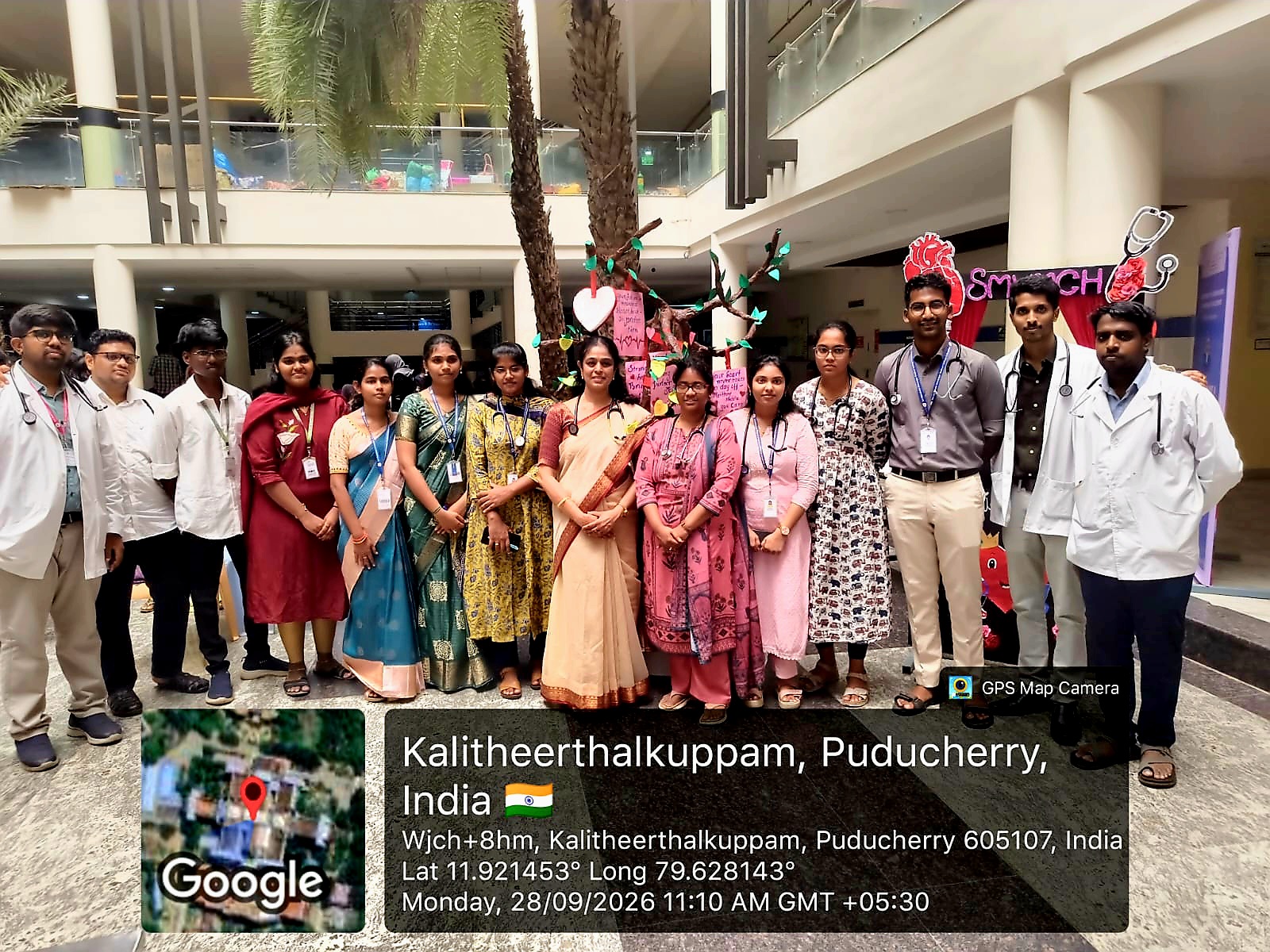
The Department of Cardiology, in association with the Department of General Medicine, successfully conducted a three-day World Heart Day 2026 Heart Health Screening Camp from 28 to 30 September 2026, in alignment with the theme “Your Heart, Your Lifestyle, Your Future.” The programme was conducted under the leadership of Dr. Ashida T. S., Professor & Head, Department of Cardiology, and Dr. S. Girija, Professor & Head, Department of General Medicine.
The initiative focused on early identification of cardiovascular risk factors, cardiometabolic screening, lifestyle assessment, and preventive health education, with an emphasis on empowering individuals to make informed and sustainable heart-healthy choices.
A Holistic Approach to Heart Health
Recognising that cardiovascular health extends beyond blood pressure and cholesterol alone, the camp adopted a comprehensive approach incorporating anthropometric, metabolic, cardiovascular, lifestyle, sleep and stress-related parameters. Participants were encouraged to understand how physical activity, nutrition, sleep, psychological stress and metabolic health interact to influence long-term cardiovascular risk.
Program Highlights:
The health camp was conducted as interactive three stations.
Station 1 – Know Your Numbers
Participants first were asked to guess their own blood pressure and daily salt intake, followed by comparison with their measured values.
Station 2 – Cardiometabolic Screening
Participants underwent assessment of blood pressure, height, weight, BMI, waist circumference, CBG, ECG and lipid profile.
Station 3 – Lifestyle and Wellness Assessment
The third station focused on the relationship between lifestyle and cardiovascular health.
Participants underwent four structured assessments:
• Healthy Lifestyle Score (HLS)
• Pittsburgh Sleep Quality Index (PSQI)
• Perceived Stress Scale – 10 (PSS-10)
• Framingham Heart Age Assessment
Key Screening Findings
A total of 152 participants were included in the screening analysis, comprising 69 males (45.4%) and 83 females (54.6%). The mean age was 45.1 ± 10.8 years. The largest proportion belonged to the 40–49-year age group (36.2%).
Among 152 participants:
• 61.8% were obese; 76.9% were overweight/obese.
• 90.1% had central obesity, including 77.4% with normal BMI and other metabolic parameters were also significantly deranged.
• Overall, the findings highlighted a substantial burden of modifiable cardiovascular risk factors among participants.
Nutrition and Health Education
An interactive nutrition and healthy-diet display was conducted by Allied Health Sciences students, highlighting balanced nutrition and heart-healthy dietary choices.
Gratitude Tree
A Gratitude Tree provided participants with an opportunity for reflection and wellness engagement. Participants shared personal experiences of quitting substance use and expressed gratitude through the Gratitude Tree, promoting positive health choices and emotional well-being.
Interactive Activities, Quiz & Lucky Draw
To make cardiovascular health education engaging and participatory, the camp incorporated quizzes, games and interactive activities for Allied Health Sciences students and winners were felicitated.
A daily Lucky-Lot activity was also conducted for participants. One participant was selected each day and presented with a gift as a token of appreciation for their participation.
From Screening to Prevention
The camp aimed to translate screening findings into actionable cardiovascular prevention encouraging regular physical activity, balanced nutrition, healthy weight, tobacco avoidance, moderation of alcohol, stress management, adequate sleep and regular monitoring of cardiovascular and metabolic parameters.
A holistic three-day initiative bringing together early risk identification, lifestyle assessment, preventive health education and active community engagement—turning awareness into healthier choices.
Thus the programme reinforced the message:
“Know your numbers, Understand your lifestyle, Make healthier choices, Protect your heart.”