
WHF calls for stronger action on cardiovascular health at the 79th World Health Assembly
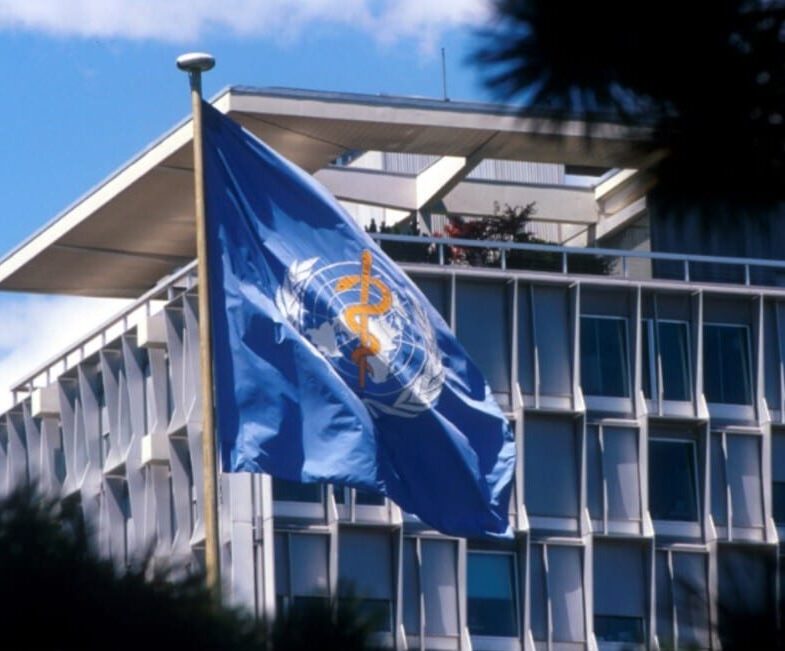
The World Heart Federation represented its Members and the global cardiovascular community at the 79th World Health Assembly, which was held from 18 to 23 May 2026 in Geneva, Switzerland.
Throughout the Health Assembly, WHF engaged with Member States, the World Health Organization, and civil society partners to call for stronger, more equitable, and more integrated action on cardiovascular health and other noncommunicable diseases (NCDs) across global health agendas.
WHF led and delivered a constituency statement under agenda item 12.6 – Health in the 2030 Agenda for Sustainable Development – on behalf of a coalition of global health organisations. Our statement highlighted that the world remains significantly off course to achieve the health-related Sustainable Development Goals, especially targets 3.4 and 3.8. It further stressed that NCDs, especially cardiovascular disease, continue to be consistently underprioritized despite their immense burden. WHF and partners drew attention to the deep and persistent inequities that shape NCD and cardiovascular disease incidence, prevalence, and outcomes, including social, economic, commercial, geographical, and environmental determinants of health. In particular, the coalition emphasized a need to integrate essential NCD services, across the continuum of care and across the life course, into primary healthcare, universal health coverage, as well as emergency preparedness, response, and recovery plans.
Prof. Julie Redfern, WHF Board Member, delivered a statement under agenda item 14.1 – WHO’s Work in Health Emergencies – calling on Member States to prioritize people living with noncommunicable diseases, particularly cardiovascular disease, in emergency and humanitarian settings.
Under Prof. Redfern’s leadership, WHF also delivered a statement under agenda item 15.1 – Strengthening Rehabilitation in Health Systems – highlighting rehabilitation as an essential health service. In line with its upcoming WHF Roadmap on Rehabilitation, WHF called for cardiac rehabilitation to be reframed as a broader approach to lifelong cardiovascular health: one that provides ongoing, person-centred care as well as ongoing support for people living with cardiovascular disease.
In addition, WHF contributed to and endorsed several constituency statements led by civil society partners, including:
- Agenda Item 12.1 – Noncommunicable Diseases – led by the International Society of Nephrology, which built on our joint webinar on the post-UN High-Level Meeting on NCDs agenda and called for coordinated and integrated action across circulatory health
- Agenda Item 12.1 – Noncommunicable Diseases – led by NCD Alliance
- Agenda Item 12.4 – Universal Health Coverage – led by the World Stroke Organization, which supported the adoption of a WHO Resolution on Stroke
- Agenda Item 12.5 – Primary Healthcare – led by NCD Alliance
- Agenda Item 20.1 – Reform of the Global Health Architecture and UN80 Initiative – led by NCD Alliance
On the sidelines of the 79th World Health Assembly, WHF also convened three high-level side events to advance cardiovascular health priorities, namely:
The Health Assembly also adopted a series of resolutions and decisions with direct relevance to cardiovascular health, including resolutions on stroke, steatotic liver disease, diagnostic imaging, and neglected tropical diseases, among others. As WHO Director-General Dr. Tedros Adhanom Ghebreyesus emphasized, the value of the Assembly’s outcomes lies in their implementation, “country by country, system by system”, supported by political commitment, sustained financing, and continued cooperation between Member States, partners, and communities.
Across its interventions, WHF reinforced the need for cardiovascular health to remain central to global health policy, financing, and implementation. As governments move from commitments to action, WHF will continue to advocate for stronger health systems, equitable access to care, and cardiovascular health for everyone.