
WORLD HEART SUMMIT 2021
Organised by the World Heart Federation with the Global Coalition for Circulatory Health.
WHAT
Preventing and controlling obesity can be a game changer for cardiovascular health.
The science is clear: obesity is associated with increased rates of cardiovascular disease (CVD) mortality and morbidity. It also shares many social and economic determinants of health – income and educational levels, access to nutritious food, availability of transportation and conditions in the physical environment – with cardiovascular disease.
With rising rates of obesity and CVD worldwide, and global and national health systems shifting following COVID, acting on obesity has never been more important.
For these reasons, the World Heart Federation made “Time to Act on Obesity” the theme of the 2021 World Heart Summit.
By bringing together innovators, policymakers, academics, people living with CVD and/or obesity, health advocates and industry, the Summit will explore:
- What role the cardiology community can play in preventing and managing obesity and CVD among people at-risk of or living with these conditions
- How social, economic, clinical, and environmental factors collide in the doctor’s office leading to CVD and obesity, and what policymakers and health advocates can do about it
- How the health workforce can most effectively address the nexus between CVD and obesity
- How to make allies beyond the CVD and obesity communities to start turning the tide
- What to do about commercial determinants of health, including marketing of unhealthy products
- And how to tackle the continuum from malnutrition to obesity amid food insecurity, urbanization, and shifting diets in low- and middle-income settings
When & Where
Adapting to the ever-changing COVID situation, WHF is planning a hybrid Summit format, with 3 global webinars between October and November 2021, culminating in a half-day hybrid meeting at the joint PASCAR – KCS Congress in Mombasa, Kenya, on 22 November.
The global webinars will each be followed by three regional, invitation-only webinars with practitioners, advocates, physicians, and people living with CVD and obesity in Latin America, Asia, Europe, and North America.
Click on the dates below to register for the webinars.
WORLD HEART SUMMIT 2021 CO-CHAIRS
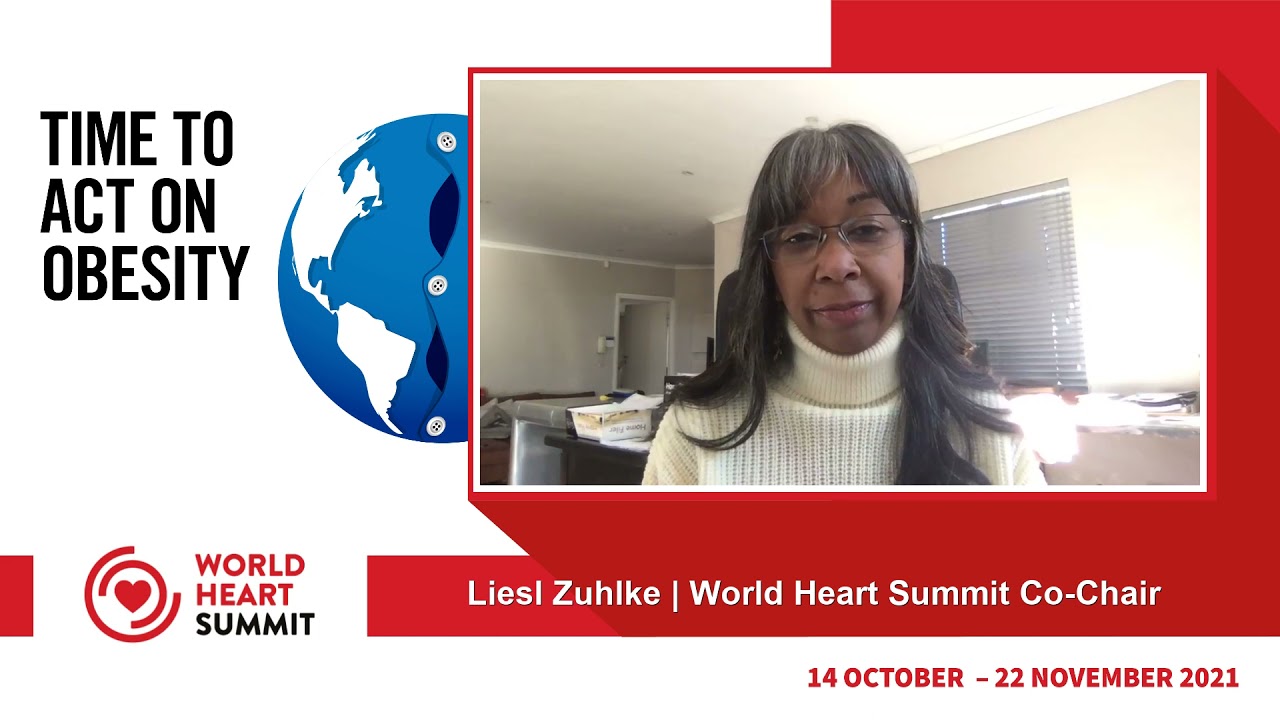
Prof Liesl Zühlke
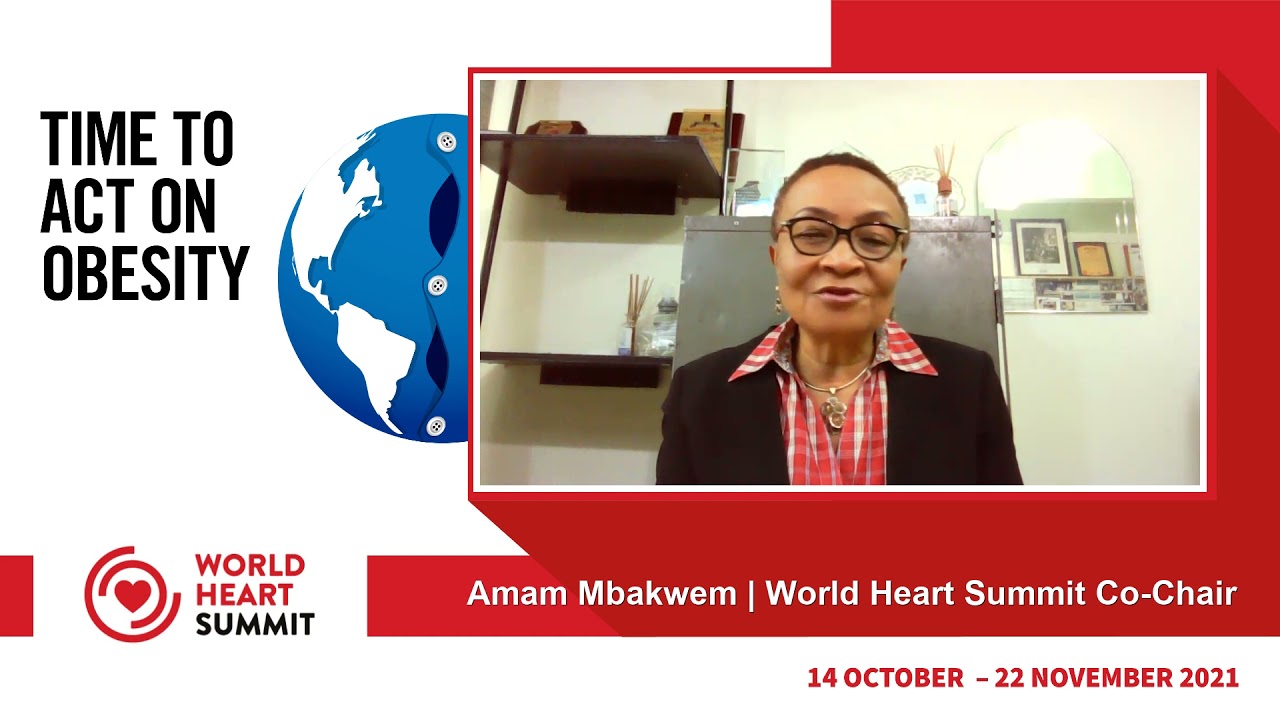
Prof Amam Mbakwem
Global Webinars
14 October – United to end the global obesity epidemic
07:00 PST | 10:00 EST | 16:00 CEST | 22:00 CST
This webinar will start the conversation about the role that the cardiovascular health community can play in preventing and controlling obesity. It will go beyond BMI to map the socioeconomic and environmental factors of obesity, hear from people living with CVD and obesity about their needs and challenges, explore how heart health professionals and advocates can make allies beyond their communities, and articulate key policy asks to take forward.
26 October – Strengthening the health workforce to fight the nexus between CVD and obesity
07:00 PST | 10:00 EST | 16:00 CEST | 22:00 CST
This webinar will ask how the health workforce can do better to prevent and manage CVD and obesity by exploring the work of multi-disciplinary teams including cardiac nurses, nutritionists, community health workers, behaviour change communicators and experts. Issues around training, behaviour change interventions, regulations, and the prevention and management of obesity among health professionals themselves will be discussed.
11 November – Health Taxes: Finding sustainable financing options to address heart disease and obesity
07:00 PST | 10:00 EST | 16:00 CEST | 22:00 CST
Innovative programmes and policies remain paper tigers without appropriate and sustainable sources of funding. Therefore, this webinar will ask how the taxation of unhealthy commodities can result in sustainable financing options for the prevention & management of CVD and obesity.
REGIONAL WEBINARS
21 October – Latin America & the Caribbean
17:00 CEST | 10:00 GMT-5 | 12:00 GMT-3
Leveraging food systems to prevent CVD and obesity
This regional webinar will bring together from experts in Latin America and the Caribbean to explore the link between cardiovascular health, obesity, and food systems, and to learn how local food systems can be transformed for better health outcomes for those at-risk of and those living with CVD and obesity.
9 November – Asia
08:00 CEST | 12:00 GMT+5 | 15:00 GMT+8
Strengthening the health workforce to fight the nexus between CVD & Obesity
This session will take the insights from the global health workforce webinar and the expertise of experts from across the Asian continent and ask how national health workforces can be strengthened to prevent and manage obesity and CVD, especially in the aftermath of the COVID-19 pandemic and its impact on those living with non-communicable diseases.
Hybrid Event
22 November
9:00-9:10 Welcome remarks by Professors Amam Mbakwem and Liesl Zuhlke, World Heart Summit Co-Chairs
This welcome session will introduce the speakers and the participants to what makes the World Heart Summit a unique event, namely its convening of which scientists, experts, industry, and policymakers with diverse experiences can network, engage in constructive dialogue, debate, question, and place critical issues of cardiovascular health in a wider global health context.
It will highlight the relevance of this year’s theme and reiterate why dialogue and collaboration between the different stakeholders present at the Summit can translate into real action for the prevention and control of obesity & CVD.
9:10-9:20 Highlights from the Global & Regional Webinars
This session will give the audience a snapshot of the key messages emerging from the global and regional webinars, and what they mean for the in-person event (e.g., to inform, to guide, to consider for the Call to Action).
9:20-10:35 Opening Plenary
Africa, the new ground 0 of the obesity epidemic: how did we get here and what can the cardiovascular community do about it?
Obesity is a looming public health crisis in Africa, where eight of the 20 countries with the fastest-rising rates of obesity are. This session takes stock of the factors that contributed to the rise in obesity rates, including shifting diets, urbanization, economic growth, and decreased levels of physical activity. It will then ask what the cardiovascular community – cardiologists, cardiac nurses, societies, and foundations – can do to prevent and control rising rates of obesity.
10:45-11:45 Panel Discussion
In their shoes: What can people living with CVD and obesity teach the cardiology community about preventing and managing CVD and obesity?
Obesity is a complex condition, as is the interplay between CVD and obesity. Understanding it requires understanding people living with CVD and obesity: what are their needs and challenges? What do they need from their physicians? And would people living with CVD and obesity want the cardiology community to know?
11:45-13:00 Panel Discussion
Shifting patterns of disease, still health systems? How can healthcare delivery keep up with the increased prevalence of non-communicable diseases on the continent?
There has been an epidemiological shift from communicable to non-communicable diseases in Africa, especially cardiovascular and metabolic diseases, yet health systems have been lagging in adjusting to these trends. This session will assess the main roadblocks to and identify solutions to ensure that health systems are prepared to address the needs of people living with CVD, obesity and other NCDs.
13:00-13:15 Closing remarks & Call to Action
The closing remarks sessions will review the results of the Summit, including the key points and recommendations coming out of the panel and the breakout discussions, and suggest ways forward.
Speakers
PROGRAMME CO-CHAIRS
Prof Dr. Amam Mbakwem is a professor of Medicine at the University of Lagos and a consultant cardiologist to the Lagos University Teaching Hospital. She completed her residency training in internal medicine and cardiology at the Lagos University Teaching Hospital and received a Fellowship of the West African College of Physicians. She underwent further training in cardiology at the Wolfson Heart Institute in Tel Aviv, Israel and Azienda Sanitaria, Tuscany, Italy. Dr Mbakwem’s research interest includes Heart failure, systemic and pulmonary hypertension, heart disease in women, effective communication in disease management and the psychosocial issues in cardiovascular diseases. She is a member of the Nigerian Hypertension society guidelines writing committee. She is the immediate past President of the Nigerian Cardiac Society and a member of the European Society of Cardiology working group on Peripartum cardiomyopathy. She is the treasurer of PASCAR.
Prof Liesl Zühlke, MBChB DCH FCPaeds Cert Card MPH FESC FACC PhD trained as a Paediatric Cardiologist in Cape Town and Dusseldorf, Germany. She has a MPH in clinical research methods, and her doctorate at the University of Cape Town provided new insights on outcomes of symptomatic and asymptomatic Rheumatic Heart Disease.
Prof Zuhlke is widely regarded as an emerging leader in cardiovascular medicine on the African continent. Her major research interests lie in Rheumatic Heart Disease and congenital heart disease. A paediatric cardiologist in the Dept of Pediatric Cardiology at RXH, she worked as the clinical co-coordinator of the ASAP programme, managing several large scale RHD projects in South Africa and on the African continent. In this capacity, she was instrumental in the development, coordination, and management of the largest prospective RHD registry the Rheumatic Heart Disease Registry (the REMEDY study) involving 25 sites, in 12 African countries, Yemen and India and is currently the national leader of the INVICTUS study, which aims to enroll over 30 000 RHD patients.
She has received a number of awards including an academic excellence award from Discovery, NIH Fogarty Fellowship, Wellcome CIDRI and Thrasher awards and the Hamilton Naki Post-doctoral Clinical Scholarship, an award given to clinical scholars of excellence. She is the immediate past president of the pediatric cardiac society of South Africa, President of the South African Heart Association and the chairperson of the Pan African Society of Cardiology Paediatric Cardiology and Cardiac Surgery Task force. She was one of the organizers of the 6th World Congress of Paediatric Cardiology and Cardiac Surgery 2013, the World Congress of Cardiology and Cardiovascular Health 2016 and is on the organising committee for the World Congress of Paediatric Cardiology and Cardiac Surgery in 2017. A previous board member of the Heart and Stroke Foundation of South Africa, she is now on the board of the Hatter Institute for Cardiovascular Research and is co-director of Rheach (Rheumatic Heart Disease-Evidence, Advocacy, Communication and Hope), the recipient of one of the largest grants from Medtronic Philanthropy for work in Rheumatic heart disease. The initiative will be providing scientific and technical support for Global RHD programmes over the next five years.
ABOUT THE WORLD HEART SUMMIT
At its events, the World Heart Federation enables focused conversations leading to innovations and decisions, which will change the lives of patients, health providers, and every single one of us.
Running since 2016, the annual World Heart Summit (previously the Global Summit for Circulatory Health) convenes leaders and innovators who drive action for cardiovascular health. The Summit is an invitation-only event where government, civil society, industry, and academia share, learn and decide what is next for the prevention and control of cardiovascular disease at a global level.
Previous editions have explored key issues such as access to essential medicines, innovations in technology, and the role of the workforce in cardiovascular health.
Get involved: Scientific Societies