
12:30 PM – 1:30 PM – SESSION 1
Addressing Atrial Fibrillation Through Challenges, Innovations, and Opportunities
Session Highlights
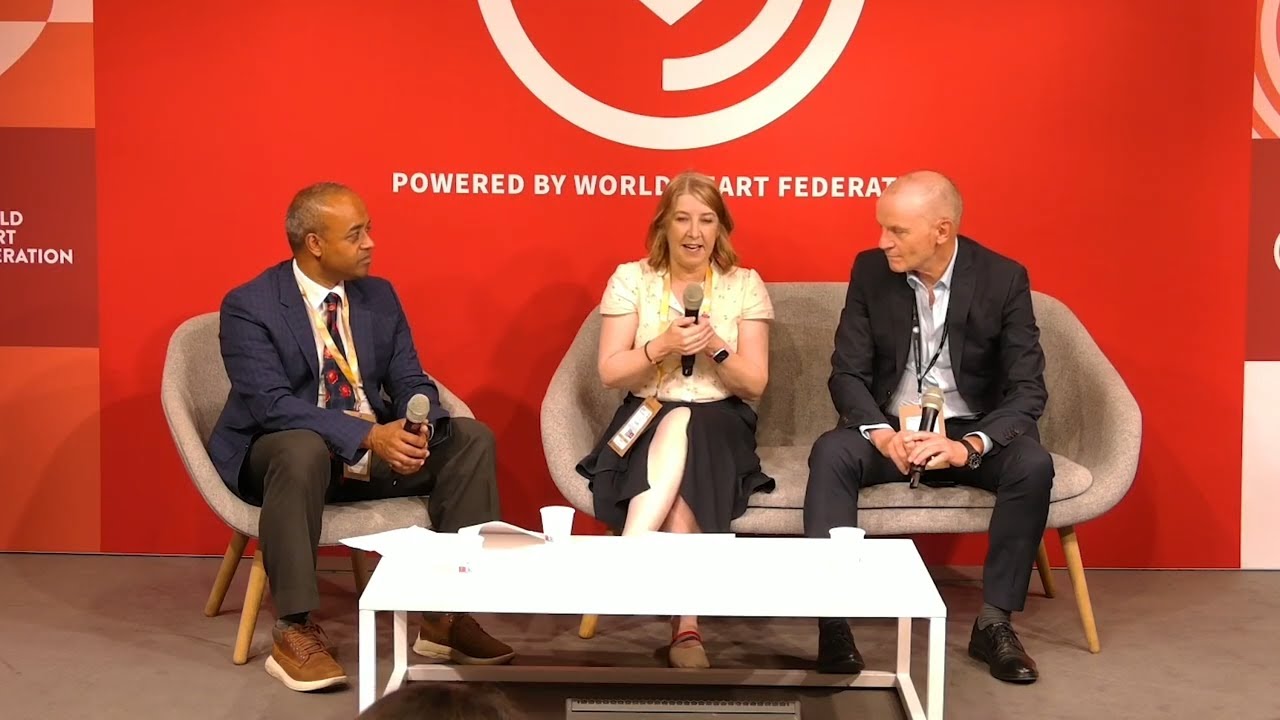
In this WHF Heart Café conversation, Amitava Banerjee (UCL) hosts Lis Neubeck and José Ramón González-Juanatey to unpack what’s new in atrial fibrillation (AF): population screening, digital health (wearables, sensors), risk stratification, rapid anticoagulation to prevent stroke, and the real-world systems needed to make care integrated, equitable, and faster.
Key Takeaways
Stroke linkage
AF is a major stroke driver; public messaging like “feel your pulse” improves awareness and early suspicion.
Confirm fast, treat fast
After AF suspicion, clinical confirmation and anticoagulation within days are critical to reduce early stroke risk.
Risk tools evolving
Changes around sex criteria in risk scores highlight the need for equitable risk stratification, especially for women.
Digital health with purpose
Wearables and novel sensors help identify AF, but data must feed a clear care pathway—not just detection.
Hypertension first
If you invest in one “Best Buy,” make it hypertension detection and control—and prevent it via diet, salt reduction, and activity.
Access & equity
Pharmacy-based screening, allied health workers, and community models improve reach in low-income and remote settings.
Integrated, multidisciplinary care
GPs and nurses anchor long-term AF care; fast-track referral and e-consults cut delays, ED visits, and mortality.
Adherence matters
Many AF patients juggle ~12 meds; deprescribing, shared decisions, and support improve NOAC adherence and outcomes.
Who should watch?
Cardiologists, GPs, nurses, pharmacists, policymakers, digital-health teams, and patient advocates working on AF screening, stroke prevention, hypertension programs, and integrated cardiovascular care.
AF Session – FAQ
- Why is rapid anticoagulation after AF detection so important?
- The first days to weeks carry the highest stroke risk. Fast confirmation and timely anticoagulation substantially reduce events.
- Do wearables solve AF detection for everyone?
- No. They can help, but yield is low in younger, low-risk groups. Use wearables selectively and link detection to a defined care pathway.
- What’s the smartest system investment?
- Hypertension detection/control and an integrated, multidisciplinary AF pathway (GP-led, nurse-supported, with fast-track cardiology input).
- How do we improve equity?
- Community and pharmacy screening, allied-health prescribers where allowed, culturally co-designed programs, and focused outreach to women and lower-SES groups.