
10:00 AM – 11:00 AM – SESSION 5
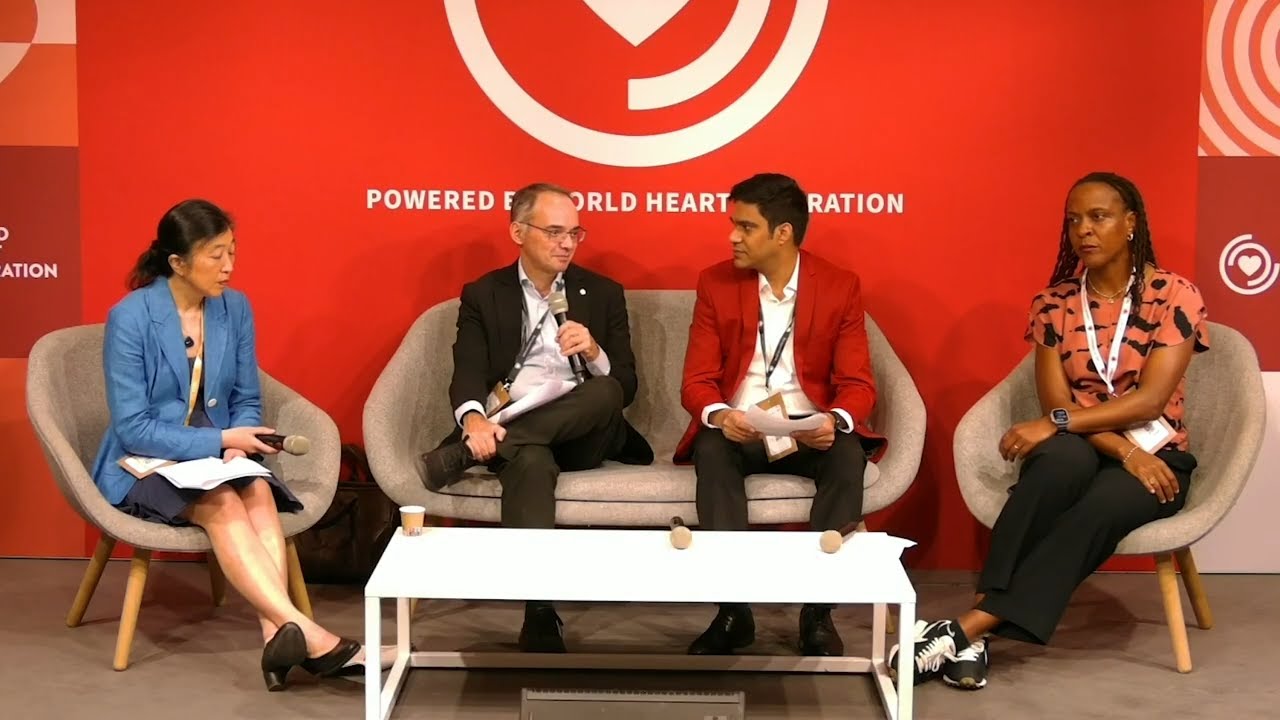
Building Stronger Systems for Secondary Prevention
Session Highlights
In this WHF Heart Café conversation, moderator Raul Santos (São Paulo/Brazil) hosts Clara Chow (University of Sydney), patient advocate Ram Khandelwal (Heart Health Ninja Foundation, India), and Sandra Ofori (McMaster University) to tackle the real-world hurdles of secondary prevention after acute coronary syndromes (ACS) and stroke—from access to essential medicines (statins, antiplatelets, BP-lowering) and continuity of care to cardiac rehabilitation, medication adherence, digital health follow-up (SMS/text), and patient-centred pathways that work in high-, middle- and low-income settings.
Key takeaways
Access is multifaceted
“Access” means affordability, availability on the shelf, last-mile distribution, and someone to prescribe—not merely drug approval.
Continuity gaps cost lives
Post-discharge drop-offs (unfilled prescriptions, no follow-up in 2–4 weeks) drive early non-adherence and recurrent events.
Adherence boosters
Start the full secondary prevention bundle in hospital; simplify regimens (e.g., fixed-dose combinations), enroll in cardiac rehab, and use reminder systems.
Primary care as the anchor
Clear discharge summaries, target-based protocols (LDL-C, BP, glucose), e-consults/virtual specialist support, and quality indicators keep care on track.
Patient literacy & language
Replace jargon (“secondary prevention”) with plain language about lifelong coronary disease and why medicines must continue even when asymptomatic.
Digital, done simply
Low-tech SMS/text programs after discharge can improve risk-factor control and behaviors; personalize content without over-complex apps.
Policy levers
Fund medicines in UHC/benefit packages, include them on national EMLs, build registries, standardize pathways, and consider multi-month dispensing.
Systems & cities matter
Invest in walkable urban design, parks, and food policies that make healthy choices feasible after MI or stroke.
Include patient voices
Patient organizations on policy boards and hospital advisory groups improve program design, adherence, and community support.
Who should watch?
Cardiologists, internists, GPs, nurses, pharmacists, rehab teams, payers, policymakers, and patient advocates working on post-MI/stroke secondary prevention, cardiac rehabilitation, digital follow-up, essential medicines access, and primary-care CVD pathways.
Secondary Prevention – FAQ
- What are the biggest barriers to effective secondary prevention?
- Multilayered access issues (cost, stock, distribution, prescriber capacity), continuity gaps after discharge, and low health literacy—especially in under-resourced settings.
- How can we boost adherence months and years after an event?
- Initiate the full regimen in hospital, use simplified regimens/fixed-dose combos, enroll in cardiac rehab, provide clear targets, and support with SMS reminders and patient communities.
- What role should primary care play?
- Primary care should anchor long-term care with standardized protocols, measurable quality indicators, and virtual cardiology back-up for complex cases.
- How do digital tools help after discharge?
- Scalable text-message programs provide bite-sized education and prompts that improve risk-factor control; prioritize personalization and simplicity over app complexity.