
12:30 – 13:30 – SESIÓN 1
Abordar la fibrilación auricular a través de los retos, las innovaciones y las oportunidades
Aspectos destacados de la sesión
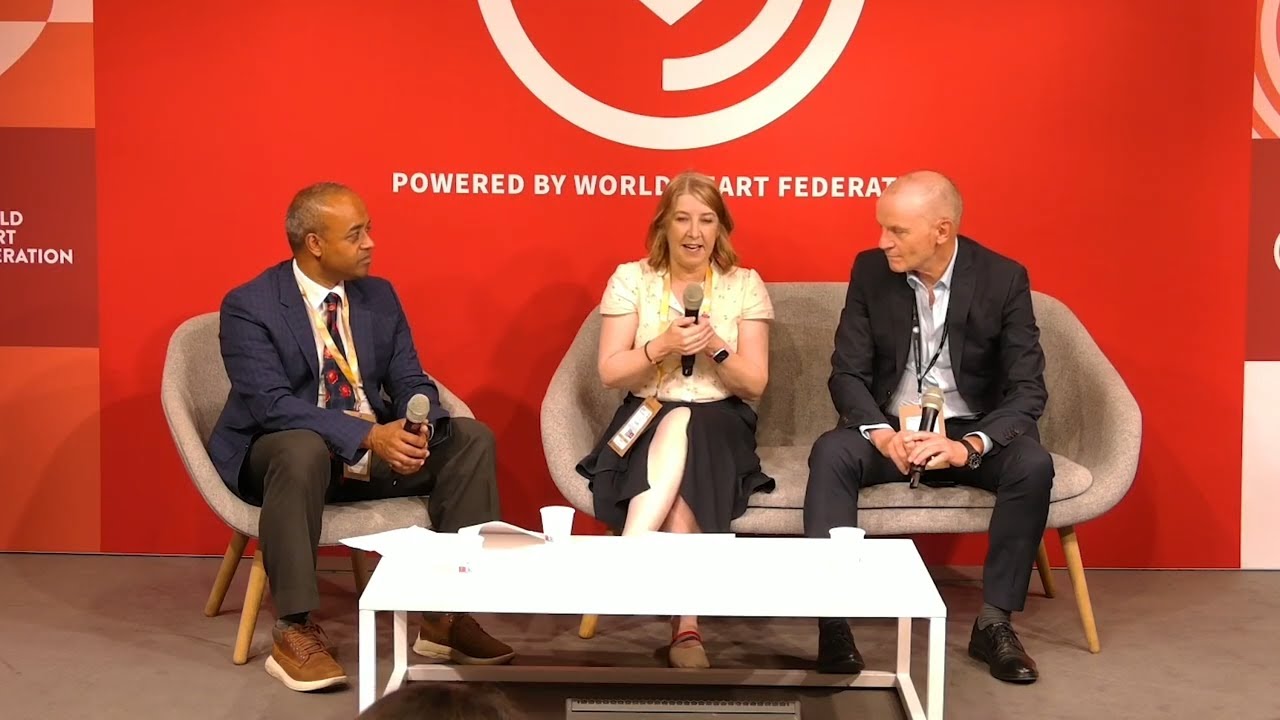
En esta conversación del «Heart Café» de la WHF,Amitava Banerjee(UCL) recibe aLis Neubecky aJosé Ramón González-Juanateypara analizar las últimas novedades en materia defibrilación auricular (FA): cribado poblacional,salud digital(dispositivos wearables, sensores),estratificación del riesgo,anticoagulación rápidapara prevenir el ictus y los sistemas del mundo real necesarios para que la atención sanitaria seaintegrada, equitativa y más rápida.
Puntos clave
Articulación de la carrera
La fibrilación auricular es uno de los principales factores de riesgo de ictus; mensajes públicos como«toma tu pulso»mejoran la concienciación y la detección precoz.
Diagnosticar rápido, tratar rápido
Tras la sospecha de fibrilación auricular,la confirmación clínicay el inicio deltratamiento anticoagulante en el plazo de unos díasson fundamentales para reducir el riesgo de sufrir un ictus precoz.
La evolución de las herramientas de gestión de riesgos
Los cambios en los criterios relacionados con el sexo en las puntuaciones de riesgo ponen de relieve la necesidad deuna estratificación equitativa del riesgo, especialmente en el caso de las mujeres.
Salud digital con un propósito
Los dispositivos wearables y los nuevos sensores ayudan aidentificar la fibrilación auricular, pero los datos deben servir para establecer unavía de atenciónclara, no solo para la detección.
Primero, la hipertensión
Si vas a invertir en una «compra inteligente», que sea enla detección y el control de la hipertensión, y en su prevención mediante la alimentación, la reducción del consumo de sal y la actividad física.
Acceso y equidad
Las pruebas de detección realizadas en farmacias, el personal sanitario auxiliar y los modelos comunitarios mejoran el alcance enentornos de bajos ingresos y zonas remotas.
Atención integrada y multidisciplinar
Los médicos de cabecera y el personal de enfermeríason el pilar de la atención a largo plazo de la fibrilación auricular; las derivaciones por vía rápida y las consultas electrónicas reducen los retrasos, las visitas al servicio de urgencias y la mortalidad.
La adherencia es importante
Muchos pacientes con fibrilación auricular tienen que compaginar unos 12 medicamentos;la reducción de la medicación, la toma de decisiones compartida y el apoyomejoran la adherencia al tratamiento con NOAC y los resultados clínicos.
¿A quién va dirigido?
Cardiólogos, médicos de cabecera, enfermeros, farmacéuticos, responsables políticos, equipos de salud digital y defensores de los pacientes que trabajan enel cribado de la fibrilación auricular,la prevención del ictus,los programas de hipertensión yla atención cardiovascular integrada.
Sesión de AF – Preguntas frecuentes
- ¿Por qué es tan importante iniciar rápidamente un tratamiento anticoagulante tras la detección de una fibrilación auricular?
- Los primeros días o semanas son los de mayor riesgo de ictus. Una confirmación rápida y un tratamiento anticoagulante oportuno reducen considerablemente la incidencia de estos episodios.
- ¿Resuelven los dispositivos wearables el problema de la detección de la fibrilación auricular para todo el mundo?
- No. Pueden ser de ayuda, pero su eficacia es baja en los grupos más jóvenes y de bajo riesgo. Utiliza los dispositivos portátiles de forma selectiva y vincula la detección a una vía de atención definida.
- ¿Cuál es la inversión más inteligente en sistemas?
- Detección y control de la hipertensión y un protocolo integrado y multidisciplinar para la fibrilación auricular (dirigido por el médico de cabecera, con el apoyo del personal de enfermería y la intervención rápida de un cardiólogo).
- ¿Cómo podemos mejorar la equidad?
- Pruebas de detección en la comunidad y en las farmacias, profesionales sanitarios afines con capacidad para recetar cuando esté permitido, programas diseñados conjuntamente teniendo en cuenta las particularidades culturales y acciones de divulgación dirigidas específicamente a las mujeres y a los grupos de menor nivel socioeconómico.