Familial Hypercholesterolemia
Familial hypercholesterolemia (FH) is a genetic condition that causes high cholesterol.
It affects approximately 34 million people worldwide. If left untreated, FH can lead to early heart disease and heart attacks.
Familial hypercholesterolemia is an inherited, metabolic disorder found in all races and ethnicities.
Individuals with FH have high levels of low-density lipoprotein (LDL) cholesterol, sometimes called “bad” cholesterol, due to a mutation in one of several genes responsible for the regulation and elimination of cholesterol. Over time, excess cholesterol will accumulate in the bloodstream and can eventually build up in the walls of the arteries (a phenomenon known as atherosclerosis). Early atherosclerosis, due to lifelong exposure to elevated levels of cholesterol, can lead to heart attacks in young adults and even children.
Familial hypercholesterolemia is largely a silent disease: it causes no symptoms. As a result, it often remains unnoticed until the emergence of complications. Once diagnosed, treatment is not systematic and sometimes suboptimal, which results in poorly controlled cholesterol levels. FH remains underdiagnosed and undertreated worldwide due to low levels of awareness, both among the general public and among healthcare professionals. Only 10% of those affected know about their condition and are adequately treated.
People Affected by FH, 2021
Hover over the countries to see the estimate number of people with FH
Source: Data from the World Heart Federation & FH Europe country mapping survey, as reported by national respondents and organizations
-
Albania
- Estimated Prevalence of FH
- 1 in less than 250 people
- Estimated total of people wth FH
- 1%
- Percentage diagnosed people who receive treatment
- 1%
-
Argentina
- Estimated Prevalence of FH
- 1 in 250 and 300 people
- Estimated total of people wth FH
- 5%
- Percentage diagnosed people who receive treatment
- 50%
-
Australia
- Estimated Prevalence of FH
- 1 in 250 and 300 people
- Estimated total of people wth FH
- 5%
- Percentage diagnosed people who receive treatment
- 80%
-
Austria
- Estimated Prevalence of FH
- 1 in 250 and 300 people
- Estimated total of people wth FH
- 15%
- Percentage diagnosed people who receive treatment
- 85%
-
Bahrain
- Estimated Prevalence of FH
- 1 in 250 and 300 people
- Estimated total of people wth FH
- 31-45%
- Percentage diagnosed people who receive treatment
- 40-55%
-
Belgium
- Estimated Prevalence of FH
- 1 in 250 people
- Estimated total of people wth FH
- 21%
- Percentage diagnosed people who receive treatment
- 21%
-
Benin
- Estimated Prevalence of FH
- 1 in less than 250 people
- Estimated total of people wth FH
- 2%
- Percentage diagnosed people who receive treatment
- 2%
-
Bosnia and Herzegovina
- Estimated Prevalence of FH
- 1 in less than 250 people
- Estimated total of people wth FH
- 4%
- Percentage diagnosed people who receive treatment
- 2%
-
Brazil
- Estimated Prevalence of FH
- 1 in 263 people
- Estimated total of people wth FH
- 1%
- Percentage diagnosed people who receive treatment
- 25%
-
Bulgaria
- Estimated Prevalence of FH
- 1 in 250 people
- Estimated total of people wth FH
- 30%
- Percentage diagnosed people who receive treatment
- 50%
-
Cambodia
- Estimated Prevalence of FH
- 1 in 250 people
- Estimated total of people wth FH
- 25%
- Percentage diagnosed people who receive treatment
- 40%
-
Canada
- Estimated Prevalence of FH
- 1 in 250 and 300 people
- Estimated total of people wth FH
- 10%
- Percentage diagnosed people who receive treatment
- 75%
-
Chile
- Estimated Prevalence of FH
- 1 in 250 people
- Estimated total of people wth FH
- 1%
- Percentage diagnosed people who receive treatment
- 90%
-
China
- Estimated Prevalence of FH
- 1 in less than 250 people
- Estimated total of people wth FH
- 1%
- Percentage diagnosed people who receive treatment
- 50%
-
Colombia
- Estimated Prevalence of FH
- 1 in 160 people
- Estimated total of people wth FH
- 10%
- Percentage diagnosed people who receive treatment
- 5%
-
Côte d'Ivoire
- Estimated Prevalence of FH
- N/A
- Estimated total of people wth FH
- 0%
- Percentage diagnosed people who receive treatment
- 0%
-
Croatia
- Estimated Prevalence of FH
- 1 in 250 people
- Estimated total of people wth FH
- 3%
- Percentage diagnosed people who receive treatment
- 3%
-
Cyprus
- Estimated Prevalence of FH
- 1 in 250 people
- Estimated total of people wth FH
- 10%
- Percentage diagnosed people who receive treatment
- 85%
-
Czech Republic
- Estimated Prevalence of FH
- 1 in 250 people
- Estimated total of people wth FH
- 16%
- Percentage diagnosed people who receive treatment
- 98%
-
Egypt
- Estimated Prevalence of FH
- 1 in 250 and 300 people
- Estimated total of people wth FH
- 10%
- Percentage diagnosed people who receive treatment
- 20%
-
Estonia
- Estimated Prevalence of FH
- 1 in 250 people
- Estimated total of people wth FH
- 2%
- Percentage diagnosed people who receive treatment
- 36%
-
French Southern and Antarctic Lands
- Estimated Prevalence of FH
- 1 in 250 and 300 people
- Estimated total of people wth FH
- 10-12%
- Percentage diagnosed people who receive treatment
- 80-85%
-
Germany
- Estimated Prevalence of FH
- 1 in 250 and 300 people
- Estimated total of people wth FH
- 5-10%
- Percentage diagnosed people who receive treatment
- 27-80%
-
Greece
- Estimated Prevalence of FH
- 1 in 250 and 300 people
- Estimated total of people wth FH
- 35%
- Percentage diagnosed people who receive treatment
- 80%
-
Hungary
- Estimated Prevalence of FH
- 1 in 250 people
- Estimated total of people wth FH
- 15%
- Percentage diagnosed people who receive treatment
- 74%
-
Iran
- Estimated Prevalence of FH
- 1 in less than 250 people
- Estimated total of people wth FH
- < 10%
- Percentage diagnosed people who receive treatment
- 50-80%
-
Iraq
- Estimated Prevalence of FH
- N/A
- Estimated total of people wth FH
- 30%
- Percentage diagnosed people who receive treatment
- 85%
-
Ireland
- Estimated Prevalence of FH
- 1 in 250 and 300 people
- Estimated total of people wth FH
- 20%
- Percentage diagnosed people who receive treatment
- 20%
-
Italy
- Estimated Prevalence of FH
- 1 in less than 250 people
- Estimated total of people wth FH
- 5%
- Percentage diagnosed people who receive treatment
- 95%
-
Japan
- Estimated Prevalence of FH
- 1 in 250 people
- Estimated total of people wth FH
- 42%
- Percentage diagnosed people who receive treatment
- 23%
-
Kazakhstan
- Estimated Prevalence of FH
- 1 in less than 250 people
- Estimated total of people wth FH
- 1%
- Percentage diagnosed people who receive treatment
- 5%
-
Kosovo
- Estimated Prevalence of FH
- N/A
- Estimated total of people wth FH
- 10%
- Percentage diagnosed people who receive treatment
- 70%
-
Kuwait
- Estimated Prevalence of FH
- 1 in 250 and 300 people
- Estimated total of people wth FH
- 7%
- Percentage diagnosed people who receive treatment
- 3%
-
Kyrgyzstan
- Estimated Prevalence of FH
- 1 in 500 people
- Estimated total of people wth FH
- 2%
- Percentage diagnosed people who receive treatment
- 26%
-
Latvia
- Estimated Prevalence of FH
- 1 in 250 people
- Estimated total of people wth FH
- 4-5.5%
- Percentage diagnosed people who receive treatment
- 4-60%
-
Lithuania
- Estimated Prevalence of FH
- 1 in less than 250 people
- Estimated total of people wth FH
- 15%
- Percentage diagnosed people who receive treatment
- 50%
-
Luxembourg
- Estimated Prevalence of FH
- 1 in 250 people
- Estimated total of people wth FH
- 6%
- Percentage diagnosed people who receive treatment
- 50%
-
North Macedonia
- Estimated Prevalence of FH
- 1 in less than 250 people
- Estimated total of people wth FH
- 1%
- Percentage diagnosed people who receive treatment
- 1%
-
Malaysia
- Estimated Prevalence of FH
- 1 in 244 to 250 people
- Estimated total of people wth FH
- 2%
- Percentage diagnosed people who receive treatment
- 52%
-
Malta
- Estimated Prevalence of FH
- N/A
- Estimated total of people wth FH
- 5%
- Percentage diagnosed people who receive treatment
- 100%
-
Mexico
- Estimated Prevalence of FH
- 1 in 250 and 300 people
- Estimated total of people wth FH
- 1-5%
- Percentage diagnosed people who receive treatment
- 50%
-
Montenegro
- Estimated Prevalence of FH
- 1 in 250 and 300 people
- Estimated total of people wth FH
- 25%
- Percentage diagnosed people who receive treatment
- 5%
-
Netherlands
- Estimated Prevalence of FH
- 1 in 250 people
- Estimated total of people wth FH
- 55%
- Percentage diagnosed people who receive treatment
- 45-92%
-
New Zealand
- Estimated Prevalence of FH
- 1 in 250 and 300 people
- Estimated total of people wth FH
- 2%
- Percentage diagnosed people who receive treatment
- 2%
-
Nigeria
- Estimated Prevalence of FH
- N/A
- Estimated total of people wth FH
- 1-5%
- Percentage diagnosed people who receive treatment
- 1-50%
-
Oman
- Estimated Prevalence of FH
- 1 in less than 250 people
- Estimated total of people wth FH
- 2%
- Percentage diagnosed people who receive treatment
- 100%
-
Pakistan
- Estimated Prevalence of FH
- 1 in 500 people
- Estimated total of people wth FH
- N/A
- Percentage diagnosed people who receive treatment
- N/A
-
Philippines
- Estimated Prevalence of FH
- 1 in 500 people
- Estimated total of people wth FH
- N/A
- Percentage diagnosed people who receive treatment
- 80%
-
Poland
- Estimated Prevalence of FH
- 1 in less than 250 people
- Estimated total of people wth FH
- 2%
- Percentage diagnosed people who receive treatment
- 90%
-
Portugal
- Estimated Prevalence of FH
- 1 in 250 and 500 people
- Estimated total of people wth FH
- 10%
- Percentage diagnosed people who receive treatment
- 10%
-
Dominican Republic
- Estimated Prevalence of FH
- N/A
- Estimated total of people wth FH
- 5%
- Percentage diagnosed people who receive treatment
- 20%
-
Romania
- Estimated Prevalence of FH
- N/A
- Estimated total of people wth FH
- 5%
- Percentage diagnosed people who receive treatment
- 50%
-
Russian Federation
- Estimated Prevalence of FH
- 1 in less than 250 people
- Estimated total of people wth FH
- 1%
- Percentage diagnosed people who receive treatment
- 50%
-
Saudi Arabia
- Estimated Prevalence of FH
- 1 in 112 people
- Estimated total of people wth FH
- 3%
- Percentage diagnosed people who receive treatment
- 62%
-
Sierra Leone
- Estimated Prevalence of FH
- N/A
- Estimated total of people wth FH
- 1%
- Percentage diagnosed people who receive treatment
- 1%
-
Slovakia
- Estimated Prevalence of FH
- 1 in 250 and 300 people
- Estimated total of people wth FH
- 6%
- Percentage diagnosed people who receive treatment
- 87%
-
Slovenia
- Estimated Prevalence of FH
- 1 in 250 and 300 people
- Estimated total of people wth FH
- 20%
- Percentage diagnosed people who receive treatment
- N/A
-
South Africa
- Estimated Prevalence of FH
- 1 in 500 people (with higher prevalence in subpopulations with founder effects)
- Estimated total of people wth FH
- 5%
- Percentage diagnosed people who receive treatment
- 96%
-
Spain
- Estimated Prevalence of FH
- 1 in less than 250 people
- Estimated total of people wth FH
- 25%
- Percentage diagnosed people who receive treatment
- 82%
-
Sweden
- Estimated Prevalence of FH
- 1 in 250 and 300 people
- Estimated total of people wth FH
- 21%
- Percentage diagnosed people who receive treatment
- 39%
-
Switzerland
- Estimated Prevalence of FH
- 1 in 125 to 135 people
- Estimated total of people wth FH
- 3%
- Percentage diagnosed people who receive treatment
- 60%
-
Tanzania
- Estimated Prevalence of FH
- N/A
- Estimated total of people wth FH
- 0%
- Percentage diagnosed people who receive treatment
- 0%
-
Thailand
- Estimated Prevalence of FH
- 1 in 300 people
- Estimated total of people wth FH
- 1%
- Percentage diagnosed people who receive treatment
- 90%
-
The Gambia
- Estimated Prevalence of FH
- N/A
- Estimated total of people wth FH
- N/A
- Percentage diagnosed people who receive treatment
- 20%
-
Tunisia
- Estimated Prevalence of FH
- 1 in less than 250 people
- Estimated total of people wth FH
- 50%
- Percentage diagnosed people who receive treatment
- 20%
-
Turkey
- Estimated Prevalence of FH
- 1 in less than 250 people
- Estimated total of people wth FH
- 12%
- Percentage diagnosed people who receive treatment
- 28%
-
Uganda
- Estimated Prevalence of FH
- N/A
- Estimated total of people wth FH
- 5%
- Percentage diagnosed people who receive treatment
- 3%
-
Ukraine
- Estimated Prevalence of FH
- 1 in less than 250 people
- Estimated total of people wth FH
- 1%
- Percentage diagnosed people who receive treatment
- 99%
-
United Arab Emirates
- Estimated Prevalence of FH
- 1 in 250 people
- Estimated total of people wth FH
- 40%
- Percentage diagnosed people who receive treatment
- 40%
-
Falkland Islands / Malvinas
- Estimated Prevalence of FH
- 1 in 250 people
- Estimated total of people wth FH
- 5%
- Percentage diagnosed people who receive treatment
- 100%
-
United States
- Estimated Prevalence of FH
- 1 in 250 people
- Estimated total of people wth FH
- 15%
- Percentage diagnosed people who receive treatment
- 65%
-
Uruguay
- Estimated Prevalence of FH
- 1 in 250 and 300 people
- Estimated total of people wth FH
- 2-10%
- Percentage diagnosed people who receive treatment
- 9-10%
-
Venezuela
- Estimated Prevalence of FH
- 1 in 250 and 300 people
- Estimated total of people wth FH
- 1%
- Percentage diagnosed people who receive treatment
- 30%
-
Vietnam
- Estimated Prevalence of FH
- N/A
- Estimated total of people wth FH
- 1%
- Percentage diagnosed people who receive treatment
- 10%
-
Yemen
- Estimated Prevalence of FH
- 1 in 250 and 300 people
- Estimated total of people wth FH
- 11%
- Percentage diagnosed people who receive treatment
- 6%
-
Zambia
- Estimated Prevalence of FH
- N/A
- Estimated total of people wth FH
- 30%
- Percentage diagnosed people who receive treatment
- 30%
-
Zimbabwe
- Estimated Prevalence of FH
- N/A
- Estimated total of people wth FH
- 5%
- Percentage diagnosed people who receive treatment
- 50%
What is cholesterol?
Cholesterol is a waxy, fat-like substance that can be found in your blood. The liver either makes cholesterol or re-uses cholesterol obtained from other sources: dietary cholesterol and saturated fat, cholesterol carried in the blood, or by reabsorbing bile from the gastrointestinal tract.
Cholesterol is crucial to the healthy functioning of the body, which needs it to build healthy cells and maeke vitamin D and other hormones. But too much cholesterol can lead to serious problems, including heart disease and stroke.
High blood cholesterol is one of the major risk factors for heart disease, heart attack and stroke.
The role of cholesterol in FH
Cholesterol is carried through your blood attached to proteins. This combination of proteins and cholesterol is called a lipoprotein. There are different types of cholesterol, based on what the lipoprotein carries, including low-density lipoprotein (LDL) and high-density lipoprotein (HDL), among others.
LDL-cholesterol is sometimes called “bad” cholesterol because it can build up inside our arteries, causing them to harden and narrow (a process called atherosclerosis) and limiting blood flow. This can ultimately lead to a heart attack or stroke.
HDL-cholesterol is often referred to as “good” cholesterol, because it carries unnecessary cholesterol away from our arteries and back to our liver, where it’s broken down and eliminated from the body. A healthy level of HDL cholesterol can protect against heart attack and stroke.
Individuals with FH are unable to properly regulate and remove the excess of “bad” cholesterol from the blood stream. Over time, cholesterol accumulates, builds up in the walls of the arteries, and leads to premature cardiovascular disease.
How is FH inherited?
FH is inherited. Typically, parents with one pathogenic mutation have a 50% chance of passing down the condition to each child. Therefore, it is essential to screen first- and second-degree relatives (i.e. parents, siblings children, aunts/uncles, nieces/nephews, and grandparents) of an individual diagnosed with FH, to detect other family members who may have inherited the disorder.
Individuals who inherited one mutation develop heterozygous familial hypercholesterolemia (HeFH), the most common form of FH. In contrast, individuals who inherited two abnormal mutations develop homozygous familial hypercholesterolemia (HoFH), a particularly rare and life-threatening form of FH, characterized by extreme levels of blood cholesterol.
Diagnosis
FH is severely underdiagnosed. Today, only 10% of individuals born with FH have been diagnosed worldwide. This is a direct consequence of low levels of awareness and education among the public and the medical community. In addition, many people with FH do not develop any visible symptoms and therefore do not seek care.
Early diagnosis and lifelong treatment of FH reduces the risk of premature cardiovascular disease and heart attacks.
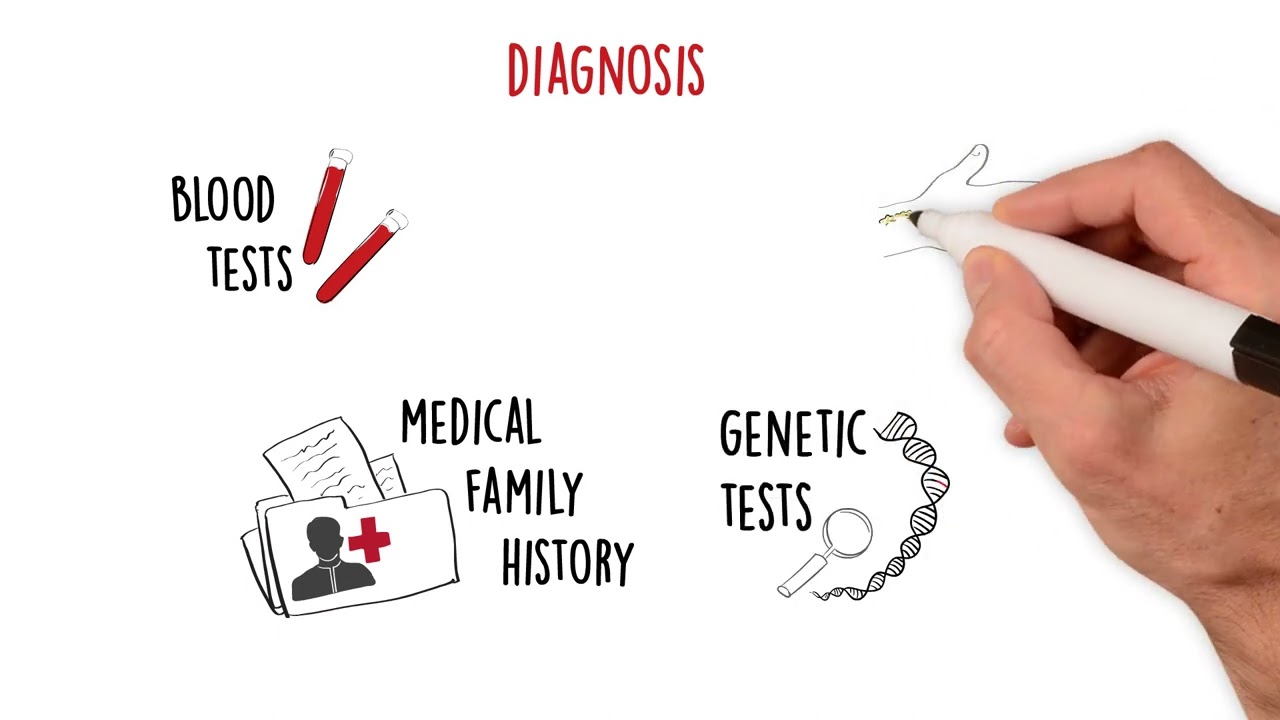
FH can be diagnosed with a simple blood test and a set of diagnostic criteria. Some untreated patients can also develop a characteristic skin condition called xanthoma, which is caused by a build-up of fat under the surface of the skin. In some settings, the diagnosis of FH can also be confirmed by a genetic test.
Treatment
Untreated men and women with heterozygous FH will generally experience a cardiovascular event by the age of 30 to 50 and 40 to 60, respectively. In contrast, individuals with homozygous FH will experience a cardiovascular event in childhood or adolescence and die before the age of 30, if left untreated.
Untreated men and women with heterozygous FH will generally experience a cardiovascular event by the age of 30 to 50 and 40 to 60, respectively. In contrast, individuals with homozygous FH will experience a cardiovascular event in childhood or adolescence and die before the age of 30, if left untreated.
Individuals with FH can live longer and healthier lives if treatment begins early in life. In the case of FH, lifestyle and diet interventions are not enough. Patients will always require cholesterol-lowering therapies. FH drug treatment focuses on reducing the extremely high levels of LDL-cholesterol. This lowers the risk of heart attack and death. Many people with FH will need to take more than one medication to control their LDL-cholesterol levels. Standard cholesterol-lowering medications act by blocking the liver’s ability to produce cholesterol, by blocking cholesterol absorption from the gut, or by increasing cholesterol uptake from the blood.
In recent years, a number of new drugs (with different mechanisms of action) have been discovered and commercialised. Most novel medications and medical interventions are generally expensive and/or resource intensive. Therefore, accessibility, availability, and affordability of high-quality drugs and care should be ensured for all patients.
Global Call to Action on FH
In 1998, the World Health Organization (WHO) officially recognized familial hypercholesterolemia as a global public health issue and published a set of 11 recommendations to address its burden. In the past two decades, tremendous scientific progress has been achieved in the fields of genetics, lipidology, cardiology, and drug development. In spite of these breakthroughs, implementation of the WHO recommendations has been largely insufficient in many countries and regions.
In January 2020, representatives from the global FH community published a Global Call to Action and highlighted a new set of recommendations, in 9 areas of priority, to reduce the clinical and public health burden of familial hypercholesterolemia:
- Raise awareness of FH
- Advocate for FH
- Screen, test, and diagnose for individuals with FH
- Manage and treat FH patients
- Guarantee care for severe and homozygous FH patients
- Develop family-based care plans for people living with FH
- Establish FH registries
- Conduct research and implement FH programmes
- Understand the value and costs of FH interventions
Latest Cholesterol News

Advocating for cholesterol control: A World Heart Federation toolkit

Cholesterol risks and remedies: A Roadmap to improve cardiovascular health

Taking a stance on cholesterol to curb heart disease

Global Call To Action on Familial Hypercholesterolemia Aims to Improve Diagnosis and Treatment Worldwide
Best practice – News article

WHF Cholesterol Roadmap presented at the Latin American Cholesterol Summit in Mexico

WHO launches plan to eliminate industrially-produced trans-fatty acids from global food supply

The World Heart Federation and the Philippine Heart Association hold Cholesterol roundtable in the Philippines

World Heart Federation attends a press conference on the alarming situation of cholesterol in Spain with our members