Hipercolesterolemia familiar
La hipercolesterolemia familiar (HF) es una enfermedad genética que provoca niveles elevadosde colesterol.
Afecta a unos 34 millones de personas en todo el mundo. Si no se trata, la HF puede provocarenfermedades cardíacasprematuras e infartos.
La hipercolesterolemia familiar es un trastorno metabólico hereditario que se da en todas las razas y etnias.
Las personas con HF presentan niveles elevados de colesterol de lipoproteínas de baja densidad (LDL), a veces denominado «colesterol malo», debido a una mutación en uno de los diversos genes responsables de la regulación y la eliminación del colesterol. Con el tiempo, el exceso de colesterol se acumula en el torrente sanguíneo y, con el paso de los años, puede depositarse en las paredes de las arterias (un fenómeno conocido como aterosclerosis). La aterosclerosis precoz, debida a la exposición a lo largo de toda la vida a niveles elevados de colesterol, puede provocar infartos de miocardio en adultos jóvenes e incluso en niños.
La hipercolesterolemia familiar es, en gran medida, una enfermedad asintomática: no presenta síntomas. Por ello, a menudo pasa desapercibida hasta que surgen complicaciones. Una vez diagnosticada, el tratamiento no es sistemático y, en ocasiones, resulta subóptimo, lo que se traduce en un control deficiente de los niveles de colesterol. La HF sigue estando infradiagnosticada e infratratada en todo el mundo debido a los bajos niveles de concienciación, tanto entre la población general como entre los profesionales sanitarios. Soloel 10 %de las personas afectadas conoce su enfermedad y recibe un tratamiento adecuado.
Personas afectadas por la FH, 2021
Pasa el cursor por encima de los países para ver el número estimado de personas con HF
Fuente: Datos de la Federación Mundial del Corazón y de la encuesta de FH Europe sobre la situación en los distintos países, según la información facilitada por los encuestados y las organizaciones nacionales.
-
Albania
- Prevalencia estimada de la HF
- 1 de cada menos de 250 personas
- Número total estimado de personas con HF
- 1%
- Porcentaje de personas diagnosticadas que reciben tratamiento
- 1%
-
Argentina
- Prevalencia estimada de la HF
- 1 de cada 250 y 300 personas
- Número total estimado de personas con HF
- 5%
- Porcentaje de personas diagnosticadas que reciben tratamiento
- 50%
-
Australia
- Prevalencia estimada de la HF
- 1 de cada 250 y 300 personas
- Número total estimado de personas con HF
- 5%
- Porcentaje de personas diagnosticadas que reciben tratamiento
- 80%
-
Austria
- Prevalencia estimada de la HF
- 1 de cada 250 y 300 personas
- Número total estimado de personas con HF
- 15%
- Porcentaje de personas diagnosticadas que reciben tratamiento
- 85%
-
Bahrein
- Prevalencia estimada de la HF
- 1 de cada 250 y 300 personas
- Número total estimado de personas con HF
- 31-45 %
- Porcentaje de personas diagnosticadas que reciben tratamiento
- 40-55 %
-
Bélgica
- Prevalencia estimada de la HF
- 1 de cada 250 personas
- Número total estimado de personas con HF
- 21%
- Porcentaje de personas diagnosticadas que reciben tratamiento
- 21%
-
Benín
- Prevalencia estimada de la HF
- 1 de cada menos de 250 personas
- Número total estimado de personas con HF
- 2%
- Porcentaje de personas diagnosticadas que reciben tratamiento
- 2%
-
Bosnia y Herzegovina
- Prevalencia estimada de la HF
- 1 de cada menos de 250 personas
- Número total estimado de personas con HF
- 4%
- Porcentaje de personas diagnosticadas que reciben tratamiento
- 2%
-
Brasil
- Prevalencia estimada de la HF
- 1 de cada 263 personas
- Número total estimado de personas con HF
- 1%
- Porcentaje de personas diagnosticadas que reciben tratamiento
- 25%
-
Bulgaria
- Prevalencia estimada de la HF
- 1 de cada 250 personas
- Número total estimado de personas con HF
- 30%
- Porcentaje de personas diagnosticadas que reciben tratamiento
- 50%
-
Camboya
- Prevalencia estimada de la HF
- 1 de cada 250 personas
- Número total estimado de personas con HF
- 25%
- Porcentaje de personas diagnosticadas que reciben tratamiento
- 40%
-
Canadá
- Prevalencia estimada de la HF
- 1 de cada 250 y 300 personas
- Número total estimado de personas con HF
- 10%
- Porcentaje de personas diagnosticadas que reciben tratamiento
- 75%
-
Chile
- Prevalencia estimada de la HF
- 1 de cada 250 personas
- Número total estimado de personas con HF
- 1%
- Porcentaje de personas diagnosticadas que reciben tratamiento
- 90%
-
China
- Prevalencia estimada de la HF
- 1 de cada menos de 250 personas
- Número total estimado de personas con HF
- 1%
- Porcentaje de personas diagnosticadas que reciben tratamiento
- 50%
-
Colombia
- Prevalencia estimada de la HF
- 1 de cada 160 personas
- Número total estimado de personas con HF
- 10%
- Porcentaje de personas diagnosticadas que reciben tratamiento
- 5%
-
Costa de Marfil
- Prevalencia estimada de la HF
- N/A
- Número total estimado de personas con HF
- 0%
- Porcentaje de personas diagnosticadas que reciben tratamiento
- 0%
-
Croacia
- Prevalencia estimada de la HF
- 1 de cada 250 personas
- Número total estimado de personas con HF
- 3%
- Porcentaje de personas diagnosticadas que reciben tratamiento
- 3%
-
Chipre
- Prevalencia estimada de la HF
- 1 de cada 250 personas
- Número total estimado de personas con HF
- 10%
- Porcentaje de personas diagnosticadas que reciben tratamiento
- 85%
-
República Checa
- Prevalencia estimada de la HF
- 1 de cada 250 personas
- Número total estimado de personas con HF
- 16%
- Porcentaje de personas diagnosticadas que reciben tratamiento
- 98%
-
Egipto
- Prevalencia estimada de la HF
- 1 de cada 250 y 300 personas
- Número total estimado de personas con HF
- 10%
- Porcentaje de personas diagnosticadas que reciben tratamiento
- 20%
-
Estonia
- Prevalencia estimada de la HF
- 1 de cada 250 personas
- Número total estimado de personas con HF
- 2%
- Porcentaje de personas diagnosticadas que reciben tratamiento
- 36%
-
Territorios Franceses del Sur y Antárticos
- Prevalencia estimada de la HF
- 1 de cada 250 y 300 personas
- Número total estimado de personas con HF
- 10-12 %
- Porcentaje de personas diagnosticadas que reciben tratamiento
- 80-85 %
-
Alemania
- Prevalencia estimada de la HF
- 1 de cada 250 y 300 personas
- Número total estimado de personas con HF
- 5-10 %
- Porcentaje de personas diagnosticadas que reciben tratamiento
- 27-80 %
-
Grecia
- Prevalencia estimada de la HF
- 1 de cada 250 y 300 personas
- Número total estimado de personas con HF
- 35%
- Porcentaje de personas diagnosticadas que reciben tratamiento
- 80%
-
Hungría
- Prevalencia estimada de la HF
- 1 de cada 250 personas
- Número total estimado de personas con HF
- 15%
- Porcentaje de personas diagnosticadas que reciben tratamiento
- 74%
-
Irán
- Prevalencia estimada de la HF
- 1 de cada menos de 250 personas
- Número total estimado de personas con HF
- < 10%
- Porcentaje de personas diagnosticadas que reciben tratamiento
- 50-80 %
-
Irak
- Prevalencia estimada de la HF
- N/A
- Número total estimado de personas con HF
- 30%
- Porcentaje de personas diagnosticadas que reciben tratamiento
- 85%
-
Irlanda
- Prevalencia estimada de la HF
- 1 de cada 250 y 300 personas
- Número total estimado de personas con HF
- 20%
- Porcentaje de personas diagnosticadas que reciben tratamiento
- 20%
-
Italia
- Prevalencia estimada de la HF
- 1 de cada menos de 250 personas
- Número total estimado de personas con HF
- 5%
- Porcentaje de personas diagnosticadas que reciben tratamiento
- 95%
-
Japón
- Prevalencia estimada de la HF
- 1 de cada 250 personas
- Número total estimado de personas con HF
- 42%
- Porcentaje de personas diagnosticadas que reciben tratamiento
- 23%
-
Kazajistán
- Prevalencia estimada de la HF
- 1 de cada menos de 250 personas
- Número total estimado de personas con HF
- 1%
- Porcentaje de personas diagnosticadas que reciben tratamiento
- 5%
-
Kosovo
- Prevalencia estimada de la HF
- N/A
- Número total estimado de personas con HF
- 10%
- Porcentaje de personas diagnosticadas que reciben tratamiento
- 70%
-
Kuwait
- Prevalencia estimada de la HF
- 1 de cada 250 y 300 personas
- Número total estimado de personas con HF
- 7%
- Porcentaje de personas diagnosticadas que reciben tratamiento
- 3%
-
Kirguistán
- Prevalencia estimada de la HF
- 1 de cada 500 personas
- Número total estimado de personas con HF
- 2%
- Porcentaje de personas diagnosticadas que reciben tratamiento
- 26%
-
Letonia
- Prevalencia estimada de la HF
- 1 de cada 250 personas
- Número total estimado de personas con HF
- 4-5,5 %
- Porcentaje de personas diagnosticadas que reciben tratamiento
- 4-60 %
-
Lituania
- Prevalencia estimada de la HF
- 1 de cada menos de 250 personas
- Número total estimado de personas con HF
- 15%
- Porcentaje de personas diagnosticadas que reciben tratamiento
- 50%
-
Luxemburgo
- Prevalencia estimada de la HF
- 1 de cada 250 personas
- Número total estimado de personas con HF
- 6%
- Porcentaje de personas diagnosticadas que reciben tratamiento
- 50%
-
Macedonia del Norte
- Prevalencia estimada de la HF
- 1 de cada menos de 250 personas
- Número total estimado de personas con HF
- 1%
- Porcentaje de personas diagnosticadas que reciben tratamiento
- 1%
-
Malasia
- Prevalencia estimada de la HF
- 1 de cada 244 a 250 personas
- Número total estimado de personas con HF
- 2%
- Porcentaje de personas diagnosticadas que reciben tratamiento
- 52%
-
Malta
- Prevalencia estimada de la HF
- N/A
- Número total estimado de personas con HF
- 5%
- Porcentaje de personas diagnosticadas que reciben tratamiento
- 100%
-
México
- Prevalencia estimada de la HF
- 1 de cada 250 y 300 personas
- Número total estimado de personas con HF
- 1-5 %
- Porcentaje de personas diagnosticadas que reciben tratamiento
- 50%
-
Montenegro
- Prevalencia estimada de la HF
- 1 de cada 250 y 300 personas
- Número total estimado de personas con HF
- 25%
- Porcentaje de personas diagnosticadas que reciben tratamiento
- 5%
-
Países Bajos
- Prevalencia estimada de la HF
- 1 de cada 250 personas
- Número total estimado de personas con HF
- 55%
- Porcentaje de personas diagnosticadas que reciben tratamiento
- 45-92 %
-
Nueva Zelanda
- Prevalencia estimada de la HF
- 1 de cada 250 y 300 personas
- Número total estimado de personas con HF
- 2%
- Porcentaje de personas diagnosticadas que reciben tratamiento
- 2%
-
Nigeria
- Prevalencia estimada de la HF
- N/A
- Número total estimado de personas con HF
- 1-5 %
- Porcentaje de personas diagnosticadas que reciben tratamiento
- 1-50 %
-
Omán
- Prevalencia estimada de la HF
- 1 de cada menos de 250 personas
- Número total estimado de personas con HF
- 2%
- Porcentaje de personas diagnosticadas que reciben tratamiento
- 100%
-
Pakistán
- Prevalencia estimada de la HF
- 1 de cada 500 personas
- Número total estimado de personas con HF
- N/A
- Porcentaje de personas diagnosticadas que reciben tratamiento
- N/A
-
Filipinas
- Prevalencia estimada de la HF
- 1 de cada 500 personas
- Número total estimado de personas con HF
- N/A
- Porcentaje de personas diagnosticadas que reciben tratamiento
- 80%
-
Polonia
- Prevalencia estimada de la HF
- 1 de cada menos de 250 personas
- Número total estimado de personas con HF
- 2%
- Porcentaje de personas diagnosticadas que reciben tratamiento
- 90%
-
Portugal
- Prevalencia estimada de la HF
- 1 de cada 250 y 500 personas
- Número total estimado de personas con HF
- 10%
- Porcentaje de personas diagnosticadas que reciben tratamiento
- 10%
-
República Dominicana
- Prevalencia estimada de la HF
- N/A
- Número total estimado de personas con HF
- 5%
- Porcentaje de personas diagnosticadas que reciben tratamiento
- 20%
-
Rumanía
- Prevalencia estimada de la HF
- N/A
- Número total estimado de personas con HF
- 5%
- Porcentaje de personas diagnosticadas que reciben tratamiento
- 50%
-
Federación Rusa
- Prevalencia estimada de la HF
- 1 de cada menos de 250 personas
- Número total estimado de personas con HF
- 1%
- Porcentaje de personas diagnosticadas que reciben tratamiento
- 50%
-
Arabia Saudí
- Prevalencia estimada de la HF
- 1 de cada 112 personas
- Número total estimado de personas con HF
- 3%
- Porcentaje de personas diagnosticadas que reciben tratamiento
- 62%
-
Sierra Leona
- Prevalencia estimada de la HF
- N/A
- Número total estimado de personas con HF
- 1%
- Porcentaje de personas diagnosticadas que reciben tratamiento
- 1%
-
Eslovaquia
- Prevalencia estimada de la HF
- 1 de cada 250 y 300 personas
- Número total estimado de personas con HF
- 6%
- Porcentaje de personas diagnosticadas que reciben tratamiento
- 87%
-
Eslovenia
- Prevalencia estimada de la HF
- 1 de cada 250 y 300 personas
- Número total estimado de personas con HF
- 20%
- Porcentaje de personas diagnosticadas que reciben tratamiento
- N/A
-
Sudáfrica
- Prevalencia estimada de la HF
- 1 de cada 500 personas (con una prevalencia mayor en subpoblaciones con efectos fundadores)
- Número total estimado de personas con HF
- 5%
- Porcentaje de personas diagnosticadas que reciben tratamiento
- 96%
-
España
- Prevalencia estimada de la HF
- 1 de cada menos de 250 personas
- Número total estimado de personas con HF
- 25%
- Porcentaje de personas diagnosticadas que reciben tratamiento
- 82%
-
Suecia
- Prevalencia estimada de la HF
- 1 de cada 250 y 300 personas
- Número total estimado de personas con HF
- 21%
- Porcentaje de personas diagnosticadas que reciben tratamiento
- 39%
-
Suiza
- Prevalencia estimada de la HF
- 1 de cada 125 a 135 personas
- Número total estimado de personas con HF
- 3%
- Porcentaje de personas diagnosticadas que reciben tratamiento
- 60%
-
Tanzania
- Prevalencia estimada de la HF
- N/A
- Número total estimado de personas con HF
- 0%
- Porcentaje de personas diagnosticadas que reciben tratamiento
- 0%
-
Tailandia
- Prevalencia estimada de la HF
- 1 de cada 300 personas
- Número total estimado de personas con HF
- 1%
- Porcentaje de personas diagnosticadas que reciben tratamiento
- 90%
-
Gambia
- Prevalencia estimada de la HF
- N/A
- Número total estimado de personas con HF
- N/A
- Porcentaje de personas diagnosticadas que reciben tratamiento
- 20%
-
Túnez
- Prevalencia estimada de la HF
- 1 de cada menos de 250 personas
- Número total estimado de personas con HF
- 50%
- Porcentaje de personas diagnosticadas que reciben tratamiento
- 20%
-
Turquía
- Prevalencia estimada de la HF
- 1 de cada menos de 250 personas
- Número total estimado de personas con HF
- 12%
- Porcentaje de personas diagnosticadas que reciben tratamiento
- 28%
-
Uganda
- Prevalencia estimada de la HF
- N/A
- Número total estimado de personas con HF
- 5%
- Porcentaje de personas diagnosticadas que reciben tratamiento
- 3%
-
Ucrania
- Prevalencia estimada de la HF
- 1 de cada menos de 250 personas
- Número total estimado de personas con HF
- 1%
- Porcentaje de personas diagnosticadas que reciben tratamiento
- 99%
-
Emiratos Árabes Unidos
- Prevalencia estimada de la HF
- 1 de cada 250 personas
- Número total estimado de personas con HF
- 40%
- Porcentaje de personas diagnosticadas que reciben tratamiento
- 40%
-
Islas Falkland / Malvinas
- Prevalencia estimada de la HF
- 1 de cada 250 personas
- Número total estimado de personas con HF
- 5%
- Porcentaje de personas diagnosticadas que reciben tratamiento
- 100%
-
Estados Unidos
- Prevalencia estimada de la HF
- 1 de cada 250 personas
- Número total estimado de personas con HF
- 15%
- Porcentaje de personas diagnosticadas que reciben tratamiento
- 65%
-
Uruguay
- Prevalencia estimada de la HF
- 1 de cada 250 y 300 personas
- Número total estimado de personas con HF
- 2-10 %
- Porcentaje de personas diagnosticadas que reciben tratamiento
- 9-10 %
-
Venezuela
- Prevalencia estimada de la HF
- 1 de cada 250 y 300 personas
- Número total estimado de personas con HF
- 1%
- Porcentaje de personas diagnosticadas que reciben tratamiento
- 30%
-
Vietnam
- Prevalencia estimada de la HF
- N/A
- Número total estimado de personas con HF
- 1%
- Porcentaje de personas diagnosticadas que reciben tratamiento
- 10%
-
Yemen
- Prevalencia estimada de la HF
- 1 de cada 250 y 300 personas
- Número total estimado de personas con HF
- 11%
- Porcentaje de personas diagnosticadas que reciben tratamiento
- 6%
-
Zambia
- Prevalencia estimada de la HF
- N/A
- Número total estimado de personas con HF
- 30%
- Porcentaje de personas diagnosticadas que reciben tratamiento
- 30%
-
Zimbabue
- Prevalencia estimada de la HF
- N/A
- Número total estimado de personas con HF
- 5%
- Porcentaje de personas diagnosticadas que reciben tratamiento
- 50%
¿Qué es el colesterol?
El colesterol es una sustancia cerosa, similar a la grasa, que se encuentra en la sangre. El hígado produce colesterol o reutiliza el que obtiene de otras fuentes: el colesterol de la dieta y las grasas saturadas, el colesterol transportado por la sangre o el que se reabsorbe de la bilis procedente del tracto gastrointestinal.
El colesterol es fundamental para el buen funcionamiento del organismo, que lo necesita para formar células sanas y producir vitamina D y otras hormonas. Sin embargo, un exceso de colesterol puede provocar problemas graves, como enfermedades cardíacas y accidentes cerebrovasculares.
El colesterolalto es uno de losprincipales factores de riesgode enfermedades cardíacas, infarto de miocardio y accidente cerebrovascular.
El papel del colesterol en la HF
El colesterol se transporta por la sangre unido a proteínas. Esta combinación de proteínas y colesterol se denomina lipoproteína. Existen diferentes tipos de colesterol, en función de lo que transporte la lipoproteína, entre los que se incluyen la lipoproteína de baja densidad (LDL) y la lipoproteína de alta densidad (HDL), entre otros.
El colesterol LDLse conoce a veces como el colesterol «malo», ya que puede acumularse en el interior de las arterias, provocando su endurecimiento y estrechamiento (un proceso denominado aterosclerosis) y limitando el flujo sanguíneo. Esto puede acabar provocando un infarto de miocardio o un ictus.
El colesterol HDLsuele denominarse «colesterol bueno», ya que se encarga de retirar el colesterol sobrante de nuestras arterias y transportarlo de vuelta al hígado, donde se descompone y se elimina del organismo. Un nivel saludable de colesterol HDL puede proteger contra el infarto de miocardio y el ictus.
Las personas con HF son incapaces de regular y eliminar adecuadamente el exceso de colesterol «malo» del torrente sanguíneo. Con el tiempo, el colesterol se acumula en las paredes de las arterias y provoca enfermedades cardiovasculares prematuras.
¿Cómo se hereda la FH?
La HF es hereditaria. Por lo general, los padres que presentan una mutación patógena tienen un 50 % de probabilidades de transmitir la enfermedad a cada uno de sus hijos. Por lo tanto, es fundamental realizar pruebas de detección a los familiares de primer y segundo grado (es decir, padres, hermanos, hijos, tíos, sobrinos y abuelos) de una persona a la que se le haya diagnosticado HF, con el fin de identificar a otros miembros de la familia que puedan haber heredado la enfermedad.
Las personas que heredan una mutación desarrollan hipercolesterolemia familiar heterocigótica (HeFH), la forma más común de FH. Por el contrario, las personas que heredan dos mutaciones anómalas desarrollan hipercolesterolemia familiar homocigótica (HoFH), una forma de FH especialmente rara y potencialmente mortal, caracterizada por niveles extremadamente elevados de colesterol en sangre.
Diagnóstico
La HF está muy infradiagnosticada. En la actualidad, solo el 10 % de las personas que nacen con HF han sido diagnosticadas en todo el mundo. Esto es una consecuencia directa de los bajos niveles de concienciación y educación tanto entre la población general como entre la comunidad médica. Además, muchas personas con HF no desarrollan ningún síntoma visible y, por lo tanto, no acuden al médico.
El diagnóstico precoz y el tratamiento de por vida de la HF reducen el riesgo de padecer enfermedades cardiovasculares prematuras y infartos de miocardio.
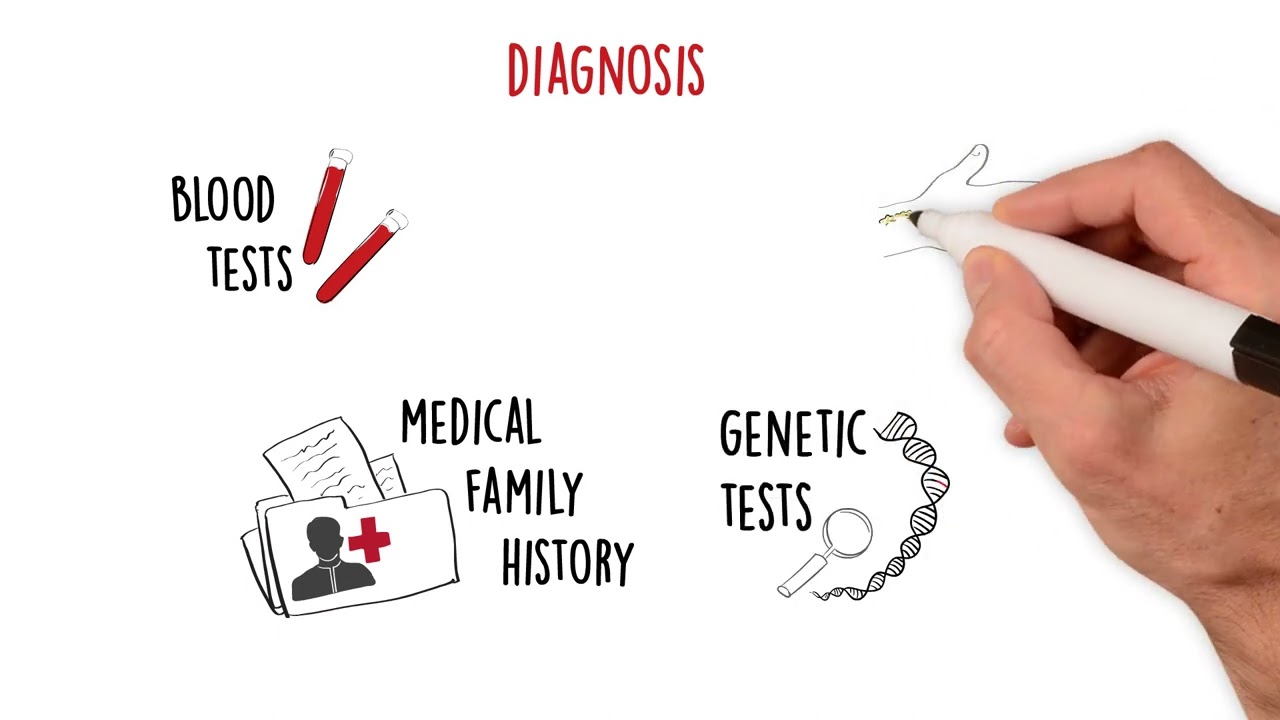
La HF se puede diagnosticar mediante un sencillo análisis de sangre y una serie de criterios diagnósticos. Algunos pacientes no tratados también pueden desarrollar una afección cutánea característica denominada xantoma, causada por una acumulación de grasa bajo la superficie de la piel. En algunos casos, el diagnóstico de la HF también se puede confirmar mediante una prueba genética.
Tratamiento
Los hombres y las mujeres con HF heterocigótica que no reciben tratamiento suelen sufrir un episodio cardiovascular entre los 30 y los 50 años y entre los 40 y los 60 años, respectivamente. Por el contrario, las personas con HF homocigótica sufren un episodio cardiovascular durante la infancia o la adolescencia y fallecen antes de cumplir los 30 años si no reciben tratamiento.
Los hombres y las mujeres con HF heterocigótica que no reciben tratamiento suelen sufrir un episodio cardiovascular entre los 30 y los 50 años y entre los 40 y los 60 años, respectivamente. Por el contrario, las personas con HF homocigótica sufren un episodio cardiovascular durante la infancia o la adolescencia y fallecen antes de cumplir los 30 años si no reciben tratamiento.
Las personas con HF pueden llevar una vida más larga y saludable si el tratamiento se inicia a una edad temprana. En el caso de la HF, las medidas relacionadas con el estilo de vida y la alimentación no son suficientes. Los pacientes siempre necesitarán tratamientos para reducir el colesterol. El tratamiento farmacológico de la HF se centra en reducir los niveles extremadamente altos de colesterol LDL. Esto reduce el riesgo de infarto de miocardio y de muerte. Muchas personas con HF necesitarán tomar más de un medicamento para controlar sus niveles de colesterol LDL. Los medicamentos hipocolesterolemiantes habituales actúan bloqueando la capacidad del hígado para producir colesterol, bloqueando la absorción de colesterol en el intestino o aumentando la captación de colesterol de la sangre.
En los últimos años se han descubierto y comercializado varios medicamentos nuevos (con distintos mecanismos de acción). La mayoría de los medicamentos e intervenciones médicas novedosos suelen ser caros y/o requerir un gran número de recursos. Por lo tanto, es necesario garantizar a todos los pacientes el acceso, la disponibilidad y la asequibilidad de medicamentos y una atención sanitaria de alta calidad.
Llamamiento mundial a la acción sobre la HF
En 1998, laOrganización Mundial de la Salud (OMS) reconocióoficialmente la hipercolesterolemia familiarcomo un problema de salud pública a escala mundial y publicó un conjunto de 11 recomendaciones para hacer frente a su impacto. En las últimas dos décadas se han logrado enormes avances científicos en los campos de la genética, la lipidología, la cardiología y el desarrollo de fármacos. A pesar de estos avances, la aplicación de las recomendaciones de la OMS ha sido en gran medida insuficiente en muchos países y regiones.
En enero de 2020, representantes de la comunidad mundial dedicada a la hipercolesterolemia familiar publicaron un«Llamamiento mundial a la acción»y presentaron un nuevo conjunto de recomendaciones, en nueve áreas prioritarias, para reducir la carga clínica y de salud pública que supone la hipercolesterolemia familiar:
- Sensibilizar sobre la HF
- Defensor de la FH
- Realizar pruebas de detección, pruebas y diagnósticos a las personas con HF
- Gestionar y tratar a los pacientes con HF
- Garantizar la atención a los pacientes con HF grave y homocigótica
- Elaborar planes de atención centrados en la familia para las personas que padecen FH
- Crear registros de HF
- Llevar a cabo investigaciones y poner en marcha programas de salud familiar
- Comprender el valor y los costes de las intervenciones de FH
Últimas noticias sobre el colesterol

Promoción del control del colesterol: un conjunto de herramientas de la Federación Mundial del Corazón

Riesgos y soluciones relacionados con el colesterol: una guía para mejorar la salud cardiovascular

Adoptar una postura respecto al colesterol para reducir las enfermedades cardíacas

La «Convocatoria mundial a la acción sobre la hipercolesterolemia familiar» tiene como objetivo mejorar el diagnóstico y el tratamiento en todo el mundo
Buenas prácticas – Artículo de prensa

La «Hoja de ruta sobre el colesterol» de la WHF se presentó en la Cumbre Latinoamericana sobre el Colesterol celebrada en México

La OMS pone en marcha un plan para eliminar los ácidos grasos trans de origen industrial del suministro alimentario mundial

La Federación Mundial del Corazón y la Asociación Filipina del Corazón organizan una mesa redonda sobre el colesterol en Filipinas

La Federación Mundial del Corazón asiste a una rueda de prensa sobre la alarmante situación del colesterol en España junto con nuestros miembros