
10:00 – 11:00 – SESIÓN 5
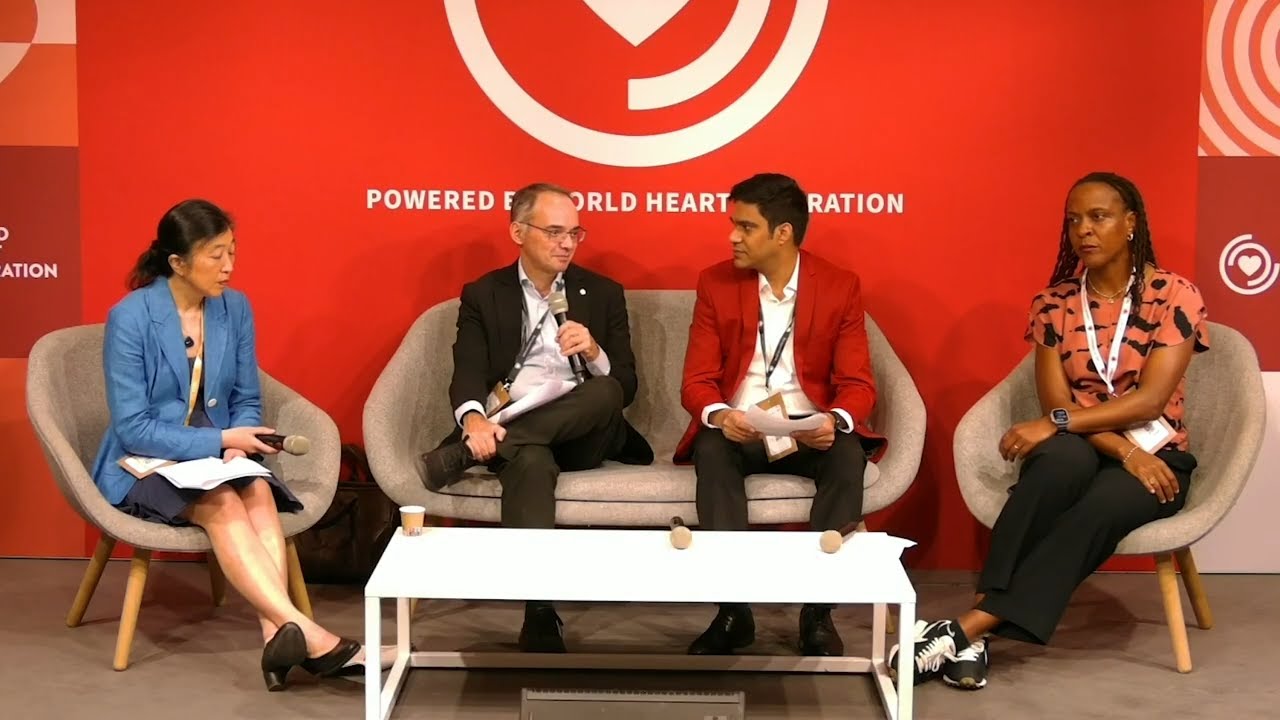
Creación de sistemas más sólidos para la prevención secundaria
Aspectos destacados de la sesión
En esta conversación del «Heart Café» de la WHF, el moderadorRaúl Santos(São Paulo, Brasil) recibe aClara Chow(Universidad de Sídney), al defensor de los pacientesRam Khandelwal(Fundación Heart Health Ninja, India) y aSandra Ofori(Universidad McMaster) para abordar los obstáculos reales dela prevención secundaria tras los síndromes coronarios agudos (SCA) y el ictus—desdeel acceso a los medicamentos esenciales (estatinas, antiagregantes plaquetarios, antihipertensivos) yla continuidad asistencial,hastala rehabilitación cardíaca,la adherencia a la medicación,el seguimiento sanitario digital(SMS/mensajes de texto) ylos itinerarios centrados en el pacienteque funcionan en entornos de ingresos altos, medios y bajos.
Puntos clave
El acceso tiene múltiples facetas
Por «acceso» se entiendela asequibilidad,la disponibilidad en las estanterías,la distribución hasta el punto final y la existencia deun profesional que lo recete, y no solo la autorización de comercialización del medicamento.
Las interrupciones en la continuidad de la atención cuestan vidas
Los abandonos tras el alta (recetas sin surtir, falta de seguimiento en un plazo de 2 a 4 semanas) provocan un incumplimiento temprano del tratamiento y la reaparición de los episodios.
Medidas para mejorar la adherencia
Iniciar elpaquete completode prevención secundaria durante la estancia hospitalaria; simplificar los tratamientos (por ejemplo,con combinaciones de dosis fijas), inscribir al paciente enun programa de rehabilitación cardíaca y utilizarsistemas de recordatorio.
La atención primaria como pilar fundamental
Los informes de alta claros, los protocolos basados en objetivos (colesterol LDL, presión arterial, glucosa),las consultas electrónicas y el apoyo virtual de especialistas, así como los indicadores de calidad, garantizan que la atención sanitaria se desarrolle según lo previsto.
Conocimientos de los pacientes y lengua
Sustituir la jerga («prevención secundaria») porun lenguaje sencilloque explique en qué consiste la enfermedad coronaria crónica y por qué hay que seguir tomando la medicación incluso cuando no se presentan síntomas.
Lo digital, de forma sencilla
Los programassencillosde SMS o mensajes de textotras el alta hospitalaria pueden mejorar el control de los factores de riesgo y los hábitos; permiten personalizar el contenido sin necesidad de aplicaciones excesivamente complejas.
Instrumentos de política
Financiar los medicamentos en el marco dela cobertura sanitaria universal (CSU) o los paquetes de prestaciones, incluirlos enlas listas nacionales de medicamentos esenciales, crearregistros, estandarizar los protocolos clínicos y considerar la posibilidad dedispensar medicamentos para varios meses.
Los sistemas y las ciudades son importantes
Invertir enun diseño urbano que favorezca los desplazamientos a pie, en parques y en políticas alimentarias que faciliten la adopción de hábitos saludables tras un infarto de miocardio o un ictus.
Incluir las opiniones de los pacientes
La participación de las organizaciones de pacientes en los consejos de políticas y en los grupos consultivos de los hospitales mejora el diseño de los programas, el cumplimiento de los mismos y el apoyo de la comunidad.
¿A quién va dirigido?
Cardiólogos, internistas, médicos de cabecera, enfermeros, farmacéuticos, equipos de rehabilitación, entidades aseguradoras, responsables políticos y defensores de los derechos de los pacientes que trabajan enla prevención secundaria tras un infarto de miocardio o un ictus,la rehabilitación cardíaca,el seguimiento digital,el acceso a los medicamentos esenciales ylas vías de atención primaria para las enfermedades cardiovasculares.
Prevención secundaria – Preguntas frecuentes
- ¿Cuáles son los principales obstáculos para una prevención secundaria eficaz?
- Problemasde accesoen múltiples niveles (coste, existencias, distribución y capacidad de los prescriptores),brechas en la continuidad asistencialtras el alta y un bajo nivel dealfabetización sanitaria, especialmente en entornos con escasos recursos.
- ¿Cómo podemos fomentar el cumplimiento del tratamiento meses y años después de un episodio?
- Iniciar el tratamiento completo en el hospital, utilizartratamientos simplificados o combinaciones de dosis fijas, inscribir al paciente enun programa de rehabilitación cardíaca, establecerobjetivos claros y ofrecer apoyo medianterecordatorios por SMSy comunidades de pacientes.
- ¿Qué papel debería desempeñar la atención primaria?
- La atención primaria debe servir de base para la atención a largo plazomediante protocolos estandarizados, indicadores de calidad cuantificables yapoyo cardiológico virtualpara los casos complejos.
- ¿Cómo ayudan las herramientas digitales tras el alta hospitalaria?
- Los programas de mensajes de textoadaptables ofrecen contenidos educativos concisos y recordatorios que mejoran el control de los factores de riesgo; dan prioridad a la personalización y la sencillez frente a la complejidad de las aplicaciones.