
Advancing Well-Being through Action on the Determinants of NCDs
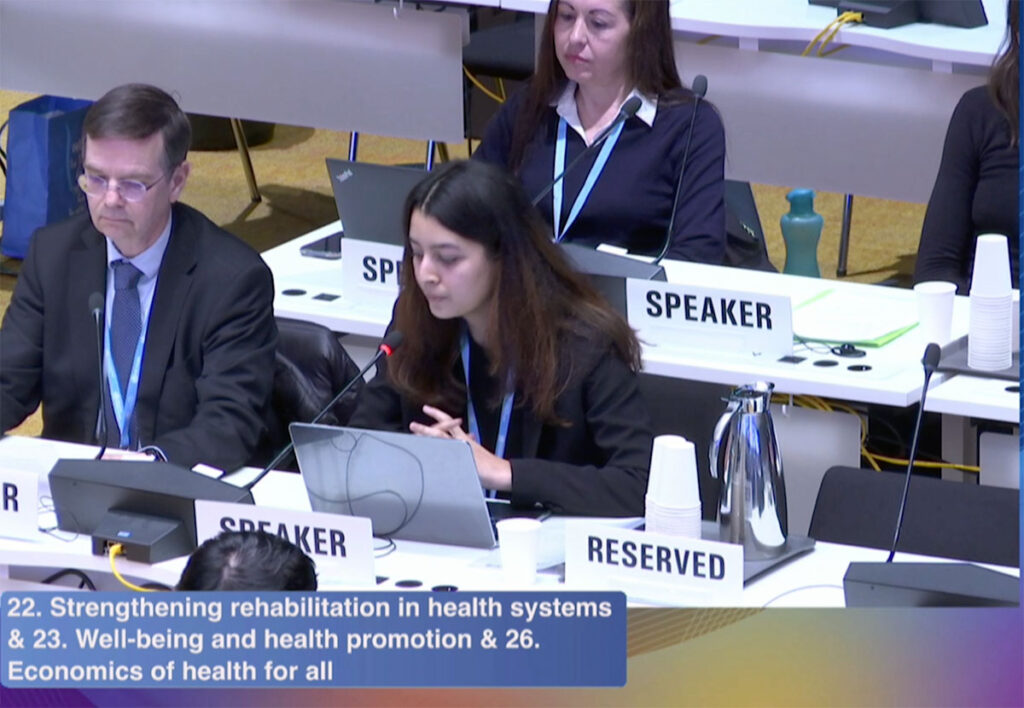
This constituency statement was led and delivered by the World Heart Federation under agenda item 23 – Well-Being and Health Promotion – at the 158th session of the WHO Executive Board.
This statement is delivered by the World Heart Federation on behalf of…
- World Stroke Organization (WSO)
- International Society on Thrombosis and Haemostasis (ISTH)
- International Diabetes Federation (IDF)
- International Alliance of Patients’ Organizations (IAPO)
- NCD Alliance (NCDA)
- International Society of Nephrology (ISN)
- World Cancer Research Fund International (WCRF)
Honourable Chair,
Distinguished Delegates,
Noncommunicable diseases – including cancers, cardiovascular disease, stroke, hypertension, kidney disease, diabetes, and other circulatory health conditions – remain the leading cause of death globally. The unequal distribution of NCD incidence, prevalence, and outcomes reflects deep and persistent inequities shaped by income, education, gender, geography, and exposure to harmful environments, both within and across countries, with a disproportionate impact on disadvantaged populations. Key risk factors – such as air pollution, tobacco, alcohol consumption, unhealthy diets, physical inactivity, loneliness, and social isolation – are strongly influenced by social, commercial, and environmental conditions.
The widespread availability, affordability, and marketing of harmful commodities contribute to poorer well-being, especially in low- and middle-income countries and among young people. Commercial influence and vested interests continue to delay, weaken, and interfere with the effective implementation of evidence-based and life-saving public health policies. Measures that protect public policy from conflicts of interest and prioritize public health over short-term profits are essential components of public health governance.
To achieve population well-being, we urge Member States to pursue urgent and sustained action to address the social, commercial, and environmental determinants of health across the life course. We commend WHO for its strong focus on whole-of-government and whole-of-society approaches, and optimising health co-benefits to promote healthy environments and reduce exposure to risk factors.
We encourage WHO and Member States to strengthen alignment between the well-being framework and the upcoming WHO’s strategy on economics of health for all, as well as existing commitments on NCD prevention and control, universal health coverage, action on the social and commercial determinants of health, and emergency preparedness and response efforts, with particular attention to vulnerable populations.
Thank you.