Paid and presented by Shockwave Medical
Patients suffering from peripheral artery disease (PAD) are increasingly being offered a treatment by doctors called intravascular lithotripsy (IVL). Developed by Shockwave Medical, part of Johnson & Johnson Medtech, Shockwave IVL was adapted from extracorporeal lithotripsy, a treatment that uses sound waves to break down kidney stones. The goal was to use similar acoustic wave technology to modify calcium in diseased arteries without damaging surrounding tissues.
IVL is used to treat cardiovascular diseases complicated by the buildup of calcium on the artery walls, called calcification. Calcification both restricts blood flow and limits the effectiveness of conventional treatments for PAD, including balloon dilatation (angioplasty) and stenting.

PAD is a condition where cholesterol-rich deposits accumulate in the arteries, forming narrowings. Such deposits may become calcified, restricting blood and oxygen flow to the limbs, over time leading to severe leg pain, limited mobility, and tissue damage and sometimes necessitating amputation. PAD primarily affects older adults and people with diabetes or kidney disease, but it is also tied to other risk factors including smoking and a genetic history of PAD.
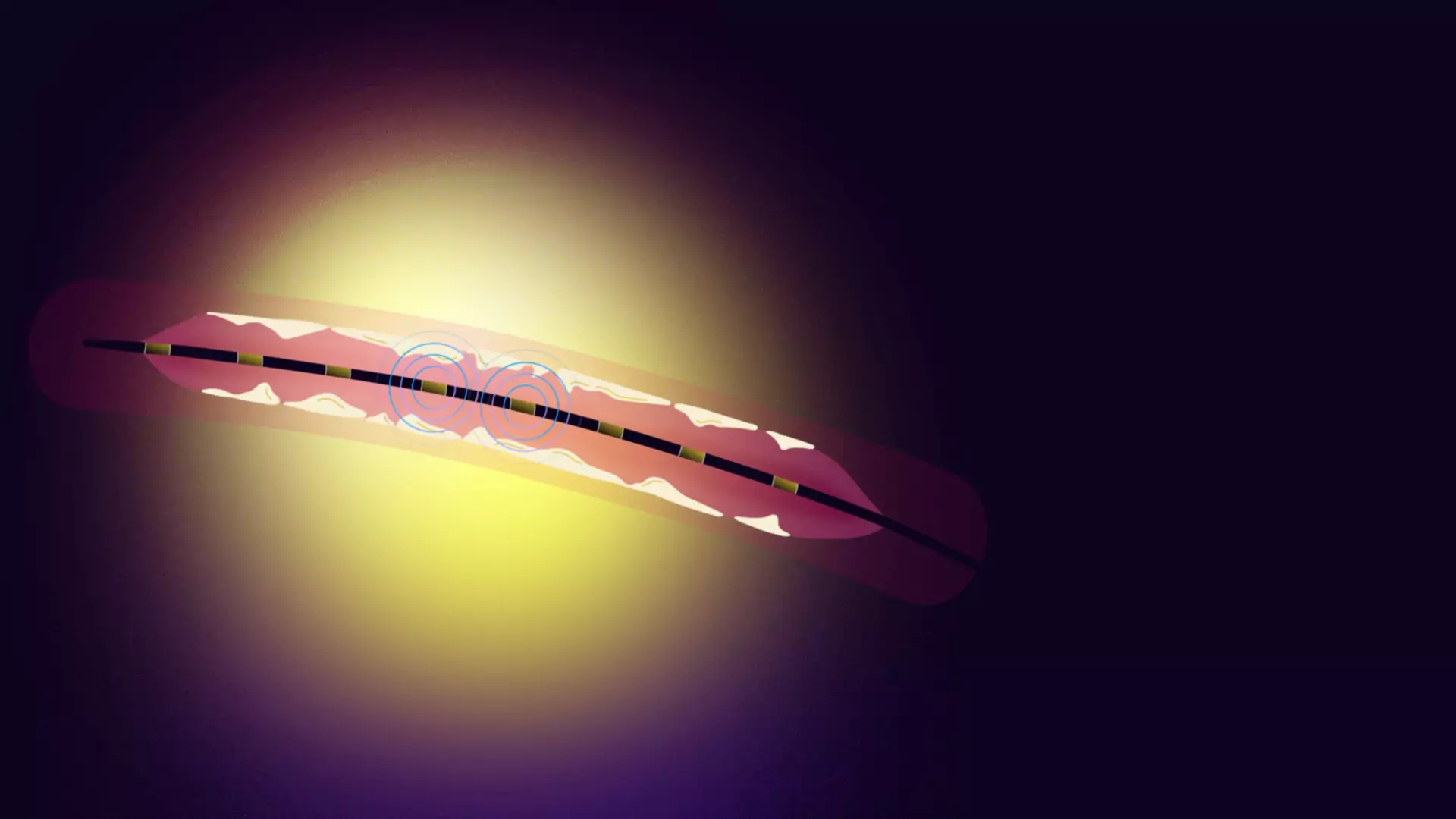
IVL cracks calcium through the generation of shock waves, a form of ultrasonic acoustic pressure wave, with a lower pressure peak than extracorporeal lithotripsy. IVL is delivered by emitters placed within a balloon angioplasty catheter and can be used alone or in conjunction with other treatments such as atherectomy, angioplasty or stenting.
“The balloon is inflated at low pressure to avoid vessel damage, and an electrical current is passed to the emitter, creating an acoustic pressure wave,” says Dr Nick West, chief medical officer at Shockwave Medical. “That pressure wave is what cracks the calcium. What you’re left with is a blood vessel that becomes more compliant – less stiff, if you like – so that you can expand it with conventional tools.”
IVL is enhancing how physicians and surgeons treat patients with calcified lesions, including the most severe form of peripheral artery disease – chronic limb-threatening ischemia (CLTI). CLTI is a progressive condition and represents the end stage of PAD, where in some cases extremely calcified arteries severely restrict blood and oxygen flow to the legs, leading to pain, ulcers and gangrene. Without timely treatment, patients may face amputation. However, IVL is a treatment option that could be used to attempt to avoid that outcome.
Treating calcified arteries in CLTI patients can be challenging, as the patient’s arteries are more fragile, rigid and at higher risk of complication than in less severe cases of PAD, Dr Mark Portou, a consultant vascular surgeon in London, explains. For eligible patients whose doctors have recommended this treatment, the benefits can be significant.
**
Despite the known risk factors and prevalence of PAD, public knowledge surrounding the condition is limited. Over 200 million people are living with PAD worldwide, Dr Portou says, yet few know what it is. It remains a condition which is underdiagnosed and undertreated.
Belinda Bridgen suffered for five years before being diagnosed with PAD at the age of 70. Leading up to her diagnosis, she endured constant pain in her hip and leg. She visited doctors with these symptoms, but none ever mentioned the possibility of it being PAD.
Bridgen assumed her symptoms were a result of ageing. She subsequently visited a surgeon, who proposed back surgery. She underwent the procedure in 2022, hoping it would ease her discomfort – however it did not. As a result of the back surgery being ineffective, Bridgen thought that she would have to live with the debilitating pain that made even her short walk to the bus stop difficult.
In early 2025, doctors found a blockage in Bridgen’s right iliac artery. With a history of kidney failure, including a kidney transplant, Bridgen returned to the doctors with resurfacing kidney failure symptoms. Through pre-kidney transplant assessments, doctors discovered a blockage and finally diagnosed Bridgen with PAD, upon which they offered IVL treatment.

Individual patient results may vary, but in Bridgen’s experience, after a few weeks of tender bruising at the site of insertion of the IVL catheter, Bridgen was soon walking more comfortably. Her destinations now stretch much further than the post box – she can now walk to the pub to meet up with friends too. “I’ve got my life back,” she says, as she talks about her upcoming trip to Croatia and the prospect of finally joining guided walking tours that she used to sit out.
Bridgen stresses the importance of visiting a doctor as early as possible. Many patients delay getting assessed because they are afraid their symptoms may signal the need for a severe medical procedure.
**
Both Dr Portou and Dr West believe that the main barrier affecting patient outcomes is the misdiagnosis of PAD symptoms. Even among healthcare professionals, symptoms are often written off as signs of ageing, poor mobility, simple musculoskeletal issues or diabetes, they explain.
This lack of understanding can lead to delayed treatment and severe consequences. For example, approximately 20% of patients suffering with CLTI might require limb amputation within a year of diagnosis.
“The mortality for [CLTI] is worse than many cancers, which people don’t realise. That needs to change,” says Dr West. “The symptoms can seem mild at first and patients often don’t report them. That delay in diagnosis is one of the biggest obstacles to improving outcomes.”
As the global population ages and rates of diabetes continue to climb, technologies like IVL could play a vital role in preserving limbs and lives, especially when paired with patient and physician education. While IVL offers a step forward in treatment, it is still only serving as part of a wider scope of surgical and non-surgical options, not a cure. It requires experience and good clinical judgment and individual patient results may vary. “This isn’t a silver bullet. It’s one part of a broader treatment paradigm that includes early diagnosis, appropriate screening and lifestyle management,” says Dr West.
Patients should seek appropriate treatment for PAD, which may include IVL, to reduce the risk of serious complications, including a life-altering limb amputation. “IVL is not a miracle and sometimes might not be enough,” says Dr Portou. “But it gives us a chance. When we save a limb, we’re not just saving a foot, we’re helping to save independence, mobility and a person’s confidence to keep living.”
In the US: Rx only. Prior to use, please reference the Important Safety Information www.shockwavemedical.com/IFU for more information on indications, contraindications, warnings, precautions and adverse events.
Please contact your local Shockwave representative for specific country availability.
Dr Portou is a paid consultant of Shockwave Medical.
Risks & Benefits
These materials are not intended to replace your doctor’s advice or information. If you have any questions or concerns regarding the medical procedure, devices and/or your personal health, please discuss them with your physician.
Benefits of Shockwave Intravascular Lithotripsy (IVL): Intravascular calcium deposits may lead to the risk of stent under-expansion, which leads to continued restriction of blood flow. IVL alone is a safe and effective treatment of severe calcific stenosis that facilitates coronary artery expansion so blood flow can be more fully restored. Severe procedural complications are uncommon but can occur.
Risks: Although major complications from Shockwave IVL procedures are uncommon, all medical procedures carry some risks:
- Bleeding or infection at the catheter insertion site
- Blood vessel trauma from the procedure
- Kidney damage from the dye used during the procedure
- Severe complications such as stroke leading to hospitalization
- In some cases, repeat procedures may be necessary
Talk to your doctor or healthcare team about the likelihood of these risks.
Precaution should be taken when treating patients with previous stenting within 5mm of target lesion IVL pulses may potentially interfere with certain implanted electrical devices (e.g., ventricular support systems).