90%
of all deaths in Europe and Central Asia are due to noncommunicable diseases
Europe & Central Asia is the region most affected by noncommunicable diseases, with cardiovascular disease being responsible for more than half of all deaths across the region.
Europe and Central Asia have the highest prevalence of tobacco smoking among adults aged 15 and older as well as the highest alcohol consumption levels in the world.
of all deaths in Europe and Central Asia are due to noncommunicable diseases
people die in the region every year because of CVD
Europe & Central Asia have the highest proportion of smokers in the world

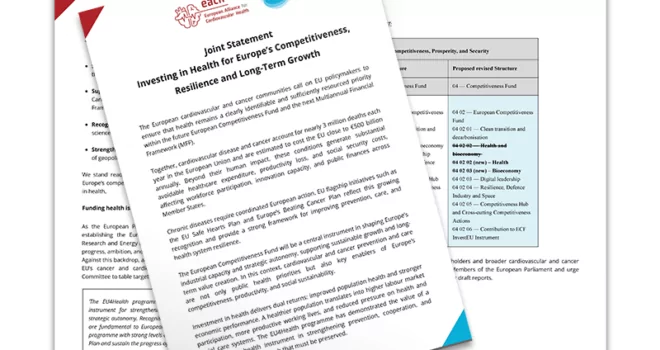
Joint Appeal to EU Leaders to Keep Health at the Core of EU Priorities Brussels, 20 April 2026 – The European cardiovascular health and cancer communities have issued a direct appeal to EU Heads of State and Government to make health investment a sustained priority ahead of their European Council (EUCO) Summit on 23–24 April. […]
World Chagas Disease Day 2026: Official Statement 08/04/2026 World Chagas Disease Day: April 14, 2026 For World Chagas Disease Day (April 14), the Pan American Health Organization (PAHO) and the Global Chagas Coalition called for strengthening the response to this disease and highlighted the role of women in early detection, prevention, and care. Under the theme “Women at […]
Chagas Disease
Cardiovascular disease (CVD) remains the leading cause of death globally. However, most people living with CVD also have multiple long-term conditions (MLTC), such as diabetes, chronic kidney disease, and mental health disorders. Despite this, health systems remain largely organised around single diseases, resulting in fragmented care and a high treatment burden. To address this challenge, […]
Long-term Care
The World Heart Federation (WHF) actively represented the global cardiovascular community at the 158th session of the World Health Organization (WHO) Executive Board, which was held from 02 to 07 February 2026 in Geneva, Switzerland. The WHF delegation, headed by Dr. Bente Mikkelsen, Chair of its Advocacy Committee, delivered a series of statements across multiple […]
Economics of Health for All
Primary Health Care
Well-Being and Health Promotion