
A Milestone for Cardiovascular Health in Europe: The EU Safe Hearts Plan
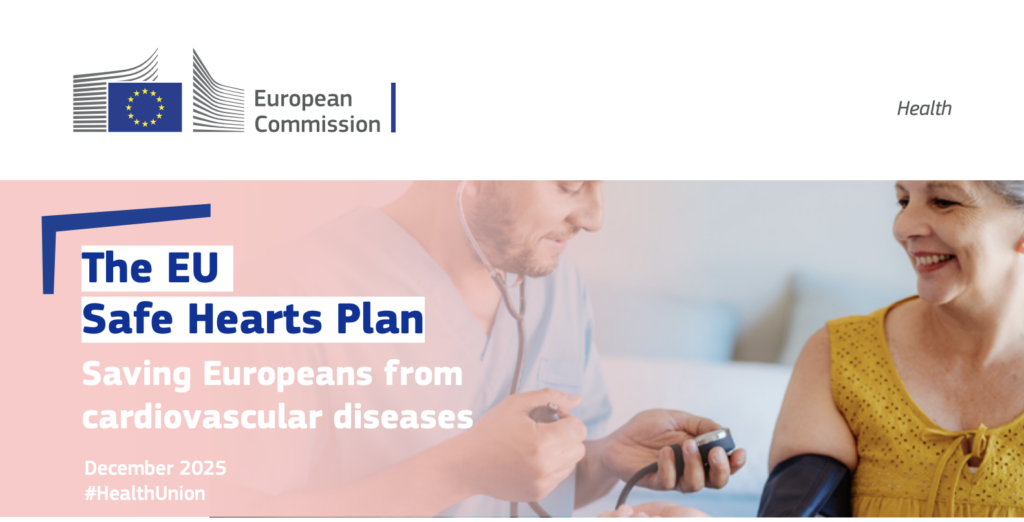
On 16 December, the European Commission published the EU Safe Hearts Plan, the first comprehensive, EU-wide strategy dedicated to cardiovascular health. The Plan marks a major milestone in the EU’s response to cardiovascular disease, which remains the leading cause of death across the Union, responsible for 1.7 million deaths every year.
Momentum around the Safe Hearts Plan has been building in recent weeks. On 10–11 December, the European Alliance for Cardiovascular Health (EACH) held its Cardiovascular Health Summit in Brussels, just days ahead of the Plan’s publication. The Summit featured a keynote address by Commissioner for Health and Animal Welfare Várhelyi, who presented the Safe Hearts Plan, alongside sessions on various topics, including Denmark’s success story in cardiovascular prevention, the role of patient voices, and gender differences in CV health.
The Safe Hearts Plan sets out a long-awaited framework to reduce the burden of CVD and improve cardiovascular health for all Europeans. It reflects the outcome of years of advocacy and collaboration among national, European, and international stakeholders.
The World Heart Federation welcomes the Plan’s comprehensive, life-course approach, spanning prevention, early detection, treatment and care, in line with priorities WHF has consistently advocated at EU and global levels.
- Prevention: The Plan places strong emphasis on reducing exposure to major cardiovascular risk factors at population level. This includes strengthened action on tobacco, alcohol, unhealthy diets, obesity and physical inactivity. It also supports the creation of healthier food environments, including measures to reduce consumption of highly processed foods.
- Early detection: A key innovation of the Plan is the proposed EU Protocol on Health Checks, to be developed by 2026, which will establish a common EU approach to early detection of cardiovascular diseases, diabetes, and obesity. The initiative aims to expand screening in primary care and community settings, promote the use of digital tools and registries, and support earlier diagnosis to prevent disease progression.
- Treatment and care: To improve quality and continuity of care, the Plan proposes the creation of a European network of cardiovascular health centres, bringing together expertise and supporting the uptake of high-quality diagnosis, treatment, and follow-up. It promotes integrated, person-centred care, better access to innovative treatments and medical technologies, strengthened cardiac rehabilitation, and the use of digital tools and AI to support clinical decision-making and long-term management.
In particular, WHF welcomes:
- The flagship initiative “EU Cares for Your Heart”, which will support all Member States in developing or implementing national cardiovascular health plans by 2027, closely aligned with the WHF framework for national action plans
- The introduction of an EU Protocol on Health Checks for early detection
- The proposal for an EU CVD Inequalities Dashboard to monitor disparities and identify trends
- Explicit references to familial hypercholesterolaemia (FH) and lipoprotein(a)
- Digital innovation framed as a cross-cutting priority
While welcoming the Plan’s ambition, WHF regrets that the Plan does not acknowledge workforce shortages in cardiology, nursing, and primary care ; constraints that directly limit prevention, screening, and treatment capacity across many Member States. It also fails to adequately address the influence of the food, alcohol, and tobacco industries, despite their well-documented role in driving cardiovascular risk. In addition, the Plan does not sufficiently recognise air pollution and climate change as major cardiovascular risk factors, with no clear EU-level target to reduce CVD attributable to air pollution in this plan.
With the Safe Hearts Plan now published, the focus must shift from ambition to delivery. Ensuring adequate funding, strong governance, and engagement with patients, health professionals, and civil society will be essential to translate this strategy into measurable improvements in cardiovascular health across Europe.
Now, implementation is what matters. The World Heart Federation stands ready to work with its partners to support the successful implementation of the EU Safe Hearts Plan.
For more information: