
Cardiovascular disease (CVD) remains the leading cause of death globally. However, most people living with CVD also have multiple long-term conditions (MLTC), such as diabetes, chronic kidney disease, and mental health disorders. Despite this, health systems remain largely organised around single diseases, resulting in fragmented care and a high treatment burden.
Advancing Integrated Care for Cardiovascular Disease and Multiple Long-Term Conditions
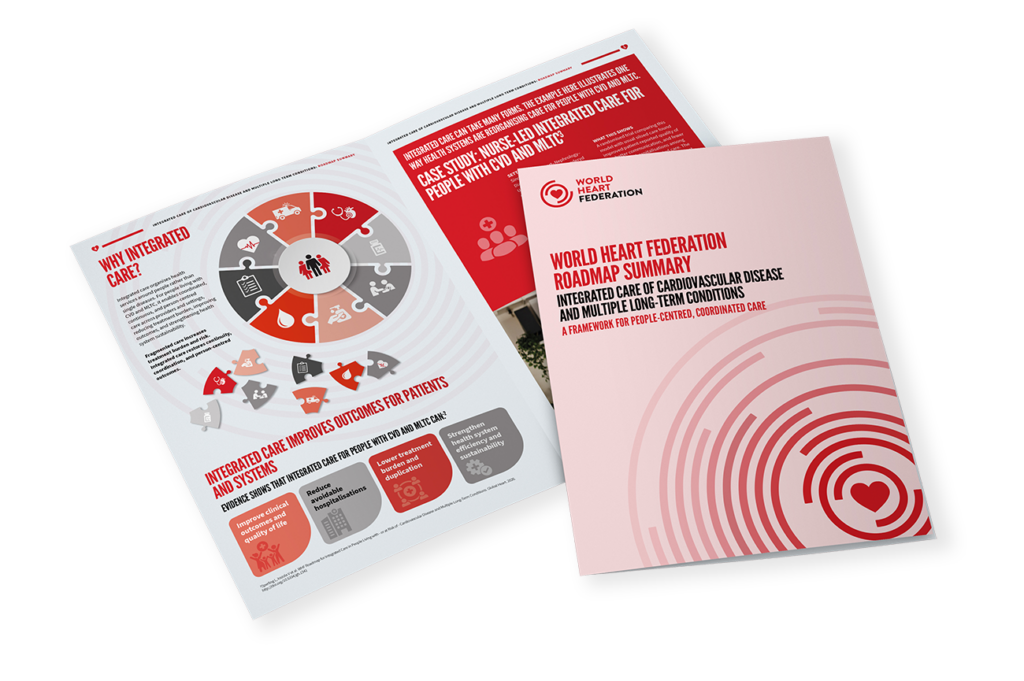
To address this challenge, the World Heart Federation (WHF) has developed a new Roadmap on Integrated Care for people living with – or at risk of – CVD and MLTC, providing a structured and practical approach to strengthening integrated, person-centred care globally. Findings from the WHF surveys highlight these challenges, with 64% of healthcare professionals identifying fragmented systems as a key barrier, alongside 74% citing insufficient funding and 64% pointing to lack of political prioritisation.
Cardiovascular disease rarely exists in isolation. This roadmap makes clear that health systems designed around single conditions can no longer meet the needs of today’s patients. Integrated, person-centred care is not optional, it is essential for improving outcomes and ensuring the sustainability of health systems worldwide.
The Reality of Multimorbidity
Patient perspectives further illustrate the scale of the challenge. In the WHF survey, 98% of respondents were living with CVD, often alongside multiple conditions, including hypertension (50%), diabetes (48%), and mental health conditions (28%). Many reported a significant treatment burden, with 76% taking five or more medications, 57% experiencing poor coordination of care, and 55% facing long waits or travel barriers to access services. Only 9% reported access to integrated risk assessment tools.
From Fragmentation to Integration
The WHF Roadmap highlights the urgent need to move towards integrated, person-centred care, supported by stronger primary care, multidisciplinary teams, and improved coordination across services. It also emphasises the role of data systems, digital tools, and access to essential diagnostics and technologies as key enablers.
Importantly, the Roadmap identifies practical and scalable solutions. Healthcare professionals highlighted priorities including improving patient awareness, strengthening training, implementing national policies, expanding access to affordable medicines, and leveraging digital monitoring tools.
There is no single model of integrated care that works everywhere. What matters is designing care around people’s real lives, capacities, and contexts. This roadmap shows how countries can adapt integrated care for CVD and MLTC while keeping equity, continuity, and community at the centre.
A Call to Action
Integrated care for people living with – or at risk of – CVD and MLTC must be implemented urgently through aligned policies, shared leadership, patient and community engagement, and targeted investment, especially in primary care, to build more equitable, resilient, and person-centred health systems. As the burden of multimorbidity continues to rise, the opportunity now is to translate evidence into action—and ensure that care is designed around the people who need it most.