
Most children have zero access to life-saving cardiovascular care, says new report from World Heart Federation
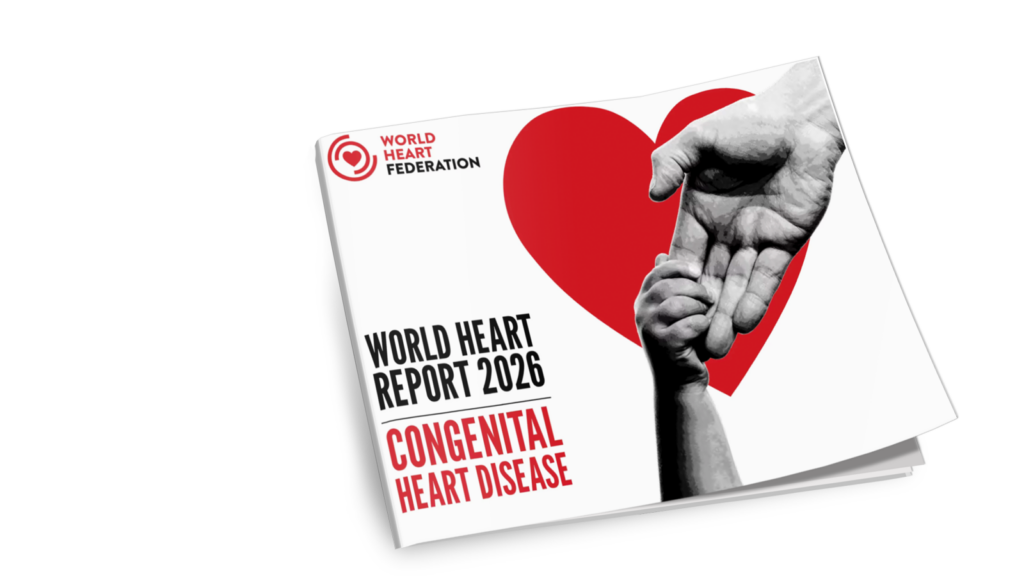
GENEVA, 16 May 2026: Over 90% of children in lower- and middle-income countries (LMICs) live in paediatric heart health “deserts” with no access to timely care for congenital heart disease (CHD), according to a new report from the World Heart Federation.
The “World Heart Report on Congenital Heart Disease” launched at the World Heart Summit today, calls on governments worldwide to take urgent action to protect infants, young children and adults with CHD, which affects approximately 2% of babies born each year. Without timely intervention, the most severe forms of CHD are fatal in up to 85% of infants.
The World Heart Report shows the true cost of the disease:
- Congenital heart disease is among the most common birth defects. It affects approximately one in every 50 newborns, and at least a third will require critical treatment in their first year of life.
- As few as 15% of children with severe forms of CHD survive without treatment – but with access to proper care, almost all affected newborns (over 97%) will reach adulthood.
- Globally, there is tremendous disparity between high income and low-income countries. Even in high income regions, such as the U.S. and Europe, death rates in poorer areas are up to eight times higher than wealthier areas.
- Most deaths from CHD occur in low- and middle-income countries with limited paediatric cardiovascular facilities. Infants represent the majority of these deaths.
- The risks to newborns are even greater in conflict and crisis zones such as Somalia, Djibouti, Niger, Chad and Afghanistan, where healthcare infrastructure is critically compromised.
Despite this critical need, children in many countries live in paediatric heart health “deserts.” Only a handful of countries have the capacity to diagnose, let alone address, heart disease in newborns and young children. Increased awareness and screenings facilitate diagnosis while treatment relies on the availability of safe and timely paediatric surgery and lifelong follow-up care.
Safe heart surgery for babies is resource-intensive and requires well-developed paediatric heart programs, which are not available in most of Africa, and many regions of Asia and Latin America. Where paediatric cardiac surgery centres do exist, provisions are often limited to a single tertiary institution in the country’s capital with limited capacity, with children in rural communities and smaller towns facing substantial barriers due to distance, cost, and delayed referrals.
The report also exposes the crippling financial barrier to treatment. Surgical costs in LMICs often exceed household yearly income, preventing many families from accessing care and forcing others into life-altering debt. In Rwanda, the mean surgical cost can be over seven times the GDP per capita, while in Nigeria this represents two to three times the average national income. Many families are forced to sell assets or borrow money to afford treatment for their children.
Krishna Kumar, Clinical Professor and Head of Paediatric Cardiology at the Amrita Institute of Medical Sciences and Research Centre in India, says:
“The world needs to wake up to this global crisis. Millions of children and babies are dying from a treatable illness. This heart health lottery means that their survival is determined by local access to high-quality healthcare.
“The problem is not just the lack of resources. There is a systemic misalignment between the critical functions of care, whereby a cocktail of limited awareness and diagnosis capacities, workforce shortages, inadequate financing and infrastructure, and weak policy planning has left children without the care they so desperately need.
“Countries with better-developed heart health capabilities have a responsibility to work with their global counterparts to train and disseminate knowledge to close global healthcare gaps.”
The World Heart Federation has called on governments to guarantee every newborn the right to heart health. This includes ensuring timely access pathways for paediatric and congenital cardiac care are standardized in national health systems, from diagnosis and surgery to long-term follow-up. It also means sharing expertise across borders to train specialized health professionals, strengthen hospitals and referral networks, and embed CHD care within broader maternal, newborn, child health, and non-communicable disease policies.
Professor Krishna Kumar says:
“Only by taking a global population health approach, ensuring equitable access to high-quality healthcare for all, regardless of income or place of birth, can we prevent avoidable deaths and begin to close the survival gap for babies born with congenital heart disease.”
NOTES TO EDITORS
- The World Heart Federation (WHF) is an umbrella organisation of more than 200 members in over 100 countries, representing the global cardiovascular community and uniting patient, medical, scientific, and civil society groups. WHF’s three-fold mission is to connect and lead the CVD community, translate science into policy, and stimulate knowledge exchange. For more information, visit https://www.worldheart.org
- The “World Heart Report on Congenital Heart Disease” is the fourth instalment in the World Heart Federation’s (WHF) flagship series. WHF is grateful for the collaboration and substantive contributions of the team at the University of Essex – Institute of Public Health and Well-Being, including their expert data-gathering and analysis in epidemiology and population health for all four reports.
Media contacts:
Katherine Connolly, Associate Director, Hawthorn Advisors k.connolly@hawthornadvisors.com | +44 7389 843 655
Lisa Hadeed, Head of Communications, WHF, lisa.hadeed@worldheart.org | +41 79 372 1346