Cazadores de mitos
La desinformación en materia de salud supone una amenaza importante para la salud pública.
La información sanitaria falsa o engañosa afecta a la salud mental de las personas, perjudica la comunicación entre pacientes y profesionales sanitarios, socava los hábitos saludables y desalienta el cumplimiento del tratamiento y de los consejos sobre el estilo de vida. En la WHF, nos comprometemos a dotar a nuestra comunidad y al público en general de conocimientos claros, fiables y basados en la evidencia para ayudarles a tomar decisiones informadas sobre su corazón.
Mitos comunes sobre la salud cardiovascular
Las enfermedades cardiovasculares en el mundo
El cáncer, la malaria o el sida son las principales causas de muerte en todo el mundo.
Las enfermedades cardiovasculares (ECV) son la principal causa de muerte en todo el mundo. En 2019, las ECV fueron responsables del 33 % de todas las muertes a nivel mundial. Las siguientes causas principales de muerte fueron los cánceres (el 18 % de las muertes a nivel mundial) y las infecciones respiratorias crónicas (el 7 % de las muertes a nivel mundial).
Las enfermedades cardiovasculares son un problema que afecta principalmente a los países ricos e industrializados.
Las enfermedades cardiovasculares constituyen un problema mundial y son la principal causa de muerte en todos los grupos de países, independientemente de su nivel de renta. Los países de renta media-baja registran la tasa de mortalidad estandarizada por edad más elevada por enfermedades cardiovasculares: más de un 40 % superior a la de los países de renta alta.
Las enfermedades cardiovasculares son un problema cada vez mayor y no somos capaces de controlarlo.
Aunque el número de fallecimientos por enfermedades cardiovasculares ha aumentado en los últimos 30 años, esto se debe en gran medida a que la población mundial está creciendo y envejeciendo. Si el tamaño y la estructura de edad de la población se hubieran mantenido iguales, las tasas de mortalidad por enfermedades cardiovasculares serían hoy más de un 30 % inferiores a las de 1990. Esto se debe a que muchos países han establecido mejores políticas para proteger a la población de factores de riesgo como la alimentación poco saludable y el tabaco, a las mejoras en el acceso a la atención sanitaria y a las nuevas terapias.
Afecciones y síntomas
Si alguien tiene el pulso acelerado, solo significa que está estresado o que está tomando demasiada cafeína.
Factores como el estrés, el consumo de cafeína y el ejercicio pueden provocar un aumento temporal de la frecuencia cardíaca. Sin embargo, un aumento de la frecuencia cardíaca que se produzca con mayor regularidad o durante un periodo de tiempo más prolongado puede ser síntoma de otras afecciones, como problemas del ritmo cardíaco (arritmias), y debe ser evaluado por un profesional sanitario.
El paro cardíaco repentino es lo mismo que un infarto.
El paro cardíaco súbito (PCS) no es lo mismo que un infarto. Piensa en un infarto como un problema de fontanería, mientras que el PCS es como un problema eléctrico. Un infarto suele estar causado por una obstrucción en un vaso sanguíneo que irriga el músculo cardíaco. Esto puede dañar de forma permanente parte del corazón. El PCS es un fallo eléctrico que altera la sincronización y el orden de la acción de bombeo. Un infarto puede provocar un paro cardíaco.
Un infarto siempre se caracteriza por un dolor intenso en el pecho.
El síntoma más común de un infarto de miocardio es el dolor torácico, pero también pueden aparecer otros síntomas, como dolor en otras partes del cuerpo —por ejemplo, en la mandíbula y la espalda—, dificultad para respirar y náuseas. Las mujeres son más propensas a presentar síntomas distintos del dolor torácico, aunque este sigue siendo el síntoma más común en ambos sexos.
Si alguien no presenta ningún síntoma, su corazón debe de estar sano.
Los principales factores de riesgo de la enfermedad coronaria, la hipertensión arterial y el colesterol LDL elevado suelen ser «silenciosos», lo que significa que no provocan ningún síntoma. Algunas personas desarrollan una enfermedad coronaria —que puede provocar un infarto de miocardio o una insuficiencia cardíaca— sin presentar ningún síntoma en absoluto. Por lo tanto, es importante que consultes con un profesional sanitario cualificado sobre tu riesgo de padecer enfermedades cardiovasculares y que te realices las pruebas que te recomiende, incluso si te sientes sano.
Riesgo de enfermedades cardiovasculares
Las enfermedades cardiovasculares solo afectan a las personas mayores.
Aunque el riesgo de padecer enfermedades cardiovasculares aumenta con la edad, estas pueden afectar también a los jóvenes y constituyen la causa más frecuente de muerte entre las personas de 15 a 49 años.
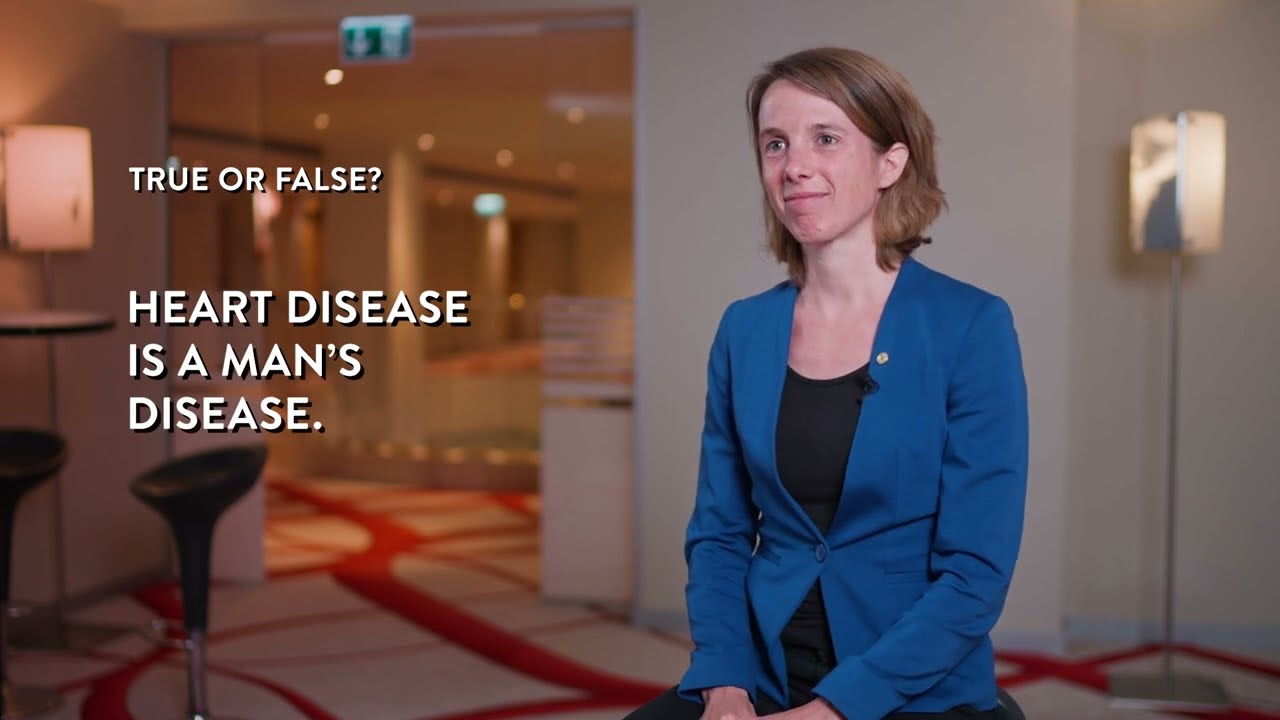
Las enfermedades cardiovasculares afectan principalmente a los hombres.
Las enfermedades cardiovasculares (ECV) son la principal causa de muerte tanto en mujeres como en hombres. Sin embargo, las mujeres tienen menos probabilidades de recibir un diagnóstico oportuno o un tratamiento óptimo en caso de sufrir un infarto. Acabar con el prejuicio de que las ECV son una «enfermedad de hombres» es una parte importante a la hora de abordar este problema.
Las enfermedades cardiovasculares se deben exclusivamente a un estilo de vida poco saludable.
Si bien hábitos como fumar, la alimentación, la actividad física y el consumo de alcohol pueden contribuir de manera significativa al riesgo cardiovascular, hay otros factores que también desempeñan un papel importante. La genética de una persona y su exposición a factores ambientales, como la contaminación atmosférica, contribuyen de manera significativa al riesgo de padecer enfermedades cardiovasculares. Algunas enfermedades cardiovasculares, como ciertas cardiopatías congénitas, están determinadas íntegramente por la genética. Es más, muchos hábitos poco saludables están estrechamente relacionados con las circunstancias sociales de una persona, como el lugar donde vive, sus condiciones laborales y la facilidad con la que puede acceder a la asistencia sanitaria.
El consumo moderado de alcohol es bueno para el corazón.
El alcohol no es bueno para el corazón y, de hecho, aumenta el riesgo de padecer cardiopatía hipertensiva, miocardiopatía, fibrilación auricular, aleteo auricular y accidentes cerebrovasculares. En el caso de los adultos que no padecen ninguna enfermedad subyacente, se recomienda reducir el consumo de alcohol o, si ya se ha dejado de beber, no empezar a hacerlo.
Si alguien es delgado, no necesita hacer ejercicio para mantenerse sano.
El ejercicio no solo es importante para perder peso. Reduce el riesgo de padecer diversas enfermedades, incluidas las cardiovasculares, en todas las personas. La Organización Mundial de la Salud recomienda al menos entre 150 y 300 minutos de ejercicio de intensidad moderada, o entre 75 y 150 minutos de ejercicio de intensidad vigorosa, a la semana para los adultos de entre 18 y 64 años.