Découvrez notre vaste bibliothèque de vidéos sur le
11e Sommet mondial du cœur et 79e Assemblée mondiale de la santé
Organisé à Genève les 16 et 17 mai, cet événement proposera des analyses approfondies et des débats sur les initiatives mondiales en matière de santé cardiaque.
Poursuivez ce voyage avec des images exclusives desévénements parallèles de la WHA79, qui se sont déroulés les18 et 19 mai, et qui retracent les débats animés et les collaborations visant à façonner l'avenir des politiques de santé publique.
Ces vidéos constituent une ressource essentielle pour comprendre les dernières tendances et stratégies en matière de santé cardiaque et d'élaboration des politiques de santé à l'échelle internationale.
samedi
08 h 45 - 09 h 00 – Ouverture du Sommet mondial du cœur 2026
Le 11e Sommet mondial du cœur s’est ouvert sur un appel pressant à transformer les engagements politiques en actions concrètes et mesurables en faveur de la santé cardiovasculaire. Dans son discours d’ouverture, le professeur Jagat Narula, président de la Fédération mondiale du cœur, est revenu sur les conclusions de la quatrième réunion de haut niveau des Nations unies sur les maladies non transmissibles et a exhorté les dirigeants mondiaux à passer des déclarations à la mise en œuvre. Soulignant que les maladies cardiovasculaires restent la première cause de mortalité dans le monde, responsables de plus de 20 millions de décès par an, le professeur Narula a défini les priorités clés pour les années à venir : accélérer la maîtrise de l’hypertension, s’attaquer aux déterminants commerciaux de la santé, intégrer la santé cardiovasculaire dans les politiques climatiques et environnementales, renforcer le financement de la prévention et des soins, et élaborer des stratégies nationales spécifiques en matière de santé cardiovasculaire. La session a souligné que les données, les solutions et les outils existent déjà. Le défi consiste désormais à garantir la volonté politique, la responsabilisation et un investissement durable afin de traduire ces engagements en vies sauvées. Donnant le ton du Sommet, ce discours d’ouverture a appelé les gouvernements, les responsables du secteur de la santé, les défenseurs de la cause et les partenaires à travailler ensemble pour assurer la santé cardiovasculaire pour tous, partout dans le monde.
09 h 00 - 10 h 00 – L'année 2025 a marqué un tournant : quelle est la prochaine étape ? Débat sur la couverture sanitaire universelle, les plans d'action nationaux et la dynamique en faveur de la santé cardiovasculaire
Dans la foulée de la Déclaration politique des Nations unies de 2025 sur les maladies non transmissibles et du lancement du plan « Safe Hearts » de l’Union européenne, cette table ronde de haut niveau a examiné comment les pays peuvent traduire leurs engagements politiques en améliorations concrètes en matière de santé cardiovasculaire. Réunissant des dirigeants des Caraïbes, du Kenya, d’Europe, de Chine et de Suède, la discussion a porté sur les opportunités et les défis liés à la promotion de la couverture sanitaire universelle, à l’élaboration de plans nationaux de santé cardiovasculaire, au renforcement des stratégies de prévention et à l’amélioration de l’accès aux soins. Les intervenants ont souligné l’importance des soins de santé primaires, de la réglementation du tabac et de la nicotine, d’un financement durable, des taxes sur la santé, de l’engagement citoyen et de la collaboration intersectorielle pour faire face au fardeau croissant des maladies cardiovasculaires. La session a mis en avant le fait que, si les déclarations mondiales fournissent un cadre important, des progrès significatifs dépendent de leur mise en œuvre aux niveaux national et local. Les participants ont partagé des expériences concrètes issues de diverses régions, démontrant comment un leadership fort, la responsabilisation, des politiques axées sur la prévention et l’engagement communautaire peuvent transformer les résultats en matière de santé cardiovasculaire. La discussion s’est conclue par un appel à maintenir le sentiment d’urgence, à renforcer les partenariats et à veiller à ce que la dynamique politique de 2025 se traduise par un changement durable pour les patients et les communautés du monde entier.
10 h 00 - 10 h 45 – Présentation du Rapport mondial sur le cœur 2026 consacré aux cardiopathies congénitales – dernières découvertes
Lors du Sommet mondial du cœur 2026, la Fédération mondiale du cœur a officiellement présenté le Rapport mondial sur le cœur 2026, mettant en lumière les cardiopathies congénitales (CC) – la malformation congénitale la plus courante au monde et un facteur majeur, bien que souvent négligé, des maladies cardiovasculaires à l’échelle mondiale. S'appuyant sur les données mondiales les plus récentes et sur les témoignages de patients, de soignants, de cliniciens et de défenseurs de neuf pays, ce rapport révèle les profondes inégalités qui déterminent l'évolution de la santé des personnes nées avec une cardiopathie congénitale. Alors que les taux de survie se sont considérablement améliorés dans de nombreux pays à revenus élevés, des millions d'enfants et d'adultes vivant dans des pays à revenus faibles ou intermédiaires continuent de faire face à des retards de diagnostic, à un accès limité aux soins spécialisés, à une pénurie de personnel soignant et à des charges financières catastrophiques. La session a permis d’examiner les principales conclusions du rapport, notamment le nombre croissant de personnes vivant avec une cardiopathie congénitale dans le monde, le besoin urgent de renforcer les systèmes de santé et l’importance d’assurer la continuité des soins tout au long de la vie. Les intervenants ont mis en avant six actions prioritaires, parmi lesquelles le renforcement des capacités nationales, le renforcement des effectifs spécialisés, l’amélioration de la collecte de données, l’intégration des cardiopathies congénitales dans les cadres politiques, la mise en avant des témoignages de première main et le soutien à une future résolution de l’Assemblée mondiale de la Santé sur les cardiopathies d’origine infantile. Alliant données scientifiques et témoignages poignants, le Rapport mondial sur le cœur 2026 appelle les gouvernements, les responsables du secteur de la santé et les partenaires mondiaux de la santé à garantir à chaque enfant, adolescent et adulte atteint d’une cardiopathie congénitale le droit à la santé cardiaque, quel que soit son lieu de naissance.
11 h 15 – 12 h 00 – Table ronde : Confiance du public, IA et avenir de la santé numérique
L’intelligence artificielle transforme rapidement les soins cardiovasculaires, offrant de nouvelles possibilités en matière de diagnostic précoce, de traitements plus personnalisés, d’amélioration de la prédiction des risques et d’élargissement de l’accès aux services de santé. Cependant, ces avancées s’accompagnent de questions cruciales concernant la confiance, la gouvernance, l’équité, la responsabilité et la sécurité des patients. Cette table ronde du Sommet mondial du cœur 2026 a réuni des cliniciens, des chercheurs, des innovateurs, des journalistes et des experts en santé numérique afin d’examiner comment l’intelligence artificielle peut être intégrée de manière responsable dans les systèmes de santé tout en préservant la confiance du public. La discussion a porté sur le rôle croissant de l’IA dans la détection des maladies, la prévention cardiovasculaire, l’imagerie médicale, l’aide à la décision clinique et la gestion de la santé des populations, en mettant en évidence à la fois son potentiel et ses limites. Les intervenants ont souligné que le plus grand défi ne réside plus dans le développement des technologies d’IA, mais dans la garantie de leur mise en œuvre de manière sûre, éthique et équitable. Parmi les thèmes clés figuraient l’importance de la surveillance réglementaire, la transparence, la validation auprès de populations diverses, la protection contre les biais et la désinformation, l’intégration du personnel soignant, ainsi que la nécessité pour les cliniciens de rester au cœur des processus décisionnels. La session s’est conclue par un appel à une collaboration renforcée entre les gouvernements, les prestataires de soins, les chercheurs, les entreprises technologiques, les communautés de patients et les organisations internationales afin de garantir que l’innovation numérique serve l’intérêt de toutes les populations. À mesure que l’IA continue d’évoluer, il sera essentiel d’instaurer la confiance, de préserver l’équité et de renforcer la gouvernance pour exploiter pleinement son potentiel en matière de santé cardiovasculaire.
13 h 45 - 14 h 30 – Table ronde : Nutrition, systèmes alimentaires et avenir en bonne santé
Les systèmes alimentaires sont de plus en plus reconnus comme l’un des principaux déterminants de la santé cardiovasculaire. Alors que les taux d’obésité, de diabète et de maladies cardiovasculaires ne cessent d’augmenter à l’échelle mondiale, les décideurs politiques, les responsables de la santé, les chercheurs et les militants sont confrontés à une question cruciale : comment transformer les systèmes alimentaires pour favoriser une vie plus saine et un avenir plus sain ? Cette table ronde du Sommet mondial du cœur 2026 a exploré les liens entre les politiques nutritionnelles, les environnements alimentaires, la santé publique et la prévention des maladies cardiovasculaires. Les intervenants ont examiné l’influence croissante des aliments ultra-transformés, la consommation excessive de sel et de sucre, l’accessibilité financière des aliments et l’inégalité d’accès à une alimentation saine, tout en abordant les traitements émergents tels que les médicaments à base de GLP-1 et leur rôle dans le cadre de stratégies de prévention plus larges. La discussion a mis en évidence la nécessité d’aller au-delà de la responsabilité individuelle et de se concentrer sur les systèmes qui façonnent les choix alimentaires. Les intervenants ont présenté des données issues d’interventions politiques couronnées de succès, notamment les étiquettes d’avertissement sur le devant des emballages, l’élimination des acides gras trans, les taxes sur les boissons sucrées, les initiatives de réduction de la teneur en sodium et les programmes de nutrition en milieu scolaire. Ils ont également souligné l’importance de s’attaquer aux facteurs sociaux, économiques et environnementaux qui influencent les choix alimentaires, en particulier dans les pays à faibles et moyens revenus. Tout au long de la session, les intervenants ont souligné que pour réaliser des progrès significatifs, une action coordonnée entre les différents secteurs était nécessaire, réunissant la santé, l’agriculture, l’éducation, la finance, l’industrie et la société civile. L’avenir de la santé cardiovasculaire ne dépend pas seulement du traitement des maladies, mais aussi de la mise en place de systèmes alimentaires qui rendent les choix sains accessibles, abordables et réalisables pour tous.
14 h 30 - 15 h 20 – Table ronde : les villes, pionnières en matière de mode de vie sain
Alors que la population urbaine ne cesse de croître, les villes sont devenues l’un des principaux lieux d’action pour prévenir les maladies cardiovasculaires et améliorer la santé publique. De la qualité de l’air aux réseaux de transport, en passant par les espaces verts, le logement, l’accès à l’alimentation et l’engagement communautaire, les collectivités locales ont une occasion unique de façonner les environnements qui influencent la santé au quotidien. Cette table ronde du Sommet mondial du cœur 2026 a examiné comment les dirigeants municipaux, les experts en santé publique, les professionnels de santé et les organisations communautaires peuvent collaborer pour créer des environnements urbains plus sains, réduisant ainsi les risques cardiovasculaires et améliorant l’équité en matière de santé. S’appuyant sur des exemples tirés de villes d’Europe, d’Asie, d’Afrique et des Amériques, les intervenants ont mis en avant des initiatives couronnées de succès qui ont permis d’améliorer la qualité de l’air, de développer les modes de transport actifs, de renforcer les programmes de prévention cardiovasculaire et de réduire les obstacles à un mode de vie sain. La discussion a mis en évidence que bon nombre des facteurs à l’origine des maladies cardiovasculaires proviennent de l’extérieur du système de santé. La pollution atmosphérique, les vagues de chaleur, la sédentarité, les environnements alimentaires malsains et les inégalités sociales contribuent tous au risque cardiovasculaire et nécessitent une action coordonnée entre les différents secteurs. Les intervenants ont présenté des approches innovantes menées par les villes, qui intègrent les considérations sanitaires dans l’urbanisme, les politiques de transport, l’action climatique et le développement communautaire. Tout au long de la session, les intervenants ont souligné l’importance du leadership local, de la collaboration intersectorielle, de l’engagement citoyen et de l’élaboration de politiques fondées sur des données probantes. En combinant prévention, renforcement du système de santé et aménagement urbain plus sain, les villes peuvent jouer un rôle transformateur dans la réduction des maladies cardiovasculaires tout en créant des communautés plus durables, plus équitables et plus résilientes pour les générations futures.
15 h 45 - 16 h 45 – Table ronde : Les pays à revenu faible ou intermédiaire et l'architecture sanitaire mondiale : défis et opportunités face à la baisse de l'aide
Alors que l’aide internationale au développement subit des réductions sans précédent, les pays à faibles et moyens revenus sont confrontés à des questions difficiles concernant l’avenir du financement de la santé, la résilience des systèmes de santé et l’accès équitable aux soins. Cette table ronde du Sommet mondial du cœur 2026 a examiné comment l’évolution de l’architecture sanitaire mondiale redéfinit les priorités en matière de santé cardiovasculaire et d’autres maladies non transmissibles. Réunissant des décideurs politiques, des cliniciens, des chercheurs, des militants et des personnes concernées, la discussion a exploré les conséquences de la baisse de l’aide extérieure, de l’évolution des priorités des bailleurs de fonds et de la pression croissante sur les budgets nationaux de santé. Les intervenants ont souligné le fardeau croissant des maladies cardiovasculaires dans les pays à faibles et moyens revenus, où les systèmes de santé doivent simultanément faire face aux maladies infectieuses, aux pathologies cardiovasculaires négligées telles que les cardiopathies rhumatismales et congénitales, ainsi qu’à la prévalence croissante de l’hypertension, de l’insuffisance cardiaque et des accidents vasculaires cérébraux. Les intervenants ont souligné que, si les réductions de financement posent des défis importants, elles offrent également des opportunités de repenser les modèles de financement de la santé, de renforcer la mobilisation des ressources nationales, d’intégrer les services et de mettre en place des systèmes de santé plus durables. Des exemples provenant d’Afrique, d’Asie et d’Amérique latine ont montré comment les taxes sur la santé, les modèles de soins intégrés, le développement des ressources humaines et un leadership gouvernemental plus fort peuvent améliorer les résultats sanitaires à long terme tout en réduisant la dépendance vis-à-vis des financements extérieurs. Tout au long de la session, les participants ont souligné l’importance de maintenir la solidarité mondiale, de faire entendre davantage la voix des patients, d’investir dans la prévention et le dépistage précoce, et de veiller à ce que les maladies cardiovasculaires restent une priorité dans les programmes de santé nationaux et mondiaux. La discussion s’est conclue par un appel à un plaidoyer plus fort, à une plus grande responsabilisation et à un engagement renouvelé en faveur de systèmes de santé équitables qui ne laissent aucun patient de côté.

16 h 45 - 17 h 15 – Table ronde : la nouvelle génération et l'action
Les jeunes ne sont pas seulement les leaders de demain : ils sont déjà les moteurs du changement aujourd’hui. Lors de cette table ronde dynamique du Sommet mondial du cœur 2026, des défenseurs de la cause des jeunes, des étudiants en médecine, des responsables de la santé publique, des représentants de patients et des militants pour une meilleure nutrition ont examiné les défis auxquels sont confrontées les jeunes générations ainsi que les mesures nécessaires pour bâtir un avenir plus sain. La discussion a mis en évidence la manière dont les jeunes évoluent dans un monde marqué par le changement climatique, la désinformation, les problèmes de santé mentale, des environnements alimentaires malsains, les inégalités sociales, l’incertitude économique et la hausse des taux de maladies non transmissibles. Les intervenants ont souligné que de nombreux risques sanitaires sont désormais considérés comme normaux, ce qui rend les choix sains de plus en plus difficiles malgré une prise de conscience croissante de leur importance. Les intervenants ont appelé à ne plus considérer les jeunes uniquement comme les bénéficiaires des politiques de santé, mais à les reconnaître comme des partenaires dans la conception et la mise en œuvre des solutions. La discussion a porté sur l’importance de l’engagement des jeunes dans l’élaboration des politiques, la défense des causes liées au climat et à la santé, la réforme des systèmes alimentaires et nutritionnels, la promotion de la santé mentale, les soins centrés sur le patient et la prévention des maladies cardiovasculaires. Tout au long de la session, les intervenants ont souligné que des progrès significatifs nécessitaient une collaboration intergénérationnelle. Les jeunes apportent de nouvelles perspectives, de la créativité, un sentiment d’urgence et une communication de pair à pair qui inspire confiance, autant d’atouts susceptibles de renforcer les campagnes de santé et d’améliorer l’engagement du public. La table ronde s’est conclue par un message clair : si les sociétés veulent un avenir plus sain, les jeunes doivent avoir leur place à la table des discussions dès aujourd’hui — non pas en tant qu’observateurs, mais en tant que contributeurs actifs à la prise de décision et à l’action.
dimanche
9 h 10 - 9 h 40 – Coup de projecteur sur les innovateurs : entretien avec un ou plusieurs acteurs du secteur de la santé sur les nouvelles approches en matière de prévention et de traitement
L'innovation transforme l'avenir de la santé cardiovasculaire. De l'intelligence artificielle aux plateformes de santé numériques, en passant par l'implication personnalisée des patients et la simplification des stratégies thérapeutiques, les nouvelles technologies ouvrent des perspectives pour améliorer la prévention, le diagnostic, le traitement et les soins de longue durée à une échelle sans précédent. Lors de cette session « Innovator Spotlight » du World Heart Summit 2026, des experts de premier plan issus du monde universitaire, des technologies et de la recherche clinique ont examiné comment les innovations émergentes peuvent rendre les soins cardiovasculaires plus accessibles, plus efficaces et davantage centrés sur le patient. La discussion a mis en lumière les avancées en matière de soins de santé basés sur l’IA, de télémédecine, de programmes numériques d’accompagnement des patients et d’interventions évolutives conçues pour améliorer les résultats tout en réduisant les obstacles à l’accès aux soins. Les intervenants ont présenté des exemples de solutions innovantes ayant déjà un impact mesurable. Parmi celles-ci figuraient des systèmes d’IA capables d’analyser des données biologiques complexes pour accélérer la découverte de traitements et la mise en place de traitements personnalisés, des programmes de santé mobile utilisant des SMS sur mesure pour accompagner les patients après un accident cardiovasculaire, ainsi que des approches thérapeutiques simplifiées telles que les traitements combinés à dose fixe, susceptibles d’améliorer l’observance et de réduire le risque cardiovasculaire à l’échelle de la population. Un thème récurrent tout au long de la session a été l’importance de transposer l’innovation dans la pratique quotidienne. Les participants ont souligné que les avancées scientifiques ne suffisent pas à elles seules ; pour qu’une innovation soit couronnée de succès, elle doit être mise en œuvre, abordable, accessible, impliquer les patients et s’adapter aux contextes locaux. Le panel a également examiné comment les systèmes de santé peuvent combler le fossé entre la recherche et la prestation de services, en particulier dans les pays à faibles et moyens revenus. La discussion s’est conclue par un appel en faveur d’une innovation qui soit non seulement à la pointe de la technologie, mais aussi équitable, évolutive et conçue en plaçant les patients au cœur de la démarche. En combinant progrès scientifiques, engagement communautaire et mise en œuvre pratique, les nouvelles approches en matière de prévention et de traitement ont le potentiel d’améliorer la santé cardiovasculaire de millions de personnes à travers le monde.
09 h 40 - 10 h 40 – Table ronde ministérielle : Lutter contre l'hypertension à grande échelle
L’hypertension artérielle reste l’un des principaux facteurs de risque de maladies cardiovasculaires dans le monde, alors que des millions de personnes ne sont toujours pas diagnostiquées, ne reçoivent pas de traitement ou ne parviennent pas à contrôler correctement leur tension artérielle. Alors que les pays s’efforcent d’atteindre l’objectif mondial consistant à permettre à 150 millions de personnes supplémentaires de bénéficier d’un contrôle efficace de leur tension artérielle d’ici 2030, des solutions innovantes et adaptables à grande échelle sont nécessaires de toute urgence. Cette table ronde ministérielle de haut niveau, organisée dans le cadre du Sommet mondial du cœur 2026, a réuni des responsables de la santé d’Égypte, du Kenya et de Thaïlande afin de partager leurs expériences concrètes dans la mise en œuvre de programmes nationaux de lutte contre l’hypertension. Les discussions ont porté sur la manière dont les pays renforcent leurs systèmes de soins de santé primaires, développent les initiatives de dépistage, améliorent l’accès à des médicaments abordables, tirent parti des technologies de santé numériques et donnent aux communautés les moyens de soutenir les soins à long terme. Les intervenants ont mis en avant des approches nationales couronnées de succès, notamment les programmes égyptiens de dépistage à grande échelle et de soins primaires intégrés, la transformation numérique du système de santé et les dossiers médicaux électroniques au Kenya, ainsi que les efforts de prévention communautaires menés en Thaïlande, axés sur la réduction de la consommation de sel et l’implication des patients. La discussion a également porté sur l’importance d’un financement durable, de la couverture sanitaire universelle, de la production pharmaceutique locale, du développement des ressources humaines et des approches innovantes en matière d’observance thérapeutique. Tout au long de la session, les intervenants ont souligné que la lutte contre l’hypertension à grande échelle ne se limite pas aux seules interventions cliniques. Une prévention efficace, un dépistage précoce, l’autonomisation des patients, l’engagement communautaire et un engagement politique fort sont tous essentiels pour réduire les maladies cardiovasculaires et atteindre les objectifs mondiaux en matière de santé. La session s’est conclue par un message commun : les pays disposent déjà d’une grande partie des outils nécessaires pour améliorer le contrôle de la pression artérielle. Le défi consiste désormais à déployer à plus grande échelle les solutions qui ont fait leurs preuves, à renforcer les systèmes de santé et à garantir que chaque personne ait accès à un diagnostic rapide, à un traitement abordable et à des soins tout au long de la vie.
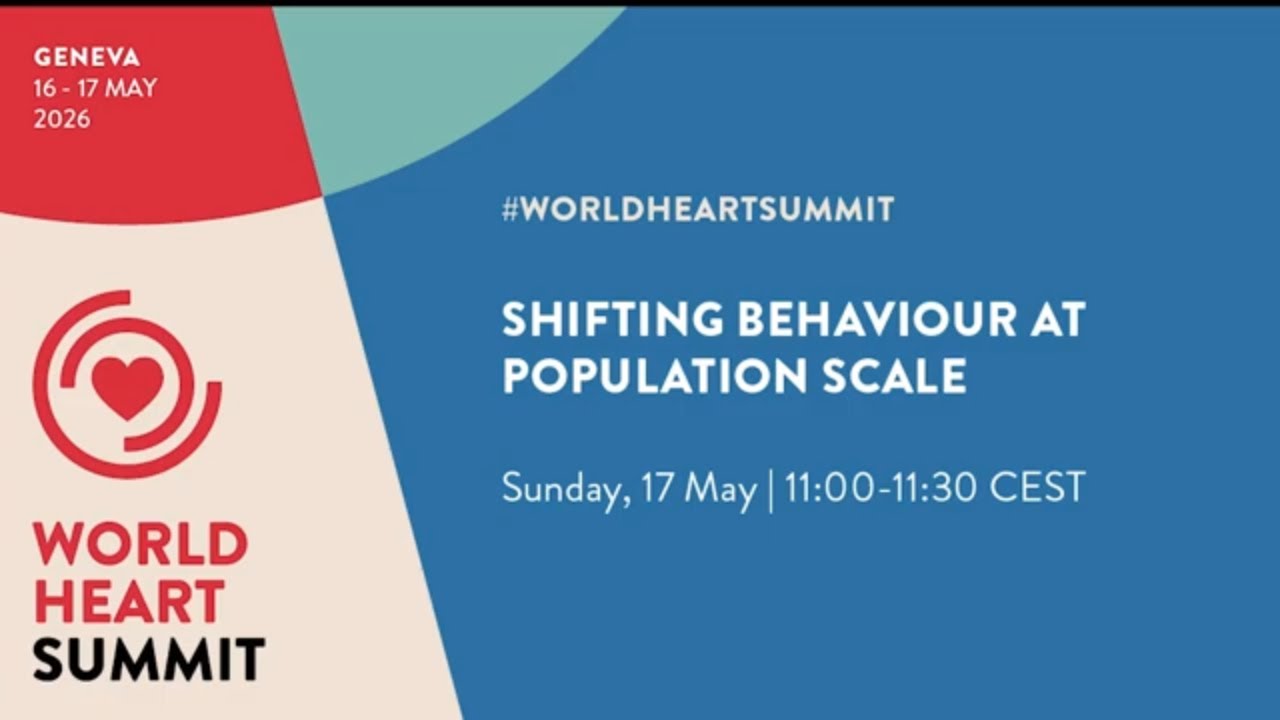
11 h 00 – 11 h 30 – Table ronde : Changer les comportements à l'échelle de la population
Améliorer la santé cardiovasculaire à l’échelle de la population ne se limite pas à encourager les individus à faire des choix plus sains. Cela nécessite des environnements, des politiques et des systèmes qui rendent un mode de vie sain plus facile, plus abordable et plus accessible pour tous. Lors de cette table ronde du Sommet mondial du cœur 2026, des experts en santé publique, en politique de santé, en systèmes de santé et en soins cliniques ont examiné comment les gouvernements et les sociétés peuvent influencer les comportements grâce à une combinaison de mesures réglementaires, fiscales, éducatives et de changements environnementaux. La discussion a porté sur l’efficacité de mesures telles que les taxes sur le tabac, les taxes sur les boissons sucrées, les politiques d’approvisionnement en aliments sains, la reformulation des produits et les incitations comportementales qui encouragent des décisions plus saines. Les intervenants ont souligné l’influence croissante des déterminants commerciaux de la santé et les défis posés par des industries puissantes dont les intérêts peuvent entrer en conflit avec les objectifs de santé publique. Alors que les données démontrent clairement l’efficacité des politiques de prévention, les participants à la table ronde ont noté que leur mise en œuvre se heurte souvent à des obstacles politiques, économiques et réglementaires. La discussion a mis l’accent sur la nécessité d’un leadership plus fort, d’une élaboration des politiques plus audacieuse et d’une attention accrue portée à la prévention, considérée comme un investissement à long terme plutôt que comme un coût à court terme. La session a également exploré l’importance de créer des environnements sains tout au long de la vie — des écoles et lieux de travail aux établissements de santé et aux communautés. Les participants ont convenu qu’un changement durable nécessite des stratégies intégrées combinant éducation du public, environnements favorables, mesures réglementaires et politiques budgétaires. En fin de compte, faire évoluer les comportements à grande échelle ne relève pas uniquement de la responsabilité individuelle, mais passe par la création de conditions permettant des choix plus sains et de meilleurs résultats cardiovasculaires pour l’ensemble de la population.
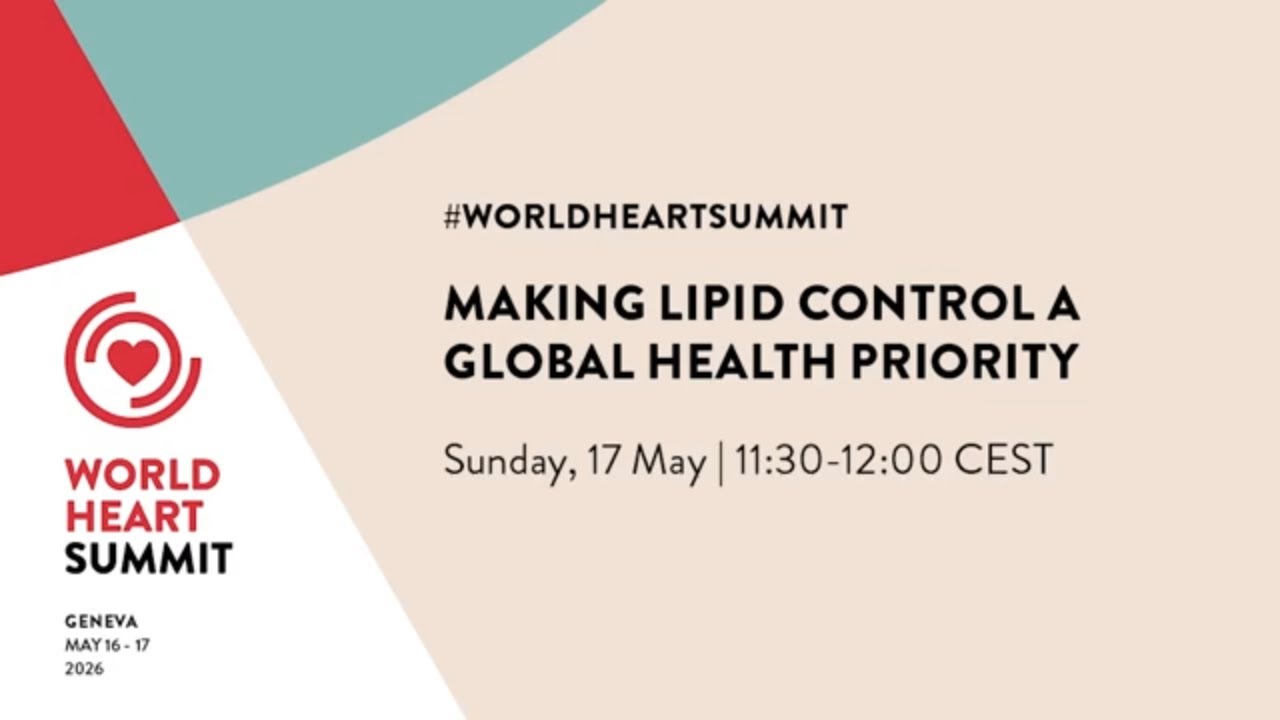
11 h 30 - 12 h 00 – Table ronde : Faire de la maîtrise des lipides une priorité sanitaire mondiale
Malgré des décennies de données démontrant le rôle du cholestérol élevé dans les maladies cardiovasculaires, le contrôle des lipides reste l’un des facteurs de risque les plus sous-diagnostiqués et les moins bien traités à l’échelle mondiale. Des millions de personnes présentant un risque élevé de crise cardiaque et d’AVC ignorent leur taux de cholestérol, tandis que l’accès au dépistage, au traitement et à la prise en charge à long terme continue de varier considérablement d’un pays à l’autre et d’un système de santé à l’autre. Cette table ronde du Sommet mondial du cœur 2026 a réuni des responsables de l’Organisation mondiale de la santé, du monde universitaire, de l’industrie et d’associations de défense des patients afin d’examiner comment la prise en charge des lipides peut devenir un pilier central de la prévention mondiale des maladies cardiovasculaires. La discussion a porté sur les développements récents, notamment le plan « Safe Hearts » de l’Union européenne, les nouvelles recommandations en matière de prise en charge du cholestérol, les progrès en matière de dépistage et d’évaluation des risques, ainsi que la reconnaissance croissante de la lipoprotéine (a) et de l’hypercholestérolémie familiale comme facteurs importants de risque cardiovasculaire. Les intervenants ont souligné la nécessité urgente de passer de la sensibilisation à la mise en œuvre. Parmi les priorités clés figuraient l’élargissement de l’accès au dépistage, le renforcement des systèmes de soins de santé primaires, l’amélioration de l’accès aux traitements hypolipidémiants, l’intégration de la prise en charge des lipides dans les stratégies cardiovasculaires nationales, ainsi que la résolution des lacunes persistantes en matière de traitement dans les pays à faibles et moyens revenus. La table ronde a également insisté sur l’importance de lutter contre la désinformation concernant le traitement du cholestérol et de favoriser l’observance à long terme des patients grâce à l’éducation, à l’engagement communautaire et au soutien par les pairs. La session s’est conclue par un message clair : la prévention des maladies cardiovasculaires ne peut aboutir sans un contrôle efficace des lipides. Un dépistage précoce, des traitements fondés sur des données probantes, des soins centrés sur le patient et des politiques nationales plus fermes ont le potentiel de prévenir des millions de crises cardiaques et d’accidents vasculaires cérébraux évitables à l’échelle mondiale.
LE SOMMET MONDIAL DU CŒUR EST ORGANISÉ GRÂCE AU SOUTIEN DES PARTENAIRES SUIVANTS








#WHA79 Événements parallèles