
14 h 30 – 15 h 30 – SÉANCE 2
Nouvelles perspectives et orientations futures en matière de maladies infectieuses et de santé cardiovasculaire
Moments forts de la session
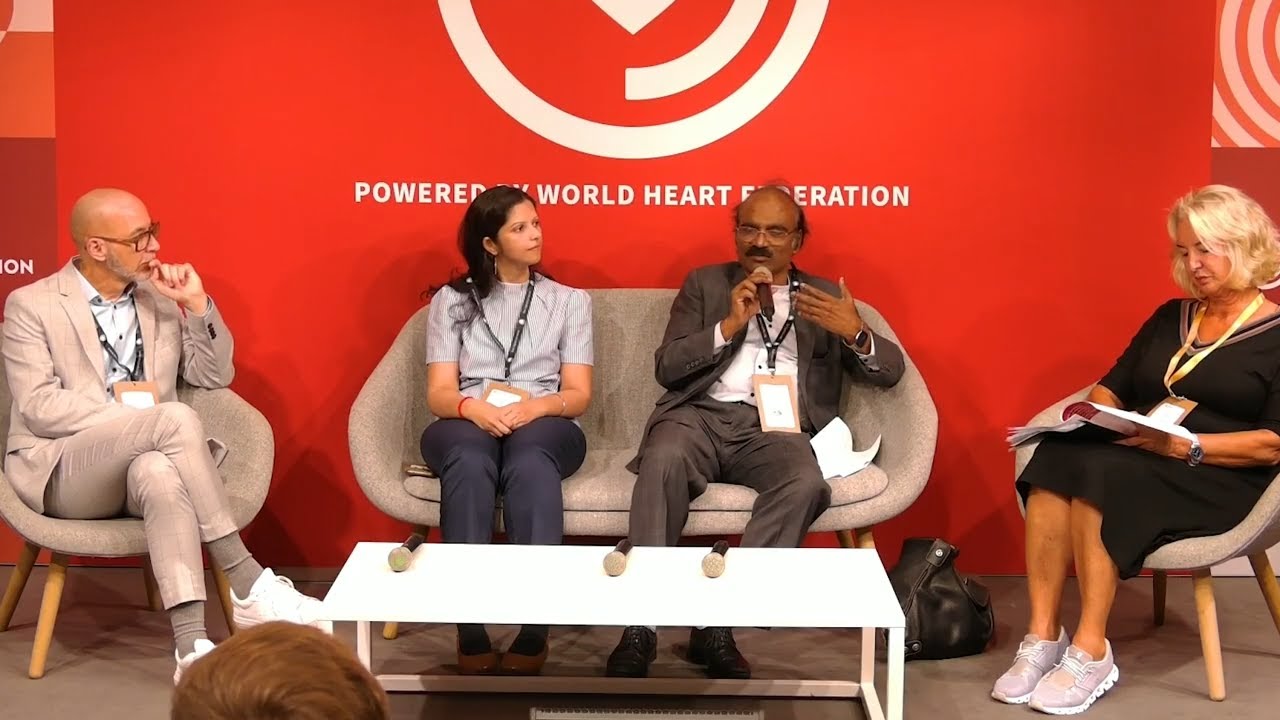
Dans le cadre de cette discussion organisée par le « Heart Café » de la WHF,Dorairaj Prabhakarananime une table ronde réunissantKaren Sliwa,Kavita Singh etSven Schellbergsur les liens bidirectionnels entreles maladies infectieuses(COVID-19, grippe, VIH) etles maladies cardiovasculaires (MCV). La discussion porte sur les données disponibles concernant le risque cardiovasculaire post-infection, le fardeau du« long COVID » et les modèles pragmatiques pourdes systèmes de santé intégrés et résilients— notamment les téléconsultations menées par des infirmières, le renforcement des soins primaires et l’interopérabilité des données dans les pays à revenus faibles et intermédiaires.
Points clés à retenir
Les infections peuvent déclencher des événements cardiovasculaires
Une grippe antérieure et la COVID-19 sont associées à un risque accru, à court terme,d’infarctus du myocardeet d’autres événements ; les personnes présentant des maladies cardiovasculaires ou des facteurs de risque ont vu leur mortalité liée à la COVID-19 multipliée par environ trois.
Le « COVID long » est un problème cardiovasculaire
Dans une cohorte WHF multinationale, 56 % des patients ont signalé au moins un symptôme au bout d’un mois (fatigue, dyspnée, douleurs thoraciques, palpitations, anxiété) ; environ 25 % de ces symptômes persistaient entre 9 et 12 mois, avec l’apparition de nouveaux diagnostics notables (par exemple, embolie pulmonaire, insuffisance rénale chronique, hypertension).
Endothélium et thrombose
La maladie à l'ère du variant Omicron se caractérise parun dysfonctionnement endothélialet un milieu prothrombotique, ce qui contribue à expliquer les événements thrombotiques tardifs et certains décès soudains survenus hors milieu hospitalier.
Agissez dès le premier contact
La « fenêtre thérapeutique » dans le cas des maladies virales est courte : il faut doterles infirmières, les agents de santé communautaires et les médecins généralistesde protocoles et d’outils d’aide à la décision afin de garantir une évaluation et un traitement rapides.
L'intégration l'emporte sur le cloisonnement
Intégrer systématiquementles contrôles de la tension artérielle et de la glycémieainsi que la prise en charge des risques cardiovasculaires dans les protocoles de prise en charge des maladies infectieuses ; recourir àla télésanté animée par des infirmièreset au partage des tâches pour assurer la continuité des soins aux malades chroniques en période de forte affluence.
Leviers des systèmes
Donner la priorité àl'interopérabilité des données,aux chaînes d'approvisionnement en médicaments(par exemple, l'insuline),à l'accompagnement des patients et à la protection des groupes vulnérables afin de soutenir les objectifs de la couverture sanitaire universelle.
Capacités et état de préparation
Les réseaux de recherche multinationales renforcent les compétences et rassemblent des données ; ils permettent de tirer les leçons de la COVID-19 afin de se préparer à la prochaine pandémie.
À qui s'adresse cette série ?
Cardiologues, médecins généralistes, infirmiers, équipes de santé publique, décideurs politiques, défenseurs des droits des patients et responsables du secteur de la santé numérique travaillant surle COVID long,la thrombose et l’endothélium,les programmes de prise en charge de l’hypertension et du diabète, ainsi que surles soins intégrés associant maladies infectieuses et maladies cardiovasculairesau sein de divers systèmes de santé.
Maladies infectieuses et maladies cardiovasculaires – FAQ
- La COVID-19 augmente-t-elle le risque cardiovasculaire après la guérison ?
- Oui. Le suivi révèle la persistance des symptômes et une augmentation de la fréquence des événements (par exemple, des thromboembolies). Parmi les facteurs probables, on peut citerles lésions endothélialesetl'hypercoagulabilité.
- Qui présente le risque le plus élevé de complications ?
- Les personnes âgées et celles souffrantd’hypertension, dediabète, d’obésité oud’une maladie cardiovasculaireexistante — mais les cliniciens doivent procéder à un dépistage à grande échelle ; le risque ne se limite pas aux « cas classiques ».
- Quelles sont les formes d'intégration qui fonctionnent dans la pratique ?
- Intégrerla surveillance de la pression artérielle et de la glycémiedans les parcours de soins dédiés aux maladies infectieuses, développerles téléconsultations menées par les infirmières, mettre en place le partage des tâches dans les soins primaires et garantirl'interopérabilité des donnéesentre les différents programmes.
- Que doivent faire les équipes de première ligne en cas de pic d'activité ?
- Adopter des protocoles simples et précoces dès le premier contact ; procéder à un triage pour évaluer le risque thrombotique ; garantir l'accès aux médicaments essentiels grâce àdes chaînes d'approvisionnement solides ; et proposer un accompagnement clair aux patients.
- Comment les spécialistes peuvent-ils vous aider au quotidien ?
- Intégrer des recommandations relatives à la vaccination et au traitement précoce dans les courriers cliniques ; mettre en avant la prévention des infections comme facteurmodificateur du risque cardiovasculaireafin d'inciter les médecins généralistes et les services de santé de proximité à intervenir en temps opportun.