
12 h 30 – 13 h 30 – SÉANCE 6
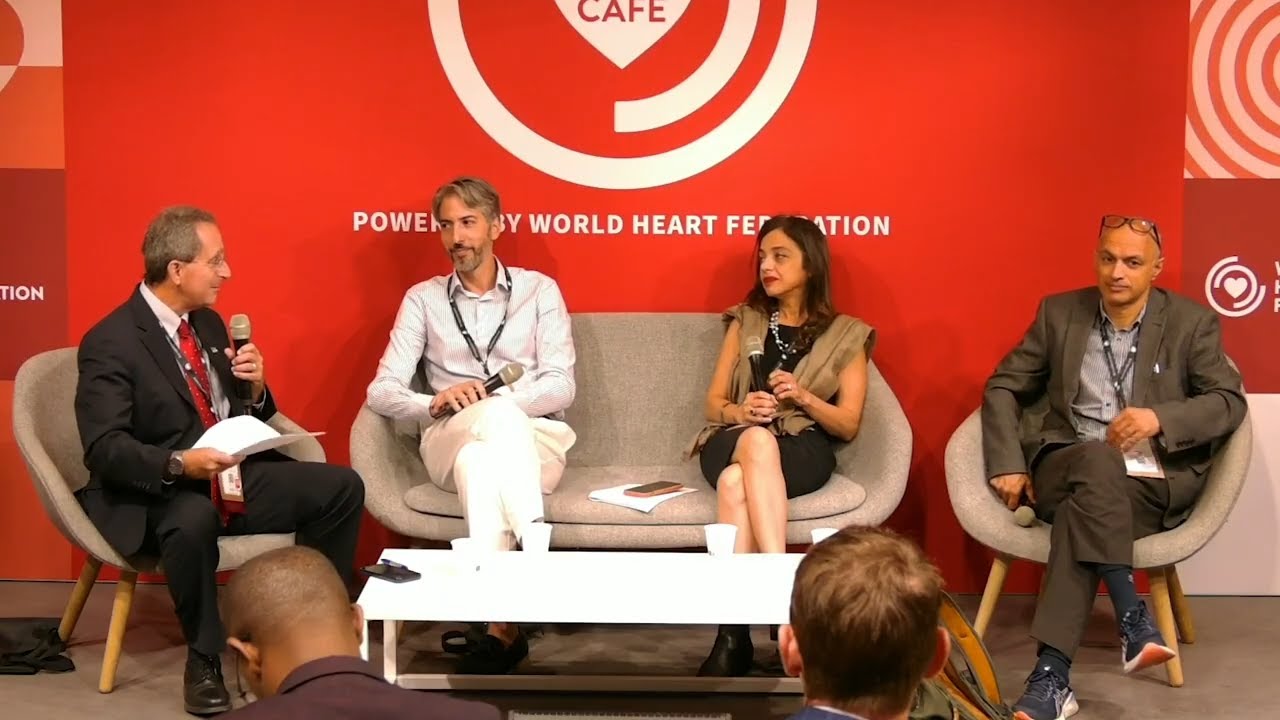
Intégration des soins dans le domaine des maladies cardiovasculaires, rénales et métaboliques
Moments forts de la session
Dans cette discussion organisée dans le cadre du « Heart Café » de la WHF, le modérateur Larry Sperling (Emory) reçoit Andrés Rosende (OPS/HEARTS dans les Amériques), Tazeen Jafar (Duke–NUS/Duke) et Naveed Sattar (Université de Glasgow) pour analyser les soins intégrés dans le domaine des maladies cardio-rénales et métaboliques (CKM). Le panel explore les liens entre les pathologies cardiovasculaires, rénales et métaboliques ; le fardeau croissant lié à l’obésité et au diabète ; les solutions évolutives en soins primaires telles que les parcours cliniques HEARTS ; les modèles collaboratifs et communautaires ; ainsi que la manière dont la santé numérique et l’intelligence artificielle, les politiques de prévention (environnement alimentaire) et les risques climatiques peuvent être pris en compte pour rendre les soins plus complets, plus équitables et plus efficaces.
Points clés à retenir
CKM est un système unique
Les maladies cardiovasculaires, rénales et métaboliques partagent une physiopathologie et des risques communs ; les recommandations cloisonnées ne tiennent pas compte de la multimorbidité ni des besoins concrets.
L'épidémiologie évolue
L'obésité et le diabète font augmenter le fardeau des maladies cardiovasculaires à un âge de plus en plus précoce ; les déterminants sociaux et les environnements alimentaires riches en produits ultra-transformés amplifient ce risque.
Des lignes directrices aux parcours
Les parcours cliniques intégrés de type HEARTS (simples ≠ simplistes) aident les soins de première ligne à assurer une prise en charge cohérente de la tension artérielle, des lipides, du diabète, de la vaccination et de l'insuffisance rénale chronique.
Les soins communautaires dispensés en équipe, ça marche
Le partage des tâches avec les infirmières et les agents de santé communautaires, les kiosques et la télésanté favorisent l'accès aux soins et renforcent la confiance dans les pays à revenu faible ou intermédiaire et les zones reculées.
L'IA en tant que copilote
Utiliser l'aide à la décision basée sur l'IA pour personnaliser les traitements et combler les lacunes, toujours sous contrôle humain et en tenant compte du contexte local.
Le climat et les infections ont leur importance
Le stress thermique, la pollution, les toxines et les liens avec les maladies infectieuses augmentent le risque de CKM ; il convient d'intégrer la vaccination et la planification de la résilience dans les stratégies d'action.
Le meilleur investissement = prévention et politique
Plaider en faveur d'environnements alimentaires plus sains, de villes propices à l'activité physique et de mesures de prévention dès la petite enfance, parallèlement à des protocoles de soins primaires adaptables à grande échelle.
À qui s'adresse cette série ?
Cardiologues, néphrologues, endocrinologues, médecins généralistes, infirmiers, pharmaciens, responsables de la santé publique, organismes payeurs, équipes spécialisées dans la santé numérique, experts en santé environnementale et acteurs locaux s’engagent à mettre en place des soins intégrés pour la CKM, des soins primaires conformes au programme HEARTS et des politiques de prévention.
Session CKM – Foire aux questions
Qu'est-ce que le CKM et pourquoi intégrer les soins ?
Le modèle CKM (cardio-rénal-métabolique) reflète les risques communs (obésité, hypertension, diabète, inflammation). Les parcours de soins intégrés permettent de mieux prendre en charge la multimorbidité que les approches cloisonnées axées sur une seule pathologie.
En quoi le programme HEARTS dans les Amériques contribue-t-il à améliorer les résultats ?
En normalisant les parcours cliniques en soins primaires (tension artérielle, lipides, diabète, insuffisance rénale chronique, vaccins), en favorisant le partage des tâches au sein des équipes et en simplifiant les protocoles afin de faciliter la généralisation et de garantir l'équité.
L'IA est-elle la solution pour la prise en charge du CKM ?
L'IA est un copilote utile pour la stratification des risques et le choix du traitement, mais sa réussite repose sur l'intelligence humaine, les processus de travail locaux, la formation et la confiance de la communauté.
Comment le climat et l'environnement influencent-ils le CKM ?
La chaleur, la pollution, les inondations et les substances toxiques augmentent les risques d’insuffisance rénale aiguë (IRA) et d’insuffisance rénale chronique (IRC), ainsi que les risques cardiovasculaires. Il convient d’intégrer dans les plans de gestion des maladies chroniques (CKM) des mesures visant à renforcer la résilience des soins face au changement climatique (climatisation, approvisionnement en eau, chaînes d’approvisionnement), la vaccination et la promotion de la qualité de l’air.